Tag: Silent Film Comedy

Consider it Stolen! —the curious case of “Singin’ in the Rain”

POST 433
Saturday, December 16, 2017
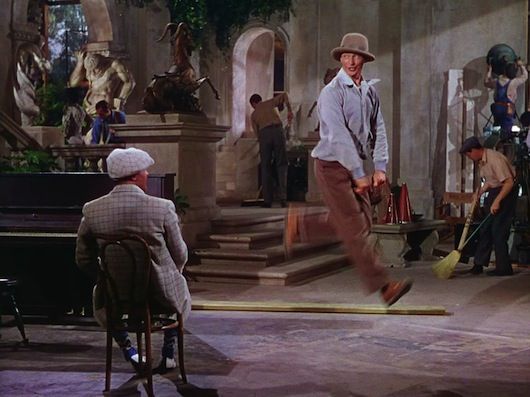
Donald O’Connor: “Make ’em Laugh”

Way back in the day, 1980 to be precise, when I was working with Joe Killian and Michael Zerphy, whenever we saw other performers do a bit we really liked, we’d say “consider it stolen!” I think the phrase originated with Joe, but he may have stolen it.

You know what they say, there’s nothing new under the sun, and that mostly holds true for physical comedy. I’m always amused, for example, when the Marx Brothers (or even Lucille Ball) are given credit for originating the broken mirror routine (Duck Soup), when in fact it not only appears in many early silent film comedies, but is referenced in even earlier reviews of vaudeville acts. Sure, there’s originality, but there’s a whole lot of borrowing going on and —if we’re lucky— creative reshaping of traditional materials.
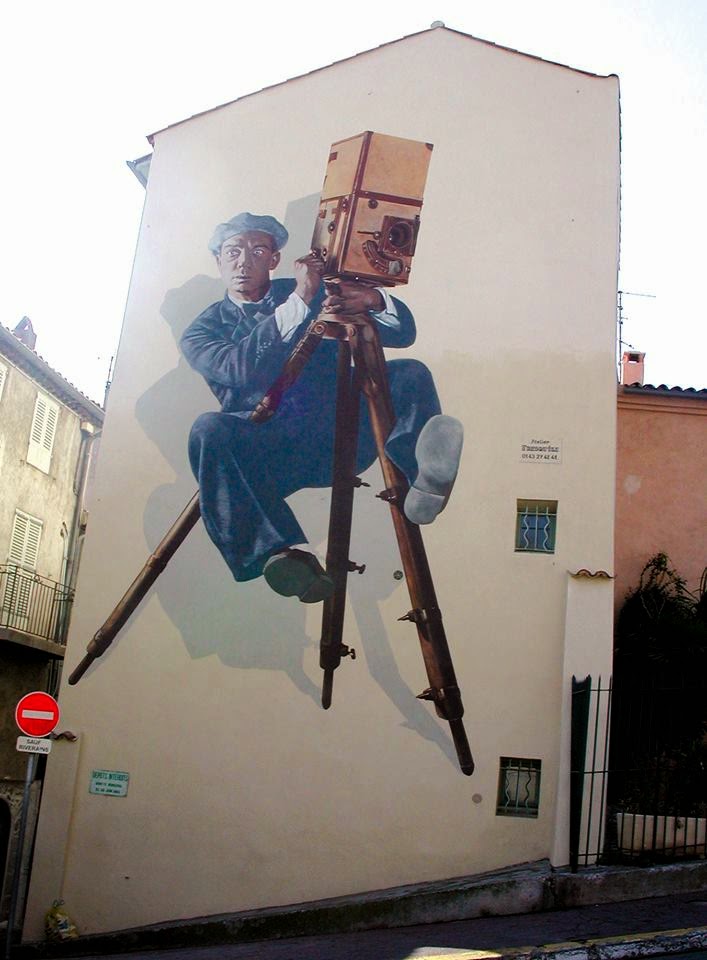
Keaton as The Cameraman

The historian-detective in me has enjoyed tracing this kind of thing, for example in this post on what I call the oblivious gag. My return to this theme is inspired by some excellent detective work done by silent film pianist and historian Ben Model, showing how Singin’ in the Rain (1952) borrowed from Buster Keaton’s The Cameraman (1928). But we’ll get to that juicy discovery a bit later…

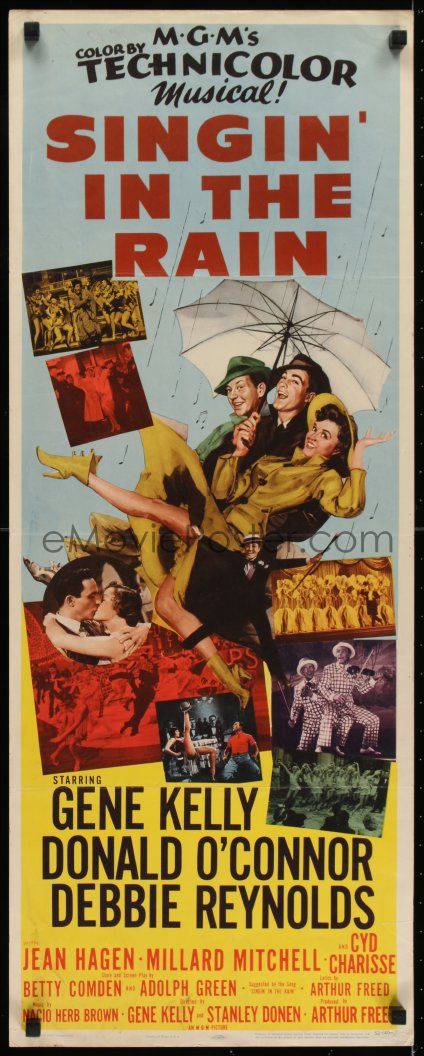
You all know Singin’ in the Rain, right? If not, you’re in for a treat! It’s a corny but delightful MGM musical from1952 starring Gene Kelly, Debbie Reynolds, and Donald O’Connor, all about the rough transition from silent film to sound. The remarkable thing about Singin’ in the Rain is that it began not as a story idea but as a musical woven around old songs, but also a musical partially woven around old physical comedy material.

The big musical link was Arthur Freed. As Cecil Adams points out in this Straight Dope article, “Freed, the producer responsible for most of the MGM musicals of the 40s and 50s, began his career as a songwriter. “Singin’ in the Rain” was part of Brown and Freed’s score for MGM’s first “all talking, all singing, all dancing” musical, The Hollywood Revue of 1929. In 1952, Freed decided to use his own songbook as the basis for an original musical, as he had done with Jerome Kern’s songs in 1946 (Till the Clouds Roll By) and George Gershwin’s in 1951 (An American in Paris).”

They had Freed’s songs, might as well shape a show around them!

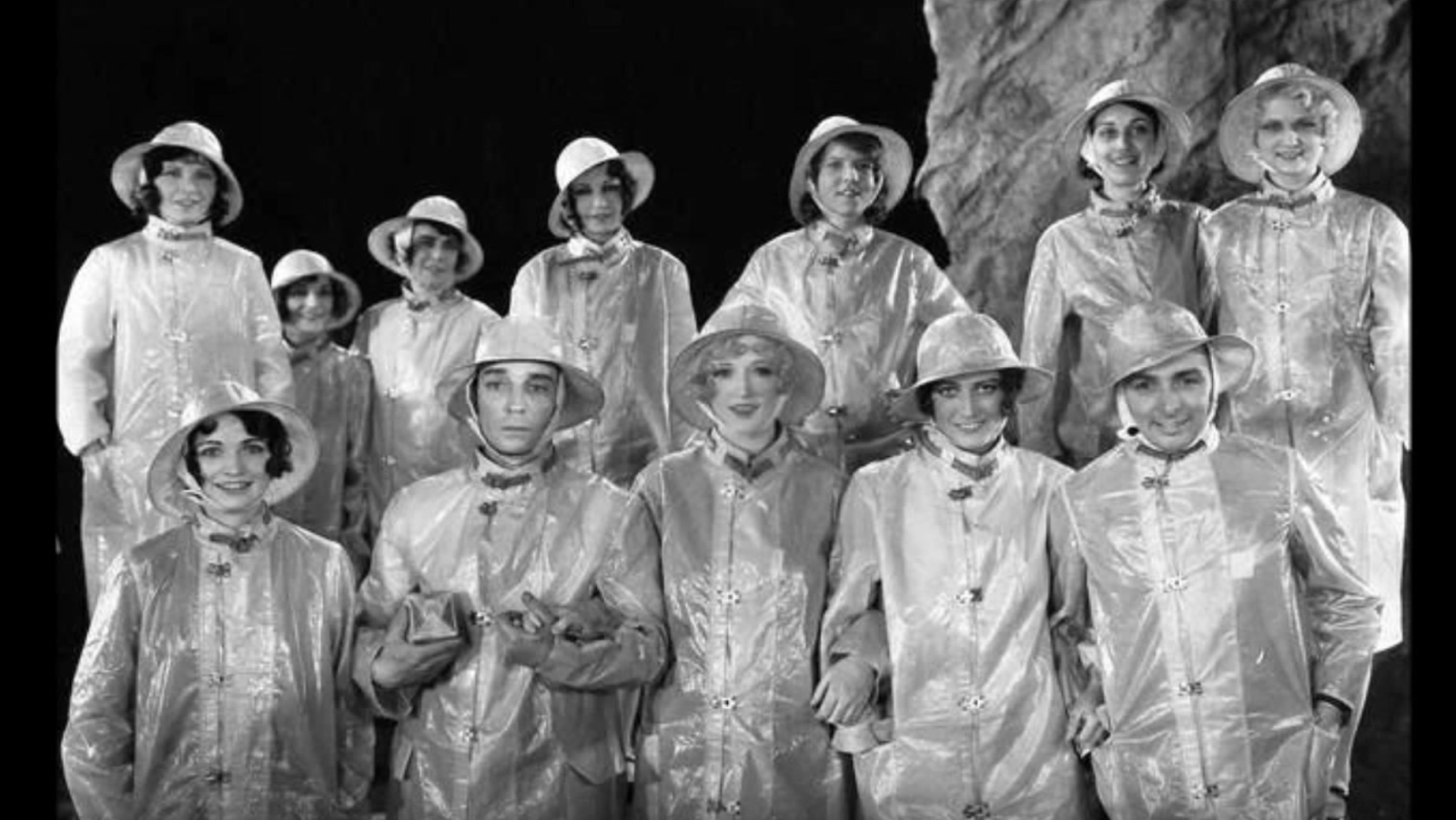
So the song Singin’ in the Rain goes all the way back to one of the two first big MGM musicals of the sound era, which featured “30 MGM stars! More Stars Than There Are in Heaven!” Here it is, the show’s big finale:

Not only did the songs come first, but the fact that they all came from the late 1920s gave screenwriters Comden & Green the idea for the story. According to this piece on the Cafe Songbook site, “Betty Comden and Adolph Green returned to M-G-M in May of 1950 to begin work on the screenplay for the movie they had been contracted to write, believing they were also contracted to write the lyrics for its songs. M-G-M clarified the terms of the contract to them. It was the studio’s option regarding the lyrics and M-G-M’s choice was that all the songs would be by the songwriting team of Arthur Freed (the film’s producer) and Nacio Herb Brown, his songwriting partner. Furthermore, they would be almost exclusively songs from their existing catalog. While looking at these songs, Comden and Green noticed that Freed-Brown songs such as “Should I?,” “All I Do Is Dream of You,” “Good Morning,” You Were Meant for me,” “You Are My Lucky Star,” “Singin’ in the Rain,” etc. were written in the late twenties which gave them the idea to create a story that came from that period; and the lynch pin of the plot they created was based on the disastrous results that sometimes occurred when silent screen actors and actresses were forced to talk on screen, to be heard no matter how awful they might sound.”

All these songs made it into the film, or should I say “made the film”?
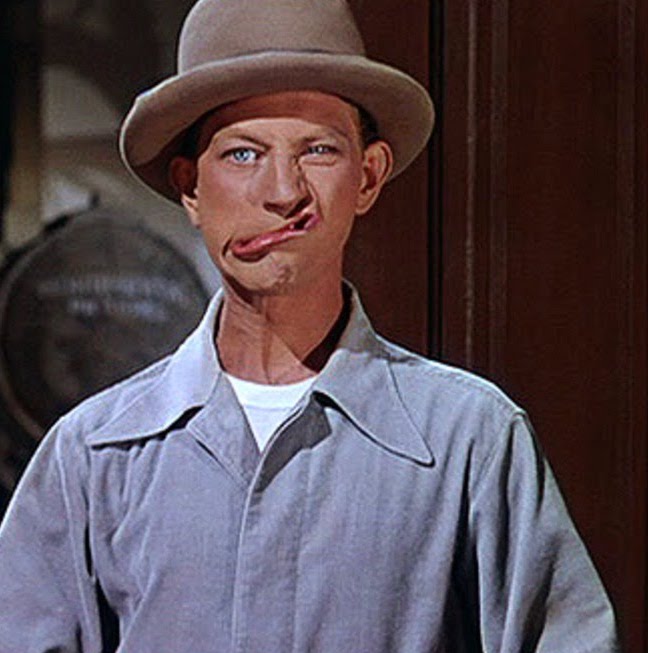
Donald O’Connor

A Tale of Two Tunes
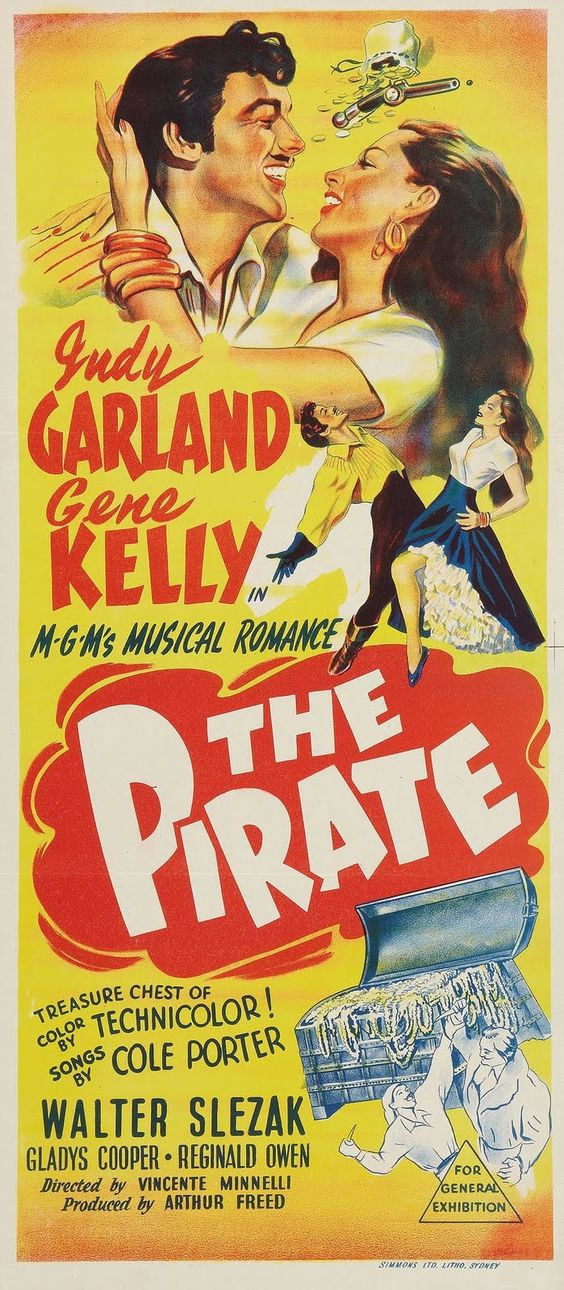
The film was coming together, but co-director Stanley Donen still wanted a solo number for Donald O’Connor, who played Gene Kelly’s comic sidekick and was a talented and very physical comedian. In fact, O’Connor’s parents were vaudevillians, his father an Irish-born circus strongman, dancer, and comedian, and his mother a circus acrobat, bareback rider, tightrope walker, and dancer. There was nothing in the Arthur Freed oeuvre that fit, but that didn’t stop MGM from doing some more borrowing. They just went back to an earlier MGM movie starring Gene Kelly, The Pirate (1948), and “borrowed” from Cole Porter instead.

Again according to Cecil Adams, “Donen suggested that Brown and Freed write a new song, pointing to Porter’s “Be a Clown” as the sort of thing he thought would fit in at that point in the script. Brown and Freed obliged —maybe too well— with “Make ‘Em Laugh.” Donen called it “100 percent plagiarism,” but Freed was the boss and the song went into the film. Cole Porter never sued, although he obviously had grounds enough. Apparently he was still grateful to Freed for giving him the assignment for The Pirate at a time when Porter’s career was suffering from two consecutive Broadway flops.”

Grateful, or simply too afraid of MGM’s power?

So that’s the background. Ironically, Kelly sang the original “Be a Clown” song, and in Make ’em Laugh, it is O’Connor singing to cheer up Kelly’s character. Here’s a short comparison, brief excerpts from each so you can see the similarity between the two tunes and the message.

But it’s not just the tune that was lifted.  The Make ‘en Laugh lyrics directly paraphrase those of Be a Clown. Clever but barely disguised plagiarism:

In The Pirate, Kelly is about to be hung by his neck in the town square. O’Connor quotes what that immortal bard, Samuel J. Snodgrass, said “as he was about to be led to the guillotine.”
While O’Connor’s dad advised him to “be an actor my son, but be a comical one,” Kelly was only three when his “clever” mom told him “I’ve got your future sewn up if you take this advice: be a clown, be a clown.”

And why go into the funny business? Because you’ll get rich, unlike in those other more effete professions. Kelly’s mom asks him “Why be a great composer with your rent in arrears? Why be a major poet and you’ll owe it for years? A college education I should never propose. A bachelor’s degree won’t even keep you in clothes.” Likewise, O’Connor’s dad warns him that “you could study Shakespeare and be quite elite, and you could charm the critics and have nothing to eat.”

But if you’re funny, what happens?  Kelly is promised  a bright future where he’ll “only stop with top folks” and “he’ll never lack” and “millions you will win.” O’Connor likewise will have “the world at your feet.”
Okay, sounds good. But what does it take to be funny? Kelly’s clown is instructed to…
• show ‘em tricks, tell ‘em jokes
• wear the cap and the bells
• be a crack Jackanapes
• give ’em quips, give ’em fun
• act the fool, play the calf
• stand on your head
• wiggle your ears
• wear a painted mustache
• spin on your nose
• quack like a duck

O’Connor’s comical actor must…

• slip on a banana peel
• [perform] old honky-tonk monkeyshines
• tell ‘em a joke, but give it plenty of hoke.
• take a fall, butt a wall, split a seam.
• start off by pretending you’re a dancer with grace, wiggle till they’re giggling all over the place, then get a great big custard pie in the face

The actual acts differ more than the lyrics because they are structured around the individual talents of the performers. “Be a Clown” actually is done twice in The Pirate, first with Kelly and the fabulous Nicklaus Brothers, and is later reprised by Kelly and Judy Garland. In both cases, it’s a partner number with more of a dance base to it. O’Connor, on the other hand, is both a better comedian and a far more skilled acrobat. The result, one of the greatest physical comedy acts ever, became his signature piece.

Here are the complete versions. Enjoy!

Be a Clown #1 (Kelly & the Nicklaus Brothers)


Be a Clown #2 (Kelly & Judy Garland)

Make ’em Laugh


The Plot Thickens

Keaton & Josephine the
monkey in The Cameraman


But that’s just the beginning! As I said at the top, this blog post got jump-started by Ben Model unearthing a less obvious and even more fascinating Singin’ in the Rain borrow. And this one is all the juicier because it involves our hero, Buster Keaton.

Take it away, Ben…

Wow! Like I said, great detective work. And as if that wasn’t amazing enough, think back to the original version of the song from The Hollywood Revue of 1929.  In that cavalcade of stars, did you notice the one luminary who couldn’t / wouldn’t have “a smile on his face”?  Yep, that’s “the great stoneface” himself at the 39-second mark.
The one thing I would add to Ben’s chronology is that in the years before Singin’ in the Rain (1952), Keaton was an uncredited gag writer for a bunch of MGM movies, including the Marx. Brothers, but especially a slew of Red Skelton vehicles, right up to his 1950 Watch the Birdie, which was partially a remake of The Cameraman, and two more 1951 Skelton films.  So if Keaton wasn’t directly consulted on Singin’ in the Rain, he was certainly still a presence at the studio. It was also in 1950 that his appearance on the Ed Wynn Show led to a lot of work on early television and made him less dependent on the Hollywood film industry.
Kelly & Skelton in Du Barry Was a Lady

And speaking of Red Skelton…
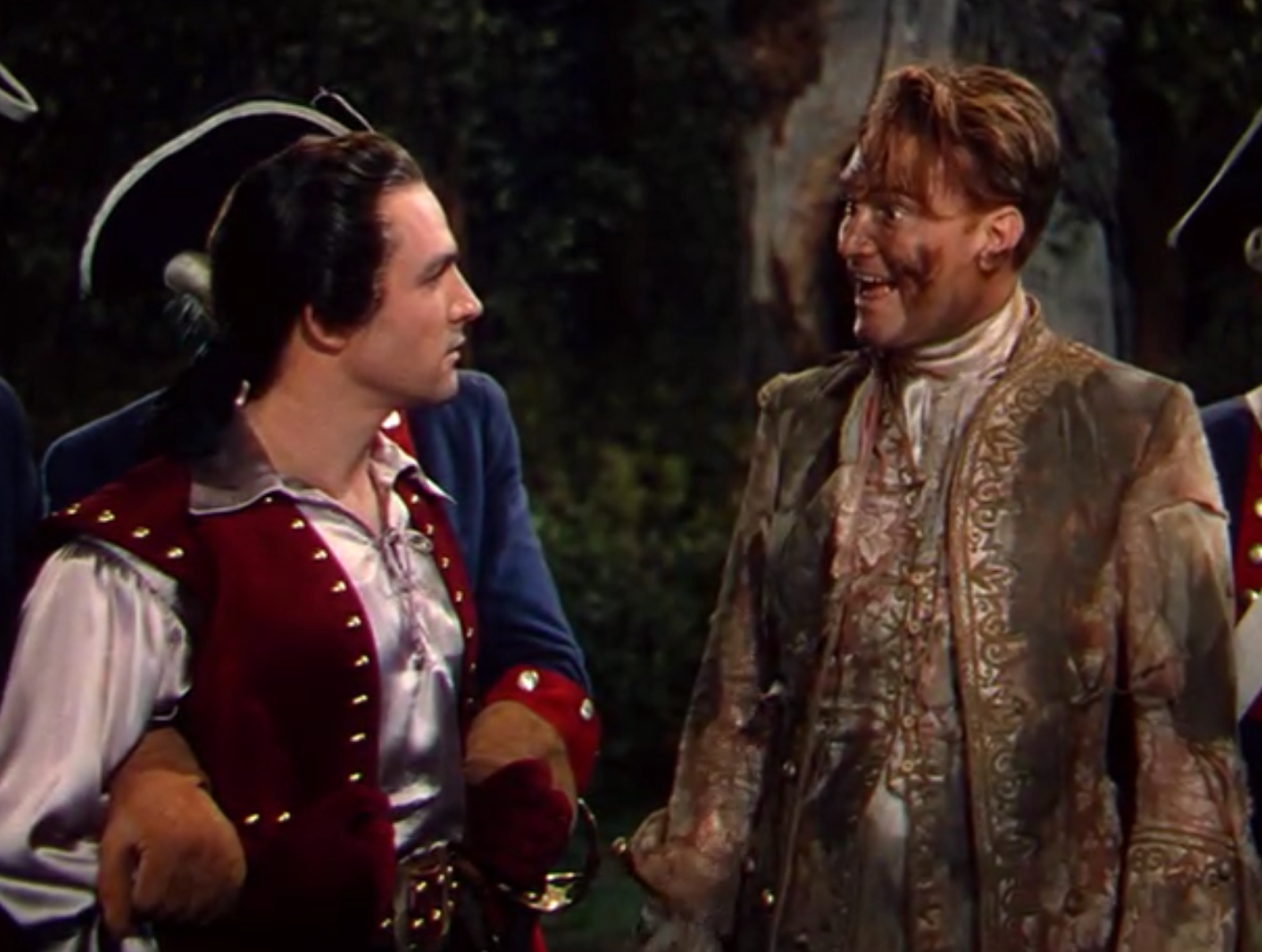
A talented pantomimist, Red Skelton, like Keaton, had grown up in show business, performing in medicine shows at the age of ten, and later burlesque and vaudeville. Keaton’s work with him in the 1940s would be enough to fill another blog post (don’t get me started!), but there are a couple of possible links between Skelton and Singin’ in the Rain. Gene Kelly’s “Broadway Ballet” fantasy sequence was apparently based on an idea that was used for MGM’s Du Barry Was a Lady (1943), starring Skelton as a nightclub worker who dreams that he’s King Louis XV. And who was his romantic rival for Lucille Ball’s affections in that one? Gene Kelly, natch. (And before the film, it was a Broadway musical starring Bert Lahr chasing Ethel Merman.)

But even more interesting than that is the similarity between some of Skelton’s pratfall moves from Du Barry and those of O’Connor, as seen in this comparison video. In the first part, Skelton and friend think they have tricked Gene Kelly into downing the drink with the Mickey Finn, but (of course!) the glasses have been switched, which leads to Skelton’s wonderful drunk pratfall sequence. Skeleton is drunk, O’Conner is giddy, but the writhing around and the circular movements when on their side on the floor are strikingly similar.

Did O’Connor borrow this? Who knows? —but not necessarily. It’s just as likely that these moves were standard fare. After all, the 108 pratfall was also common property (if you could do it!). Still, you need someone to preserve the vocabulary, and in the yakkety-yak-yak 1940s, that someone may well have been Red Skelton.

Of course, once you start making these connections, it’s endless —ancestry.com run amok— so I’ll stop the narrative here and just leave you with a few tidbits for dessert…

• When they made the biopic The Buster Keaton Story in 1957, can you guess who played Keaton? Dramatic pause. Are you really guessing? Space filler. Space filler Space filler. More space filler. Even more space filler. Yep, Donald O’Connor. This stuff’s downright incestuous.

• Trav SD points out that Singin’ in the Rain producer/songwriter Arthur Freed wrote material for the Marx Brothers’ act and performed in their sketches way back in their vaudeville days.

• As for the Nicklaus Brothers, according to Wikipedia “this dance sequence was omitted when shown in some cities in the South, such as Memphis, because it featured black performers the Nicholas Brothers, Fayard and Harold, dancing with Kelly. It was the first time they had danced onscreen with a Caucasian, and while it was Kelly’s insistence that they perform with him, they were the ones who were punished. Essentially blackballed, they moved to Europe and did not return until the mid-60s.”

• Kevin Kline does his own version of “Be a Clown” in the 2004 Cole Porter biopic, De-Lovely. Interesting enough and a much bigger production number.

• In 2006 or so, Volkswagon did this commercial where they remade Gene Kelly’s dance in the rain, using his face and choreography but a break dancer’s body and moves. Very interesting!

• Anthony Balducci, whose Journal blog I highly recommend, has an excellent piece about gag borrowing/ stealing, with some interesting comparisons between the tv work of Ernie Kovacs and the sketches of the British comedy duo Morecambe & Wise.

• For a list of Keaton’s uncredited gag writing, see Buster Keaton: Cut To The Chase by Marion Meade.

• Keaton’s downward spiral as a star at MGM is chronicled in Kevin Brownlow’s 2004 documentary, So Funny It Hurt: Buster Keaton and MGM. It is included as part of the DVD set, Buster Keaton Collection: (The Cameraman / Spite Marriage / Free & Easy).

Braggedy-brag-brag, but my personal show-biz DNA intersects with several of the performers mentioned here:
—My first acting job was just days past my 7th birthday, a skit with Skelton and Jackie Gleason on the Red Skelton Show. Skelton had worked extensively with Keaton, and Keaton had done a version of clown Sliver Oakley’s classic one-man baseball pantomime in The Cameraman. The skit I did with Gleason & Skelton was —yep!— about a baseball game. Also, around this time, Skelton did some research for creating his Freddie the Freeloader tramp clown. He visited Coney Island and studied the clown Freddy the Tramp, later “borrowing” some of his bits for his new character. Freddy the Tramp was the father of my long-time clown partner, Fred Yockers. When Fred, Jan Greenfield, and I started the First NY International Clown-Theatre Festival in 1983, Skelton agreed to be honorary chairperson, though we never actually got to speak with him.
—Keaton was on the Ed Wynn Show in 1950, and I was on a tv show with Wynn about nine years later. (There’s no way telling which of us Wynn preferred working with.)
— In The Pirate, the great character actor Walter Slezak played the town mayor who (spoiler alert!) is really the pirate Macoco. In 1958 I acted with Slezak on “Beaver Patrol,” a comic drama on the U.S. Steel Hour about an eccentric New York uncle who visits relatives in Beverly Hills, takes over a scout troupe, and teaches the spoiled rich kids gritty New York City stuff. Yes, I’m the one looking at the camera. I do remember Slezak as being very affable and a pleasure to work with.

SHARE
EXPLORE FURTHER

Learning from Keaton

POST 409
Thursday, December 3, 2015

I’m always amazed to find young physical comedians who study and work hard at their craft and yet have only minimal familiarity with the silent films of Buster Keaton.

WTF?!?!

When I was in my early 20s —the pre VCR days— the only way to see his films was to go to Manhattan’s Elgin Cinema (now the Joyce Theatre) for the annual Keaton festival and try to take in the enormous breadth of his work —without a rewind button. In the audience were half of the city’s clowns, all muttering “how did he do that?” Nowadays, with DVD and the internet, there’s no obstacle to appreciating and learning from the master.

So buy the DVD set and keep the remote handy. Meanwhile, here are several excellent video pieces analyzing his work. The first is from the noteworthy video series by Tony Zhou, Every Frame a Painting, which reminds us that Keaton was also a damn good film director, one who firmly believed that physical comedy should not be faked. (Thanks to Skye Leith and Mark Mitton for the link on this one!)

__________________________________
“One reason Sennet did not hire trained acrobats for his Keystone force was because a trained acrobat seldom can get laughs in pictures when taking a comedy fall.  He looks what he is, a trained acrobat doing his stuff, instead of a character in the picture taking a stumble accidentally…  Though I have been called an acrobat, I would say I am only a half-acrobat, at most.  What I do know about is body control.”
—Buster Keaton, My Wonderful World of Slapstick
__________________________________

Sometimes Keaton is known too much for his stunts and not enough for his talents as a comic actor. Here’s a sweet two-and-a-half minute compilation of reaction shots by the great stoneface. (Thanks to Larry Pisoni for the link!)

__________________________________
Interesting fact: Did you know that Buster Keaton couldn’t do a back handspring? He learned his acrobatics in vaudeville, not in a gymnasium.
__________________________________

Okay: “half-acrobat,” comic actor, writer, stuntman, film director. But did you know that Keaton was also an early pioneer of film special effects? Here’s a thorough documentary on the making of one of my favorite Keaton movies, Sherlock, Jr.  This was put out by Kino in 2010 and the main credit reads: Written by David B. Pearson with Patricia Eliot Tobias.

If Keaton has a worthy successor in film, it’s probably Jackie Chan. Here’s Tony Zhou again with a spot-on analysis of how physical comedy works in Chan’s films. Some really good insights.

In his notes to the YouTube video, Zhou summarized Chan’s approach as follows:


The 9 Principles of Action Comedy
1. Start with a DISADVANTAGE
2. Use the ENVIRONMENT
3. Be CLEAR in your shots
4. Action & Reaction in the SAME frame
5. Do as many TAKES as necessary
6. Let the audience feel the RHYTHM
7. In editing, TWO good hits = ONE great hit
8. PAIN is humanizing
9. Earn your FINISH

If you haven’t seen enough, here are two more related pieces from Zhou’s Every Frame a Painting series:
• Edgar Wright: How to Do Visual Comedy

You can support Every Frame a Painting here.
SHARE
EXPLORE FURTHER

Lupino Lane’s Pratfall Tutorial

POST 408
Sunday, November 29, 2015

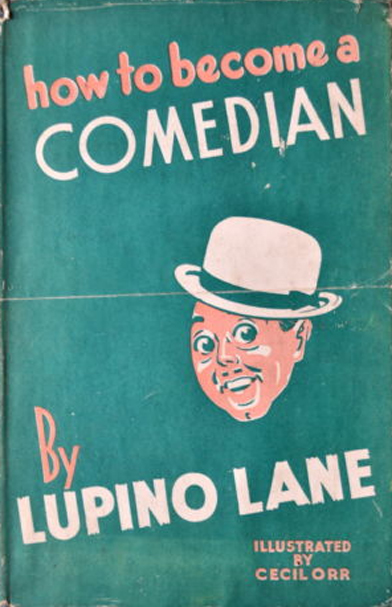
Yes, the blog is back! I’ve pretty much been away from it for a year as I worked on a new book (see sidebar), but I’ve got plenty of new stuff to share. Well, this post’s new stuff is actually quite old, but I’m sure new to most of you: a tutorial on pratfalls from silent film great Lupino Lane’s out-of-print book, How to Become a Comedian.

If you don’t know Lupino Lane (1892–1959), it’s because a lot of his best work is still not available on DVD or YouTube. Growing up in London in the storied Lupino music hall family (dating back to 1612), it was no surprise that he made his stage debut at the age of 4 and was already a seasoned veteran when he made his first film at 23. Lane never developed a clown persona as memorable as that of Chaplin or Keaton (or even Lloyd or Langdon), but he was Keaton’s equal as an acrobat, and Chaplin’s as a dancer, and all three shared an encyclopedic knowledge of physical comedy vocabulary and gags.

Before we get to that tutorial, here’s a clip from Hello, Sailors (1927), co-starring his brother Wallace Lupino, that shows off some of Lane’s acrobatic prowess.

And here’s a spoof of an Apache dance from Fandango (1928). Try to imagine this one with tango music instead!

Yes, Lane was partial to cheap special effects, especially using wires to fly.

Oh yeah, he could sing too. When sound films came in, Lane was better positioned than most for the transition, as he was in some ways more at home in musical comedy than in silent film. No wonder he shows up right away in Ernst Lubitsch’s first talkie, The Love Parade (1929), which starred Maurice Chevalier and Jeanette MacDonald. Here he is with Lillian Roth in a comic turn that showcases all of his talents. (Most of the physical comedy comes after the 2-minute mark.)

After his Hollywood phase in the 20s, Lane returned to England and enjoyed a prosperous film and stage career. In the late 30s he starred in the musical Me and My Girl (a revival made it to Broadway in 1986) for which he created the dance craze “The Lambeth Walk” and became famous all over again. And in 1946 he published How to Become a Comedian. Not necessarily a great book, but a very interesting one, and it does include the following chapter on ”funny falls.”

A lot of standard stuff here, but there are some interesting moves and insights. (Small quibble: I’ve always spelled it “knap,” which Merriam-Webster defines as “to break with a quick blow.”) The instructions are rudimentary at best, so be careful. If you get hurt, I’m not legally liable!

SHARE
EXPLORE FURTHER

The Silent Films of Billy Crystal’s Father

POST 398
Saturday, February 21, 2015

Don’t want to give away the joke, so just watch!

If you haven’t seen it, I highly recommend the source for this clip, Billy Crystal’s one-man autobiographical show, 700 Sundays, available on HBO Go and on DVD. And if you like movies about comedians, I also recommend Crystal’s Mr. Saturday Night (1992).

SHARE
EXPLORE FURTHER

The Comedy Dance of ‪Jirí Kylián‬

POST 396
Saturday, February 14, 2015

Last night I made it out to Triskelion Arts in Williamsburg for a totally fun double-bill of comedy dance with a Valentine’s Day theme, and it got me thinking how some of the best physical comedy is to be found in the world of dance. [The double-bill was the Red Gloves’  Flannery and the Valentine’s Day Ninja, created by Billy Schultz and Geneviève Leloup; and Tough Cookie Dance’s Love Letters, by Josselyn Levinson. If you happen to be reading this on Valentine’s Day in NYC, don’t miss the last performance tonight.]

All of which leads me to the subject of today’s post, the very funny comedy dance of legendary Czech choreographer Jirí Kylián‬, whose main body of work was created with the Nederlands Dans Theater. While most of his work is more “serious,” he has choreographed a few video pieces that I find hysterically funny.

The first two I think are actually excerpts from a 35-minute piece Birth-Day (2001) set to the music of Mozart. Clearly this hyper-kinetic work is made for video. The speeding up of the action is an exaggeration of silent film undercranking, and I’m assuming they were shot with slowed-down Mozart in the background to keep them on the beat. The first high-octane excerpt is this very funny bedroom romp:

And the companion piece, a richly detailed kitchen sketch with slaps, juggling, and percussion layered onto the comic movement and caricatures:

And if you’re thinking I’m going to tell you not to try this at home, well, it’s too late, because the Tel Aviv School of the Arts already did. Here’s a video of their students reprising the piece, but with sevens pair of students each getting their 15 seconds of fame. If nothing else, an interesting classroom project:

Kylian’s love of silent film is even more obvious in a movie he made with director Boris

Paval Conen that combines footage of silent film car chases with modern dancers and actors, filmed in and around an abandoned coal mine in the Czech Republic. It is set to the music of Georges Bizet, and the title of course is Car Men.

I haven’t seen the whole film yet but I have just ordered the DVD. Not sure how all this mayhem translates into a half-hour film, but the descriptions says that the film characters are based on the original Carmen opera. Watch for an update to this post, but meanwhile, here’s a short excerpt that gives some idea of what he’s playing with.

AND MORE:
• Though not comedy, the piece Stamping Ground has a lot of eccentric movement.
• Here’s a 7-minute video where Kylián‬ discusses his study of animal movement in creating characters for his dancers.
• Kylián‬’s web site has a thorough listing of his creations, with video.

SHARE
EXPLORE FURTHER

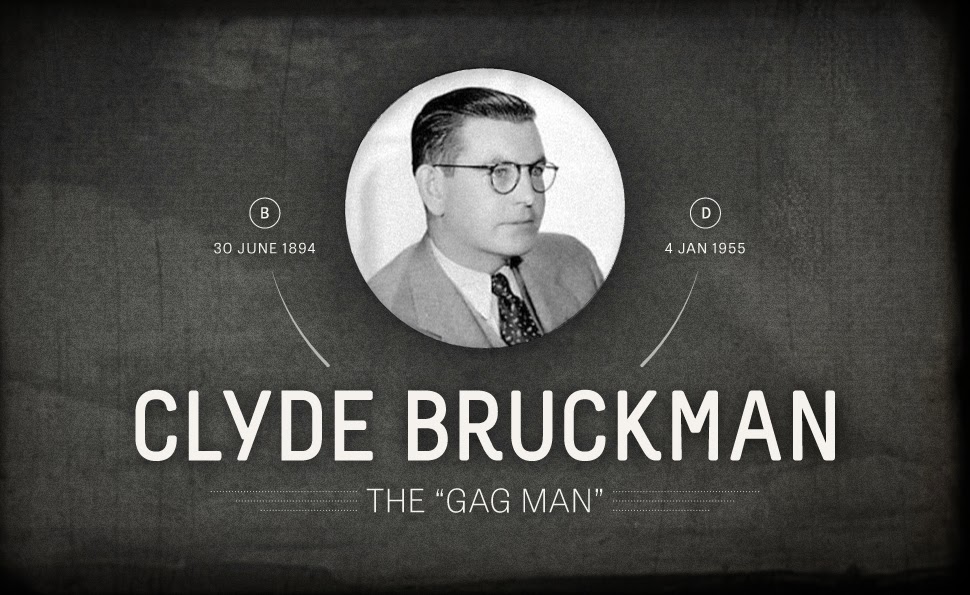
Clyde Bruckman: The Gag Man

POST 383
Monday, June 30, 2014

Today is the 120th birthday of Clyde Bruckman.

Clyde who?

You’ve probably never heard of him because, even in his heyday, he was never actually famous. He was for many years a gag writer for Buster Keaton who also directed for Harold Lloyd, Laurel & Hardy, and W.C. Fields, and wrote for Abbot & Costello and the Three Stooges. In the silent film era and beyond, when the gags often came first in the creative process and the story second, “gag writer” was a recognizable job description.

____________________________

One joke of the time was that Keaton’s employment application consisted of two questions: “Are you a good actor?” and “Are you a good baseball player?” and a passing grade was 50 percent. Brand ran into Bruckman, realized he was a natural fit for Keaton’s studio, arranged a lunch, and Bruckman started the next Monday, in a dual role as “outfielder and writer.”  — Matthew Dessem

____________________________

Being a gag writer also got him into trouble, because when a decade later he recycled Harold Lloyd gags for Three Stooges movies — certainly a common practice at the time — Lloyd sued Columbia Pictures for $1.7 million and “won.” Well, won, but only won $40,000, perhaps enough to pay his lawyers. As somewhat of a physical comedy historian, I’d have to take Bruckman’s side on this one. So many of the gags of that era were lifted from earlier movies, films that it was assumed would never be seen again. And in any case, you can find references to many of these same gags being performed on the variety stage long before the advent of film. Nothing new under the sun. T’ain’t what ya do, it’s the way hows ya do it.

I mention Bruckman today not only because it’s his birthday but as an excuse to encourage you to check out an excellent article on him which sheds some light on how gag writers worked in the 20s and 30s. And all you have to do is click here to read The Gag Man by Matthew Dessem.

SHARE
EXPLORE FURTHER

Book Report: Chain of Fools

POST 376
Thursday, April 17, 2014

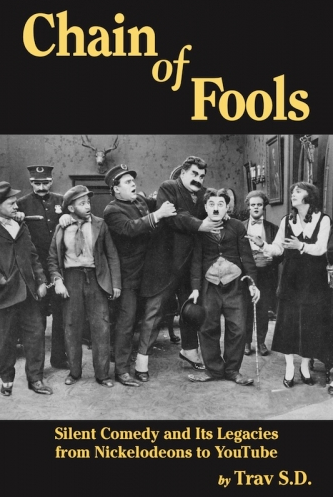
Chain of Fools
Silent Comedy and Its Legacies
from Nickelodeons to YouTube
by Trav S.D.

Trav S.D. —oddly enough named after his gritty home town in the middle of South Dakota’s Badlands — is a so-good-he’s-bad vaudevillian: a performer, producer, historian, popularizer, and blogger whose popular blog Travalanche is a must for the variety arts fan.

I remember when I first came across his book, No Applause, Just Throw Money: The Book that Made Vaudeville Famous. I couldn’t help but think “do we really need another history of vaudeville?” Then I read the book and discovered that the author was a really good writer, a prodigious researcher, and had a fresh slant on his subject matter. When I heard he was publishing a book on silent film comedy, I couldn’t help but think “do we really need another history of silent film comedy?” Then I read the book and… yep, you guessed it.

Trav S.D.

A lot of people read book reviews but don’t read books, but if you’re just the opposite and are already zoning out then let me cut to the chase and simply say that if you’re reading this blog (on purpose) then you’ll probably find Chain of Fools highly entertaining and informative.

Here’s just a few of the things you will like about it:

• I highlighted something on almost every page. It’s just chock full of info that was new to me and very interesting.
• He writes very lively and conversational prose, the kind I like to write but don’t always succeed at. Nothing pedantic here. He searches for and almost always finds an interesting way to say what he has to say.

• He’s very good at context. You really get the feeling what the work and artistic environment must have been for those creating this new medium.
• He makes a convincing case for silent film comedy as a unique art form and not just as a collection of funny performers.
• He doesn’t pretend that every silent film comedy was wonderful.
• He’s strong on the relationship between story and character.

• He appreciates what Paris and French culture meant to the arts and the growth of cinema.
• He makes Mack Sennett very interesting.
• He has fresh insights on many of the comedians; Harry Langdon and Lupino Lane, to name just two.

Any weaknesses, quibbles, reservations?


• It’s sparsely illustrated, and the discussion of individual films will have much more value if you have them on DVD or can find them online. Since he can’t assume you do, a lot of space has to be devoted to plot summaries. He handles them well, but exposition is exposition.
• His pre-cinema comedy history is sketchy and is missing some pretty clear links between the two eras.
• Physical techniques aren’t discussed in any detail.
• Max Linder’s feature films are given short shrift, and some of the comedians of the 40s and 50s (e.g., 3 Stooges; Abbott & Costello; Ritz Brothers; Jerry Lewis) are a little too summarily dismissed for my taste.
• There are a few errors I caught. For example, Keaton’s pole vault in College is lauded, but this was actually performed by gold medalist Lee Barnes, and it was apparently the only time (at least in the silent era) when Keaton used a stunt double. That being said, there’s no reason to doubt the overall accuracy of the work.

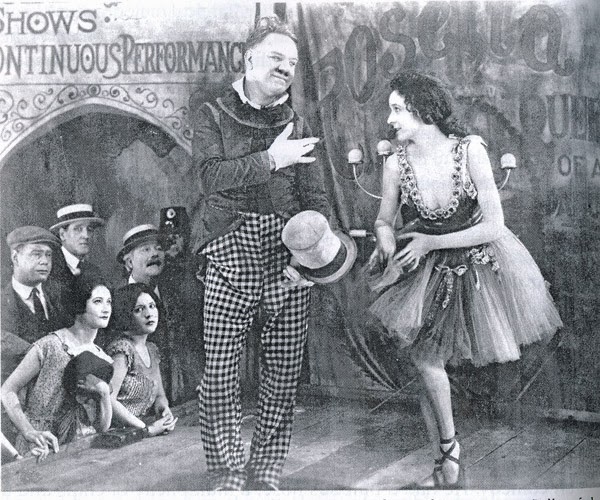
W.C. Fields in Sally of the Sawdust

Here are a few samples of his excellent writing:

I tend to think of Keaton as a verb; Chaplin as a noun.


This principle of ultimate action, of perpetual motion, was not discovered overnight, but came gradually, experimentally, in the same way Jackson Pollock arrived at drip painting or Charlie Parker came to bebop. It was a process of taking matters a little further, a little further, a little further over dozens of films until Sennett hit a new comedy dimension that looked like universal chaos.


There was very little precedent for what Sennett would now attempt. This would be the first time in history a studio head would endeavor to staff an entire company with absurd types. Sennett’s comedians resembled human cartoons: fat men, bean poles, vamps, men with funny mustaches, matronly wives and mothers-in-law wielding rolling pins and umbrellas; geezers with canes and long beards, bratty children with enormous lollipops. Diminutive heroes; terrifyingly large villains.


Keaton’s character may have a place in society, but he realizes that this is no guarantee of security or even tranquiity. What about the safe that may fall on your head? Or conversely, the wallet full of money that may miraculously fall into your hands. Rich or poor makes no difference. Fate makes playthings of us all. Man plans. God laughs. Keaton seems to feel no need to comfort us about this. No one emerges to make things better. The world is  cruel, capricious, barren of any special benevolence. It is this lack of faith or optimism perhaps that causes Keaton’s comedies to speak more to our time than to his own, and made him a big hit with European audiences even as many Americans were scratching their heads.

______________________

You can buy Chain of Fools here.

SHARE
EXPLORE FURTHER

Cut to the Chase: The Police vs. Rémi Gaillard

POST 351
Monday, January 20, 2014

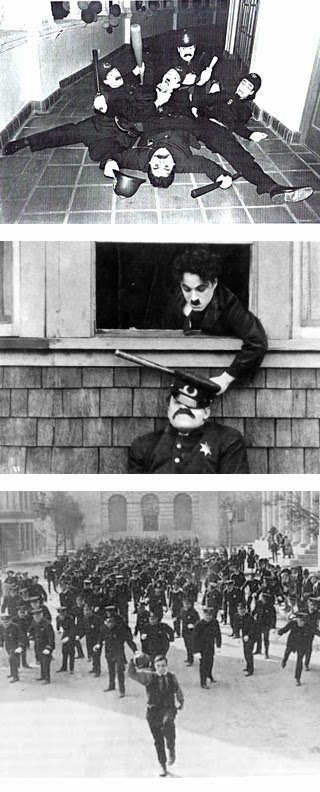
Just over 100 years ago ago, Mack Sennett hit cinema pay dirt and spawned American silent film comedy when he introduced audiences to the hapless Keystone Cops, forever the butt of the joke. Chaplin and Keaton and their fellow silent film comedians likewise mocked police incompetence and, more politically, condemned at least implicitly their treatment of the underdog. Nowadays such attitudes are rarer in film comedy, but certainly not in the work of French prankster and provocateur Rémi Gaillard, whose YouTube videos have had over a billion hits.

Here’s one of his most popular compilations, showing his joy at taunting the police in segments reminiscent of those early chase scenes where the cops were doing all the chasing. “I do it for France!” Gaillard is fond of shouting. Ha!

You can see many, many more videos at his web site, and of course buy tons of anarchistic merchandise.

SHARE
EXPLORE FURTHER

A New Orson Welles Silent Film Comedy!

POST 333
Wednesday, August 7, 2013
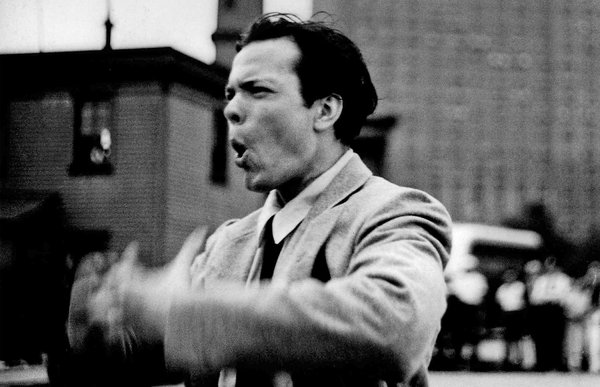
Orson Welles directing Too Much Johnson in lower Manhattan around 1938.

Huh? Orson Welles? The guy whose “first film” Citizen Kane made movie history in 1941?

Yep.

It was reported today that an early effort by Welles, Too Much Johnson, has been recovered in Italy and is currently being restored. The 40 minutes of footage shot in 1938 was to be shown as part of a live theatrical performance, an early mixed-media event. The show closed out of town, the editing of the film was never quite completed, and what was thought to be the only copy was lost in a fire. But here’s the intriguing part, at least for this blog. According to the NY Times

Each act of the play… was to begin with a film segment. The first (and most nearly completed in the rediscovered print) was a chase across Lower Manhattan shot in the style of a silent comedy, complete with Keystone Kop-like pursuers, a suffragist parade to barrel through and Cotten tottering on the edge of a skyscraper like Harold Lloyd in “Safety Last.”

We’ll have to wait until October for the first screening, but you can read the whole article here.

SHARE
EXPLORE FURTHER

“Arrested Development” Channels Buster Keaton

POST 285
Wednesday, October 10, 2012

One of Buster Keaton’s most famous (and dangerous) gags was standing obliviously in the path of a falling side of a house in Steamboat Bill, Jr. (1928).

Yes, the stunt was real and was based on precise measurements. The wall could have killed him.

Fast forward to season 2, episode 2 of the tv show Arrested Development, where a character named Buster tries to have a house fall on him to get out of going into the army, but again a (larger) window saves him.

Buster’s one of the regular characters on the show, so the name wasn’t created for this episode. In fact, maybe the character’s name gave them the idea.

Thanks to Riley Kellogg for the link!

UPDATE (Nov. 29, 2012): Click here for a new post on more revivals of this classic Keaton stunt!

SHARE
EXPLORE FURTHER
Check out My New Book

Visual and verbal humor for the cognitively and artistically curious!

“A book to treasure!”
—Bill Irwin

Upcoming Events