Your 3 Santas: Hovey Burgess (left), Mr. Clown (center), and yours truly
Here’s a Winter Solstice-Chanukah-Christmas-Kwanza-New Year’s present for you, a compilation of Santa’s favorite physical comedy acts. This year you’re being gifted self-contained acts, not physical comedy that’s part of a narrative, which is why there are no movie clips from Keaton, Chaplin, Lloyd, and the rest of the gang in your stocking. Sure, some of these 13 acts are from movies, but they were just snuck in there like whiskey in the eggnog to punch things up. So off we go, in no particular order. Happier holidays!
Larraine & Rognan
Her name is often listed as “Lorraine” but her actual name was Jean Larraine. Either way, she’s fabulous. If you’ve never heard of them, that’s because their career ended tragically in an airplane crash that killed him and left her with injuries too severe to continue dancing. You can read more about them in this previous blog post.
Walter Dare Wahl & Emmet Oldfield
I love the movement imagination of these guys. So inventive! Donald O’Connor: Make ’em Laugh
You could make a case for this being the best physical comedy act ever. It’s got everything but the kitchen sink. I wrote a lot more about it here.
The Mathurins
HIgh-speed, high-caliber comedy acrobatics (even if the host says “it looks easy”). Not big on character, but boy do you get your money’s worth!
George Carl There are many versions of this amazing act available online, and I’m sure you’ve all seen at least one. Still, Santa would be remiss to leave him off the list.
Charlie Rivel: Comedy Trapeze
The legendary Catalonian clown could do it all. This is from the movie, Acrobat-Oh!
Red Skelton: Guzzler’s Gin (“Smooth!”)
Perhaps the classic drunk act. For more on Red Skelton, see my previous post.
Dick Van Dyke & Rose Marie: Mary’s Drunk Uncle
I came across this piece since I wrote this post and this postabout Van Dyke. As with Jean Lorraine, what I absolutely love here is Van Dyke’s back-and-forth between two states of being.
Beijing Opera: The Fight in the Dark
This one goes back centuries, but it’s a masterpiece of physical dexterity. This is the tradition Jackie Chan came from, and it’s easy to see the connections. Fifteen minutes long, and it’s not all comedy, but it’s great.
The Wiere Brothers
A recent discovery, which you can read all about here, and see lots more videos.
Lupino Lane with Lillian Roth (The Love Parade, 1929)
Lupino Lane was one of the great silent film comedians, although his characters never registered as strongly as those of Keaton or Chaplin. He was, however, every bit their match as a physical comedian. A member of the legendary Lupino family, with theatre lineage dating back to the pantomime days of Joseph Grimaldi, he was a superb dancer and acrobat. As it turned out, he could also sing and act well enough to survive the transition to sound. Lubitsch’s Love Parade, starring Maurice Chevalier and Jeanette McDonald, was one of the first good movie musicals, and it signaled Lane’s new career direction. Shortly thereafter he left Hollywood and returned to London, where he remained a star on stage and screen for decades. Lots more on Lane hereand here.
The Jovers (1980)
Here’s proof that you don’t have to be skinny and you don’t have to have 15 tricks in a row to do good physical comedy. (Not that there’s anything wrong with that!)
Alrighty then, that’s twelve, one for each day of Christmas, but let’s make this a baker’s dozen in honor of all the people who never bake the rest of the year but are churning out cookies for Santa while we lazily sit around watching these videos.
Wilson & Keppel
Long before Steve Martin’s King Tut, there was this sublimely silly sand dance performed by Jack Wilson, born in Liverpool in 1894, and Joe Keppel, born in Ireland a year later. Wilson and Keppel first performed together in New York in March 1919 as a comedy acrobatic and tap dancing act in vaudeville, and continued working together until 1963. Yep, that’s 44 years together.
Way back in the day, 1980 to be precise, when I was working with Joe Killian and Michael Zerphy, whenever we saw other performers do a bit we really liked, we’d say “consider it stolen!” I think the phrase originated with Joe, but he may have stolen it.
You know what they say, there’s nothing new under the sun, and that mostly holds true for physical comedy. I’m always amused, for example, when the Marx Brothers (or even Lucille Ball) are given credit for originating the broken mirror routine (Duck Soup), when in fact it not only appears in many early silent film comedies, but is referenced in even earlier reviews of vaudeville acts. Sure, there’s originality, but there’s a whole lot of borrowing going on and —if we’re lucky— creative reshaping of traditional materials.
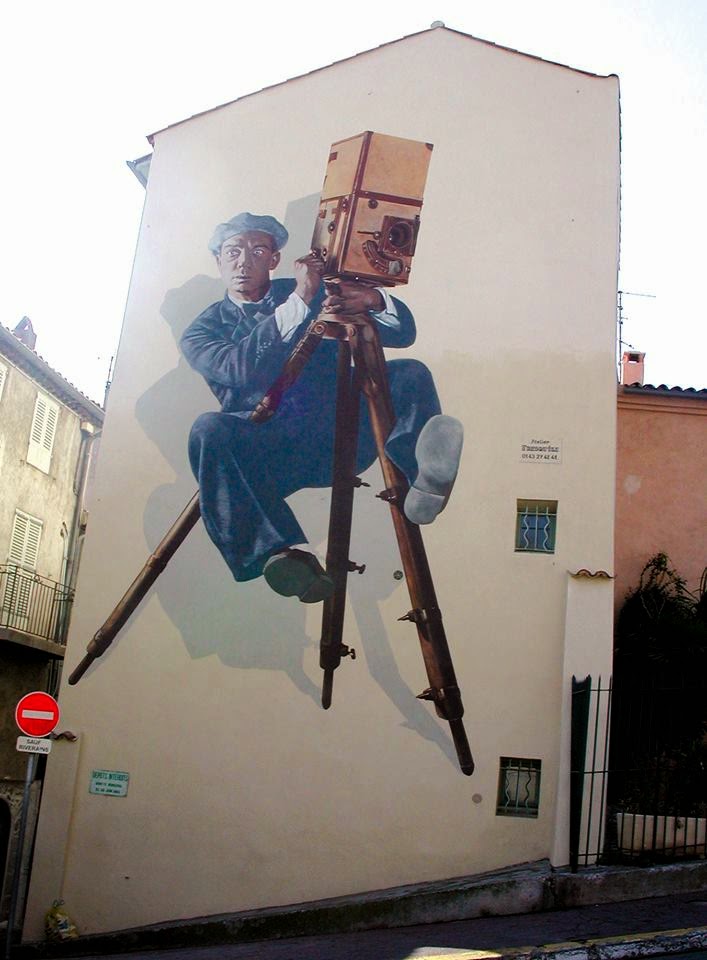
Keaton as The Cameraman
The historian-detective in me has enjoyed tracing this kind of thing, for example in this post on what I call the oblivious gag. My return to this theme is inspired by some excellent detective work done by silent film pianist and historian Ben Model, showing how Singin’ in the Rain (1952)borrowed from Buster Keaton’s The Cameraman (1928). But we’ll get to that juicy discovery a bit later…
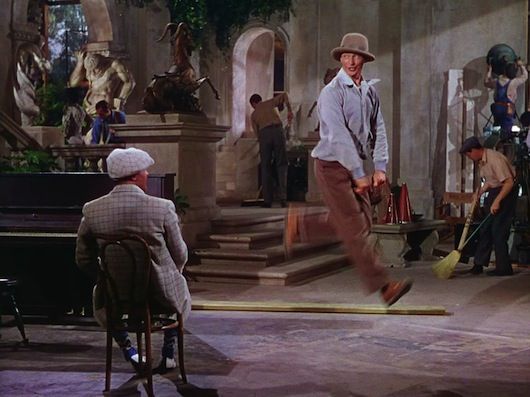
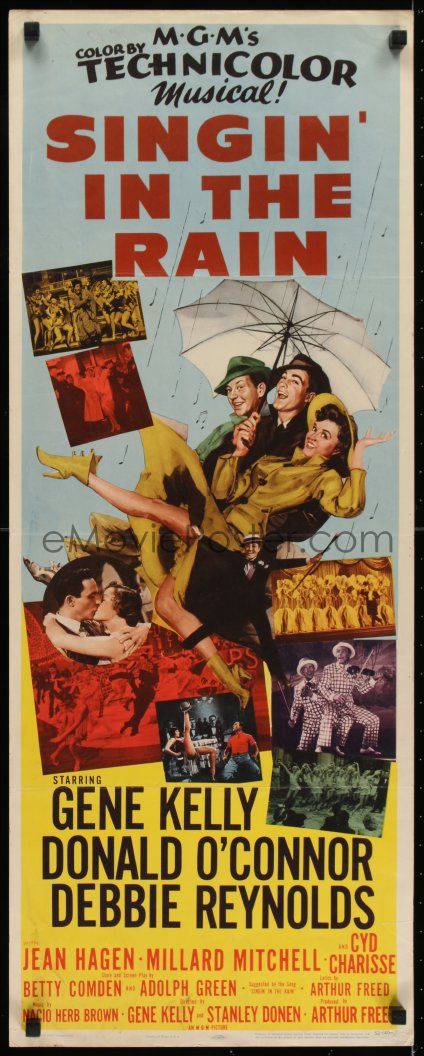
You all know Singin’ in the Rain, right? If not, you’re in for a treat! It’s a corny but delightful MGM musical from1952 starring Gene Kelly, Debbie Reynolds, and Donald O’Connor, all about the rough transition from silent film to sound. The remarkable thing about Singin’ in the Rain is that it began not as a story idea but as a musical woven around old songs, but also a musical partially woven around old physical comedy material.
The big musical link was Arthur Freed. As Cecil Adams points out in thisStraight Dope article, “Freed, the producer responsible for most of the MGM musicals of the 40s and 50s, began his career as a songwriter. “Singin’ in the Rain” was part of Brown and Freed’s score for MGM’s first “all talking, all singing, all dancing” musical, The Hollywood Revue of 1929. In 1952, Freed decided to use his own songbook as the basis for an original musical, as he had done with Jerome Kern’s songs in 1946 (Till the Clouds Roll By) and George Gershwin’s in 1951 (An American in Paris).”
They had Freed’s songs, might as well shape a show around them!
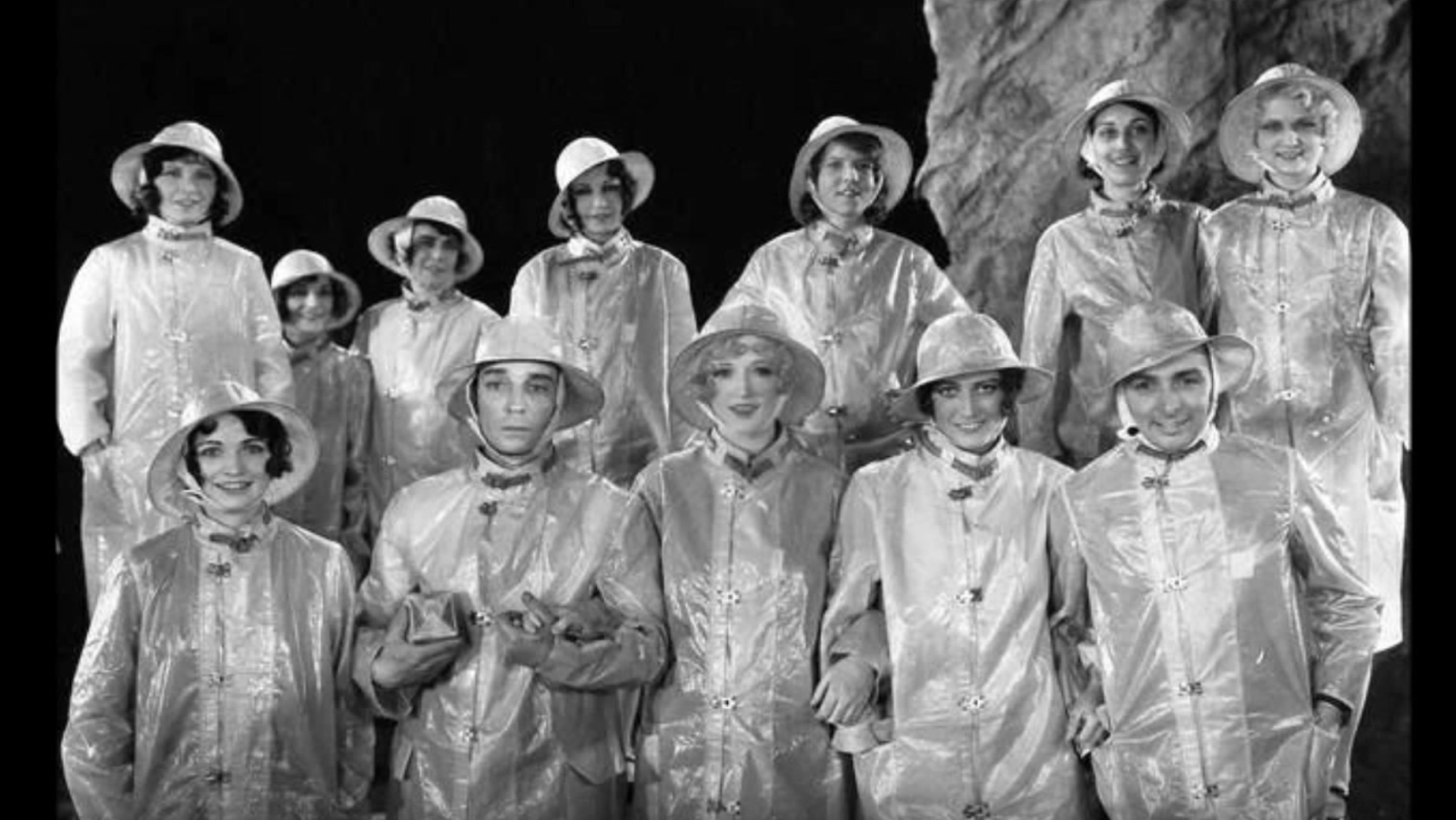
So the song Singin’ in the Rain goes all the way back to one of the two first big MGM musicals of the sound era, which featured “30 MGM stars! More Stars Than There Are in Heaven!” Here it is, the show’s big finale:
Not only did the songs come first, but the fact that they all came from the late 1920s gave screenwriters Comden & Green the idea for the story. According to this piece on the Cafe Songbook site, “Betty Comden and Adolph Green returned to M-G-M in May of 1950 to begin work on the screenplay for the movie they had been contracted to write, believing they were also contracted to write the lyrics for its songs. M-G-M clarified the terms of the contract to them. It was the studio’s option regarding the lyrics and M-G-M’s choice was that all the songs would be by the songwriting team of Arthur Freed (the film’s producer) and Nacio Herb Brown, his songwriting partner. Furthermore, they would be almost exclusively songs from their existing catalog. While looking at these songs, Comden and Green noticed that Freed-Brown songs such as “Should I?,” “All I Do Is Dream of You,” “Good Morning,” You Were Meant for me,” “You Are My Lucky Star,” “Singin’ in the Rain,” etc. were written in the late twenties which gave them the idea to create a story that came from that period; and the lynch pin of the plot they created was based on the disastrous results that sometimes occurred when silent screen actors and actresses were forced to talk on screen, to be heard no matter how awful they might sound.”
All these songs made it into the film, or should I say “made the film”?
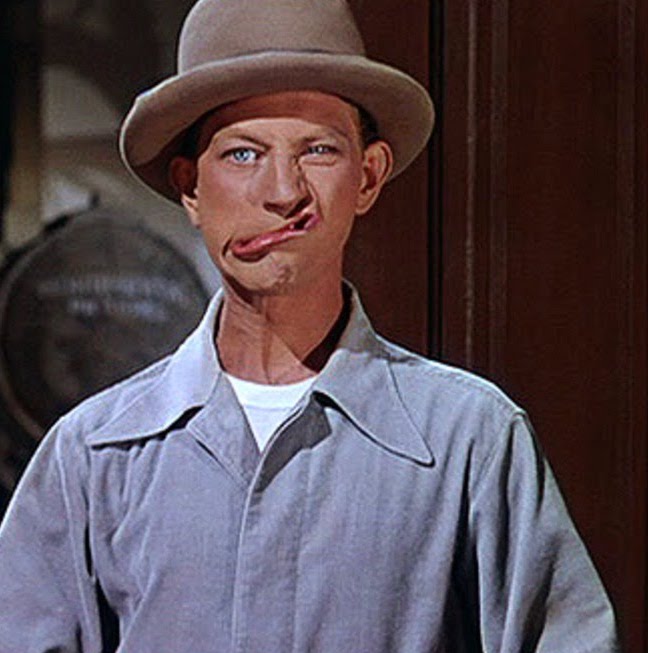
Donald O’Connor
A Tale of Two Tunes
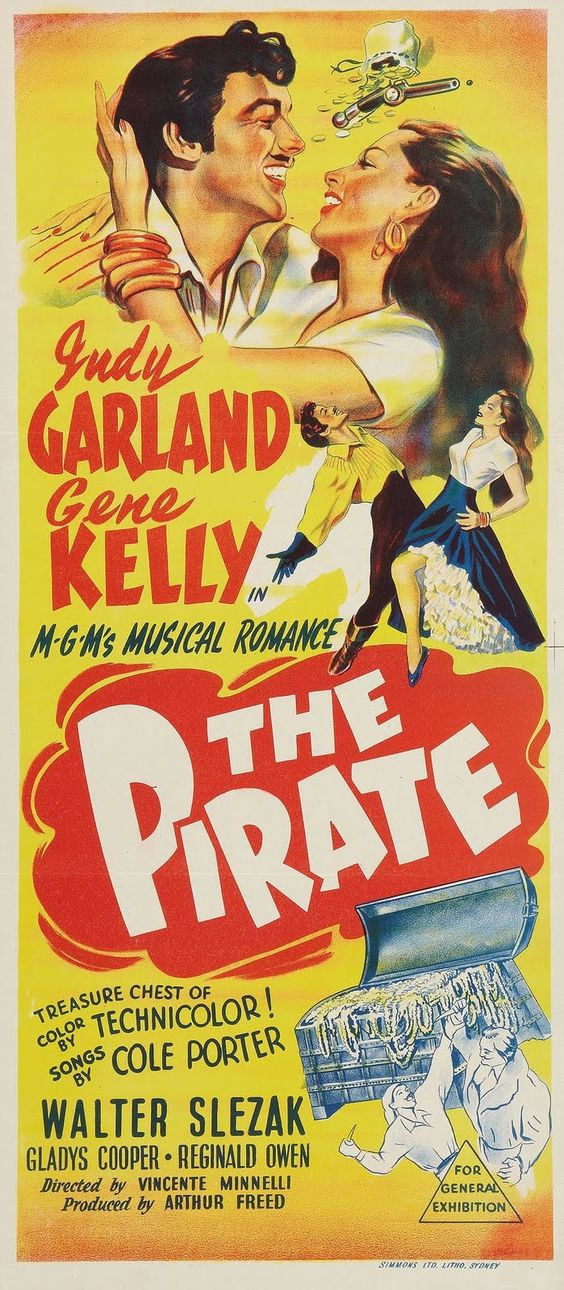
The film was coming together, but co-director Stanley Donen still wanted a solo number for Donald O’Connor, who played Gene Kelly’s comic sidekick and was a talented and very physical comedian. In fact, O’Connor’s parents were vaudevillians, his father an Irish-born circus strongman, dancer, and comedian, and his mother a circus acrobat, bareback rider, tightrope walker, and dancer. There was nothing in the Arthur Freed oeuvre that fit, but that didn’t stop MGM from doing some more borrowing. They just went back to an earlier MGM movie starring Gene Kelly, The Pirate (1948), and “borrowed” from Cole Porter instead.
Again according to Cecil Adams, “Donen suggested that Brown and Freed write a new song, pointing to Porter’s “Be a Clown” as the sort of thing he thought would fit in at that point in the script. Brown and Freed obliged —maybe too well— with “Make ‘Em Laugh.” Donen called it “100 percent plagiarism,” but Freed was the boss and the song went into the film. Cole Porter never sued, although he obviously had grounds enough. Apparently he was still grateful to Freed for giving him the assignment for The Pirate at a time when Porter’s career was suffering from two consecutive Broadway flops.”
Grateful, or simply too afraid of MGM’s power?
So that’s the background. Ironically, Kelly sang the original “Be a Clown” song, and in Make ’em Laugh, it is O’Connor singing to cheer up Kelly’s character. Here’s a short comparison, brief excerpts from each so you can see the similarity between the two tunes and the message.
But it’s not just the tune that was lifted. The Make ‘en Laugh lyrics directly paraphrase those of Be a Clown. Clever but barely disguised plagiarism:
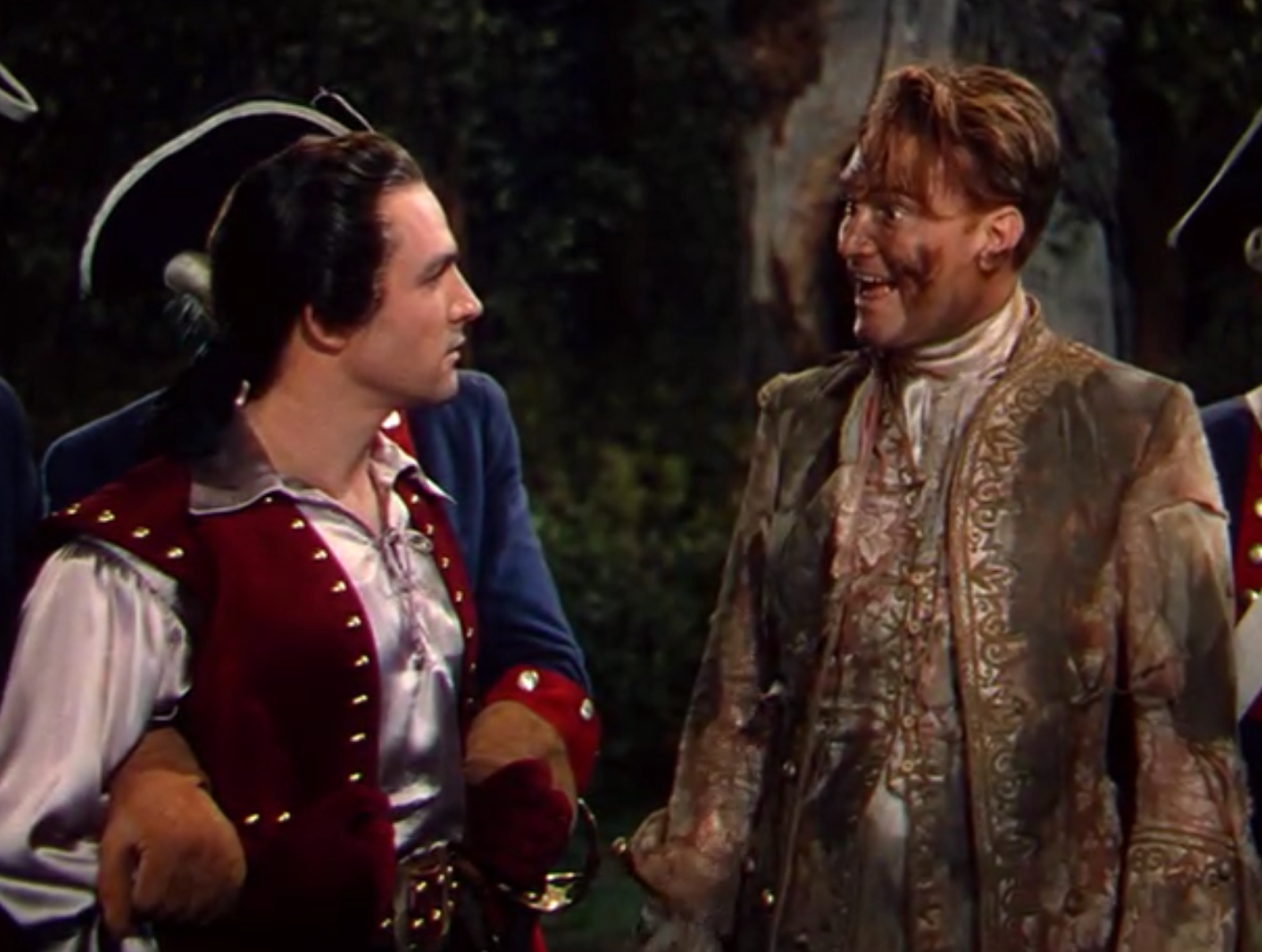
In The Pirate, Kelly is about to be hung by his neck in the town square. O’Connor quotes what that immortal bard, Samuel J. Snodgrass, said “as he was about to be led to the guillotine.”
While O’Connor’s dad advised him to “be an actor my son, but be a comical one,” Kelly was only three when his “clever” mom told him “I’ve got your future sewn up if you take this advice: be a clown, be a clown.”
And why go into the funny business? Because you’ll get rich, unlike in those other more effete professions. Kelly’s mom asks him “Why be a great composer with your rent in arrears? Why be a major poet and you’ll owe it for years? A college education I should never propose. A bachelor’s degree won’t even keep you in clothes.” Likewise, O’Connor’s dad warns him that “you could study Shakespeare and be quite elite, and you could charm the critics and have nothing to eat.”
But if you’re funny, what happens? Kelly is promised a bright future where he’ll “only stop with top folks” and “he’ll never lack” and “millions you will win.” O’Connor likewise will have “the world at your feet.”
Okay, sounds good. But what does it take to be funny? Kelly’s clown is instructed to…
• show ‘em tricks, tell ‘em jokes
• wear the cap and the bells
• be a crack Jackanapes
• give ’em quips, give ’em fun
• act the fool, play the calf
• stand on your head
• wiggle your ears
• wear a painted mustache
• spin on your nose
• quack like a duck
O’Connor’s comical actor must…
• slip on a banana peel
• [perform] old honky-tonk monkeyshines
• tell ‘em a joke, but give it plenty of hoke.
• take a fall, butt a wall, split a seam.
• start off by pretending you’re a dancer with grace, wiggle till they’re giggling all over the place, then get a great big custard pie in the face
The actual acts differ more than the lyrics because they are structured around the individual talents of the performers. “Be a Clown” actually is done twice in The Pirate, first with Kelly and the fabulous Nicklaus Brothers, and is later reprised by Kelly and Judy Garland. In both cases, it’s a partner number with more of a dance base to it. O’Connor, on the other hand, is both a better comedian and a far more skilled acrobat. The result, one of the greatest physical comedy acts ever, became his signature piece.
Here are the complete versions. Enjoy!
Be a Clown #1 (Kelly & the Nicklaus Brothers)
Be a Clown #2 (Kelly & Judy Garland)
Make ’em Laugh
The Plot Thickens
Keaton & Josephine the
monkey in The Cameraman
But that’s just the beginning! As I said at the top, this blog post got jump-started by Ben Model unearthing a less obvious and even more fascinating Singin’ in the Rain borrow. And this one is all the juicier because it involves our hero, Buster Keaton.
Take it away, Ben…
Wow! Like I said, great detective work. And as if that wasn’t amazing enough, think back to the original version of the song from The Hollywood Revue of 1929. In that cavalcade of stars, did you notice the one luminary who couldn’t / wouldn’t have “a smile on his face”? Yep, that’s “the great stoneface” himself at the 39-second mark.
The one thing I would add to Ben’s chronology is that in the years before Singin’ in the Rain (1952), Keaton was an uncredited gag writer for a bunch of MGM movies, including the Marx. Brothers, but especially a slew of Red Skelton vehicles, right up to his 1950 Watch the Birdie, which was partially a remake of The Cameraman, and two more 1951 Skelton films. So if Keaton wasn’t directly consulted on Singin’ in the Rain, he was certainly still a presence at the studio. It was also in 1950 that his appearance on the Ed Wynn Show led to a lot of work on early television and made him less dependent on the Hollywood film industry.
Kelly & Skelton in Du Barry Was a Lady
And speaking of Red Skelton…
A talented pantomimist, Red Skelton, like Keaton, had grown up in show business, performing in medicine shows at the age of ten, and later burlesque and vaudeville. Keaton’s work with him in the 1940s would be enough to fill another blog post (don’t get me started!), but there are a couple of possible links between Skelton and Singin’ in the Rain. Gene Kelly’s “Broadway Ballet” fantasy sequence was apparently based on an idea that was used for MGM’s Du Barry Was a Lady (1943), starring Skelton as a nightclub worker who dreams that he’s King Louis XV. And who was his romantic rival for Lucille Ball’s affections in that one? Gene Kelly, natch. (And before the film, it was a Broadway musical starring Bert Lahr chasing Ethel Merman.)
But even more interesting than that is the similarity between some of Skelton’s pratfall moves from Du Barry and those of O’Connor, as seen in this comparison video. In the first part, Skelton and friend think they have tricked Gene Kelly into downing the drink with the Mickey Finn, but (of course!) the glasses have been switched, which leads to Skelton’s wonderful drunk pratfall sequence. Skeleton is drunk, O’Conner is giddy, but the writhing around and the circular movements when on their side on the floor are strikingly similar.
Did O’Connor borrow this? Who knows? —but not necessarily. It’s just as likely that these moves were standard fare. After all, the 108 pratfall was also common property (if you could do it!). Still, you need someone to preserve the vocabulary, and in the yakkety-yak-yak 1940s, that someone may well have been Red Skelton.
Of course, once you start making these connections, it’s endless —ancestry.com run amok— so I’ll stop the narrative here and just leave you with a few tidbits for dessert…
• When they made the biopic The Buster Keaton Story in 1957, can you guess who played Keaton? Dramatic pause. Are you really guessing? Space filler. Space filler Space filler. More space filler. Even more space filler. Yep, Donald O’Connor. This stuff’s downright incestuous.
• Trav SD points outthat Singin’ in the Rain producer/songwriter Arthur Freed wrote material for the Marx Brothers’ act and performed in their sketches way back in their vaudeville days.
• As for the Nicklaus Brothers, according to Wikipedia “this dance sequence was omitted when shown in some cities in the South, such as Memphis, because it featured black performers the Nicholas Brothers, Fayard and Harold, dancing with Kelly. It was the first time they had danced onscreen with a Caucasian, and while it was Kelly’s insistence that they perform with him, they were the ones who were punished. Essentially blackballed, they moved to Europe and did not return until the mid-60s.”
• Kevin Kline does his own version of “Be a Clown” in the 2004 Cole Porter biopic, De-Lovely. Interesting enough and a much bigger production number.
• In 2006 or so, Volkswagon did this commercialwhere they remade Gene Kelly’s dance in the rain, using his face and choreography but a break dancer’s body and moves. Very interesting!
• Anthony Balducci, whose Journal blog I highly recommend, has an excellent pieceabout gag borrowing/ stealing, with some interesting comparisons between the tv work of Ernie Kovacs and the sketches of the British comedy duo Morecambe & Wise.
• Braggedy-brag-brag, but my personal show-biz DNA intersects with several of the performers mentioned here:
—My first acting job was just days past my 7th birthday, a skit with Skelton and Jackie Gleason on the Red Skelton Show. Skelton had worked extensively with Keaton, and Keaton had done a version of clown Sliver Oakley’s classic one-man baseball pantomime in The Cameraman. The skit I did with Gleason & Skelton was —yep!— about a baseball game. Also, around this time, Skelton did some research for creating his Freddie the Freeloader tramp clown. He visited Coney Island and studied the clown Freddy the Tramp, later “borrowing” some of his bits for his new character. Freddy the Tramp was the father of my long-time clown partner, Fred Yockers. When Fred, Jan Greenfield, and I started the First NY International Clown-Theatre Festival in 1983, Skelton agreed to be honorary chairperson, though we never actually got to speak with him.
—Keaton was on the Ed Wynn Show in 1950, and I was on a tv show with Wynn about nine years later. (There’s no way telling which of us Wynn preferred working with.)
— In The Pirate, the great character actor Walter Slezak played the town mayor who (spoiler alert!) is really the pirate Macoco. In 1958 I acted with Slezak on “Beaver Patrol,” a comic drama on the U.S. Steel Hour about an eccentric New York uncle who visits relatives in Beverly Hills, takes over a scout troupe, and teaches the spoiled rich kids gritty New York City stuff. Yes, I’m the one looking at the camera. I do remember Slezak as being very affable and a pleasure to work with.
I am pleased to be able to introduce a new contributor to this blog who, like my other guest writers, knows a lot of stuff that I don’t. Ashley Griffin is a writer, actor, singer, and dancer whose expertise is in the area of musical theatre, the history of which she has taught at New York University. She has performed on- and off-Broadway as well as in Los Angeles, Chicago, and London. Her plays have been produced off-Broadway, in L.A, and Chicago, and she is most well known as the creator of the pop-culture phenomenon Twilight: The Unauthorized Musical Parody. Ashley has a long-time interest in circus, clowning, and physical comedy, and one of her current projects is a collaboration withJoel Jeskeon a physical comedy version of Alice in Wonderland. — jt
_______________________________________
Donald O’Connor in Singing in the Rain
When John asked me to write a guest post about physical comedy in musical theatre, I instantly started brainstorming on all the wonderful performers and shows I would reference, all the great examples I would pull out like….um…well…that one thing in…no…wait…um…uh…shoot. Wait, that’s not right! Musical theater was, at least partly, founded with physical comedy as one of its main elements. It’s a staple, right? Let’s go back a bit….
In essence, the American musical was created out of two very different art forms that were popular in the early 1900s: operetta, and ethnic theatre. As I discussed in my blog entry Changed For Good – or The Famous Thesis, operetta, a lighter version of traditional opera (think Babes in Toyland) was considered sophisticated entertainment.
Operetta was the basis for the traditional musical theatre form – a narrative story told through song, occasionally employing dialogue in between numbers. Ethnic theater – especially Yiddish and Jewish theater — was thriving in America at the same time as operetta, and was hugely popular. It was, however, often looked down upon as “low” theater, and not respected the same way operetta was.
This dichotomy has found its way into contemporary musical theater, where it seems all shows are either delegated to the “high art” category (think The Light in the Piazza, or anything Sondheim) or the “popular, financially successful” category (think Mamma Mia! and Cats.) It seems that as far as the critics are concerned, never the twain shall meet, although there have been some rare “grey area” shows that might fall into both categories.
Though physical comedy was not a huge staple of operetta, it was all but mandatory in ethnic theater, which in general was far more comedy-based. It was this type of theater that eventually developed into vaudeville in the 1920s and 30s. In fact, physical comedy was such a staple that almost all the famous silent movie comedians began their careers in vaudeville. Vaudeville was not what we would currently term “musical theater.” There was not a single narrative — in fact it was made up of a collection of “acts.” Some of these acts, however, did have mini-narratives, and might even use music to tell their story. Some of these sketches became so popular; they eventually evolved into full-length pieces.
The most famous example of this was the Marx Brothers, who began their career in vaudeville, pairing their natural comic talent with their adept musical skill. They became so famous that in the early 1920s they were asked to create a full length review, I’ll Say She Is, which was followed by The Cocoanuts and then Animal Crackers – both Broadway musicals (with music and lyrics by Irving Berlin, no less) that went on to become classic films.
The physical comedy genius of the Marx brothers has been brilliantly analyzed by writers far more knowledgeable of the subject then me. But what is unusual in terms of the musical form is how much they rely on physicality not for gags (though they do that) but to advance the story, create the world, and develop character. They almost use a comic physicality to replace dance — which traditionally has been the third component of the “integrated musical” — the “physical” component along with singing, and acting. Harpo, for example, never speaks a word.
After that, the waters get a bit murky. While the “first” musical is generally agreed to have been The Black Crook, it was Show Boat that truly began paving the way to what we now consider the classical musical. Show Boat was every inch an operetta and, indeed, that’s the direction musicals have been heading ever since. In fact, quite a bit of the comedy in the late 20s / early 30s on Broadway was found in review shows like The Garrick Gaieties – the SNL of their day (though there were certainly comic musicals, for example Good News in the 1920s, and Babes in Arms in the 1930s.) But there was a strong trend in the 30s towards verbal comedy, and parody as opposed to physical. While film saw the rise of screwball comedies, in general American entertainment reacted to the Depression with a desire for glamor and escapism.
The 40s and 50s ushered in the “Golden Age of Broadway,” largely heralded by the collaboration of Rodgers and Hammerstein. Although their shows were landmarks, none could really be described as funny, although South Pacific (which won the Pulitzer Prize) does open act two with a holiday performance put on by the nurses and Seabees, which includes a drag performance of “Honey Bun” with nurse Nellie dressed as a sailor, and one of the sailors dressed as the “honey bun” of the song — complete with coconut bra and grass skirt.
Another gender-reversed comic moment occurred around the same time in the musical White Christmas, which was a film musical first, long before it was recently adapted for the stage. In White Christmas, the male leads first encounter the female leads when the two girls perform a song called “Sisters” as part of their nightclub routine. Later, in order to help the girls escape from the police, the guys wind up taking their places in the act — creating comic hilarity when they begrudgingly perform the girl’s number to the “t.”
There is also of course the classic number “Make ‘em Laugh” from Singing in the Rain, which was also a film long before it was on the stage.
“Make ‘em Laugh” was in itself a deliberate reference to “Be a Clown” from The Pirate – also a movie, never a stage musical.
Are we noticing a pattern here? Film has a great history of physical comedy. Theater…well…kind of stumbled along the way. Or at least, we don’t have hard evidence to the contrary.
Part of the difficulty of commenting on physical comedy in musical theater, especially during this time period, is in a lack of recorded performance. Most physical comedy is not written down. Even when an entire sketch is nothing but physical comedy, it is usually written as a simple outline meant to help the performers remember the order of actions. A talented physical comedian could turn the stage direction “he goes to the mirror and shaves” into a half-hour, riotous routine.
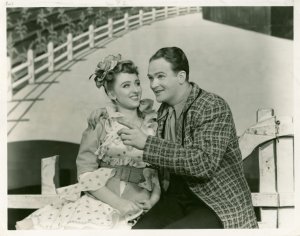
The original Ado Annie (Celeste Holm) from Oklahoma
Film is forever — and we can easily find the physical comedy in films from the beginning of the medium onwards. We have almost no visual record of most live musical theater shows written before the 1970s — and therefore only have the scripts to go by. And the scripts are not much help. For example, “classic” musicals are somewhat characterized by their character structure of having two principle “romantic leads” and the secondary “comic leads.” In Oklahoma, Laurie and Curly are the romantic leads, and Will and Ado Annie are the comic leads. I’ve seen Ado Annie played completely deadpan, and with raucous physicality – and both are hysterical. However, one is physical comedy, and the other is not. It’s up to the performer, and not dictated by the material. And we don’t have records of a lot of performances.
The further we get away from vaudeville, the further the musical gets away from physical comedy. We get comic moments, certainly, but nothing groundbreaking, or revolutionary or, sadly, hardly ever relevant to the plot. Ado Annie can certainly be played by a physical comedian; but if it’s not, it won’t devastate the show. This of course leads me to ask: why is this so? Well, my personal experience leads me to conclude this:
Being a musical theater performer requires an immense amount of training in many different fields. First you have to sing. And especially today, you can’t just sing – if you’re a girl you have to belt, and sing legit. Then you have to act. And you have to dance — that includes at bare minimum tap, jazz, and ballet. Each of those elements could take up a lifetime of study. As it is in most musical theater training programs, acting seems to fall by the wayside. Nowadays you practically have to play an instrument too. (You can’t audition for Once or, well, any John Doyle production if you don’t.) And it helps to know aerial acrobatics and gymnastics. You know, for Spiderman, Wicked, Peter Pan, The Pirate Queen, and every vampire musical. Learning physical comedy is not a casual skill you can just “pick up.” The amount of work required to be really good at it is one reason it’s probably not emphasized, at least in training programs.
Then there’s also the issue of musical theater and “high art.” Physical comedy is a vocabulary in and of itself that, to be truly incorporated into a musical, would not only have to have performers capable of doing it, but writers who are adept at writing it. All musical theater writers have to be incredibly well trained in music theory, composition, etc. Book writers analyze structure. To truly incorporate physical comedy means being fluent in it. That’s much easier in a traditional physical comedy show where the performer almost always has a hand in creating a piece. In musical theater, a team of people write a show, then give it to actors who are expected to, yes, bring themselves to a role, but most importantly translate the vision of the writer(s) and director(s). Either the writers have to write a piece with physical comedy clearly in it, then find performers who can sing, act, dance, and do physical comedy, or else an actor might find one or two small moments to bring in some physical comedy, but it’s never going to completely define the role, or the show.
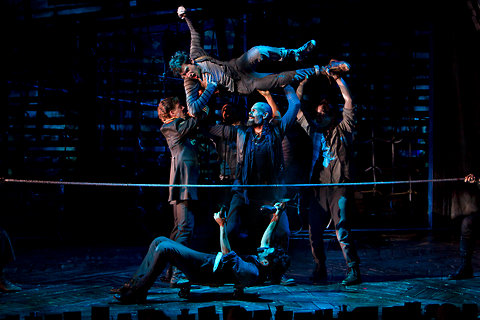
from the original off-Broadway production of Peter and the Starcatcher
This seems to be at least slightly different with plays as opposed to musicals – we all know and love Noises Off – but that was written as a farce. Robin Williams, Steve Martin, and Bill Irwin did a Broadway revival of Waiting for Godot that used quite extensive physical comedy — but those were adept physical comedians who were allowed to reinterpret a text. Most recently, Peter and the Starcatcher on Broadway utilized great physical comedy, and was a rare exception where both the writer and cast understood the vocabulary. But that was also in essence a play, not a musical.
There is of course the amazing Bill Irwin — and his Broadway work — but those were physical comedy plays that happened to go to Broadway. Not to mention the fact that musicals are so expensive to produce now that they must run several years just to make their money back. That means living through far more than the original cast. Can you imagine if they had to hold auditions to recast Bill Irwin in Regard of Flight? I doubt it would continue running for very long. And one of the reasons is that what’s funny on one person may not be funny on another.
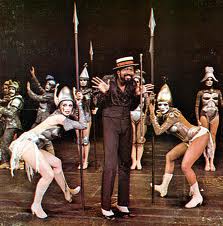
The original production of Pippin
In the 1970s, some experimental theater techniques began to make their way into mainstream musical theater – most notably (and I emphasize him because of his physicality) with Bob Fosse. The 70s, following upon the work of the amazing Jerome Robbins, became a time when physicality began to become more of a storytelling device. Pippin for example, uses an ensemble of highly stylized “players” (complete with white face) who lead an innocent (Pippin) down a path searching for ultimate fulfillment. While this is certainly not a physical comedy show, it is arguably a physical show, and therefore moments of physical comedy do come in to it.
In the early 2000s, Broadway saw a return to the “good old fashioned musical comedy” with The Producers. This was truly a landmark show in many ways, partly because there literally hadn’t been an original, traditional musical comedy in a very long time. The Producers featured great moments of physical comedy, such as this one that was featured on the Tony awards. Notice the use of the walkers, not to mention the beautiful physicality of the performers. Those are guys and girls playing the little old ladies.
Jeffry Denman
I have to take a moment to reference one of the best resources when it comes to physical comedy in musical theater (and there aren’t a ton.) The wonderful book A Year With The Producers by Jeffry Denman is a must read for anyone interested in theater, comedy, or being entertained/educated in any way. It chronicles Jeffry’s year auditioning for/being cast in/performing with The Producers on Broadway in which he played/created a myriad of hysterical characters His description of both his process, and the inner workings of musical theater (which would be greatly enlightening to any physical comedians who aren’t as familiar with the world of musical theater) are genius.
I also mention Jeffry for another reason – I had the great fortune to get to work with him on Twilight: The Unauthorized Musical Parody and got to see first-hand his genius at creating brilliant characters and comedy moments. We were very fortunate that all of our Twilight cast members were fantastic comedians, and I especially noticed in how many different shows Jeff was able to introduce brilliant elements of physical comedy, so I highly recommend checking out Jeff’s book and looking at his process.
The following year, Broadway and musical theater were shaken up by the truly genius musical Urinetown. Part of what made this show feel so fresh and original was that it was created by the experimental theater group the Neo Futurists — who used many of their experimental conceits and techniques within a traditional musical theater structure. Check out this clip of their Tony awards performance (yes, they were winners that night.)
I particularly love their unusual use of physical humor in this number. The physical comedy “gag” is not the focus of the piece – it is the elephant in the room. Notice the lovely young girl bound up and gagged who proceeds to do all the choreography, even though she is tied up for the whole number. And notice how the fact that there is a dancing hostage is never acknowledged. Brilliance. Even more so when you know the show and realize how much this moment is actually advancing the plot.
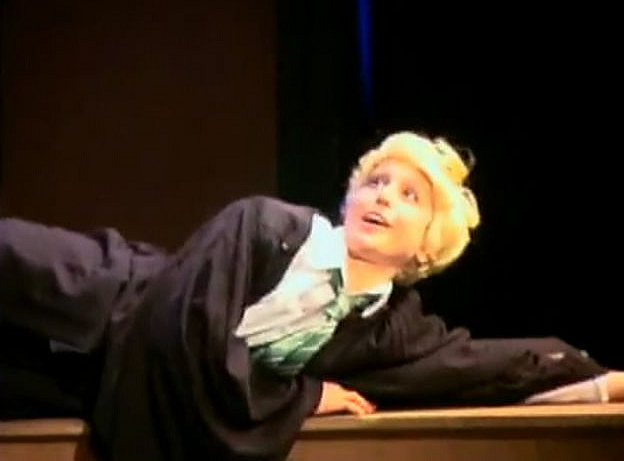
Another shout out also has to go to the incomparable Lauren Lopez, who first gained notoriety for her performance as Draco Malfoy in the youTube sensation, A Very Potter Musical. Though this is not a Broadway show, Ms. Lopez wonderfully created physical comedy moments within the musical as a way to define Draco’s character, and his relationships with other characters. Here’s a highlights reel. It’s a great example of some of the “underground” work being done in musical theater. Physicality really starts around :44
As with Mr. Denman, I’ve seen Ms. Lopez’s work in many projects, and she always brings a unique physical comedy element to whatever she’s doing. I wish everyone reading could watch her live performing as the spastic child Renesmee in Twilight. Her talent as a physical comedian, as well as a musical theater performer is one of the reasons I work with her so often.
Then there are moments of physical comedy in musical theater that don’t relate to a specific show. My favorite is Bill Irwin and Karen Ziemba’s interpretation of Sondheim’s song “Sooner or Later” for “Sondheim: A Celebration at Carnegie Hall.” The song was originally written for the film Dick Tracy.
What is the future of physical comedy in musical theater? It’s hard to say. With the advent of the rock musical (Rent, American Idiot, Next To Normal), original comedies in general on Broadway seem to be diminishing. Then again the recent show Bloody Bloody Andrew Jackson managed to incorporate elements of physical comedy into a rock musical. The 25th Annual Putnam County Spelling Bee was highly physical, but it was more a use of funny physicality than actual physical comedy. The Book of Mormon also has moments of physical comedy; one of my favorites, and one of the most subtle, is at the end of the song “I Believe.” See how hopeful Mormon Elder Price and evil warlord “Butt-Fucking-Naked” (yes, that’s his name) relate to each other. It’s at the very end of the song:
However, and I may get some flack for this, I think most of the humor in Book of Mormon is based on verbal and musical jokes, how people look, and the situations they are put in — which is not true-blue physical comedy, although there are certainly elements of that in the show as well most notably in the song “Turn It Off.”
Truly incorporating physical comedy into musical theater is tricky. Musical theater is by nature narrative-driven, and is largely verbal. It has to be. The performers are singing more than half the show, not to mention the fact that it would be near impossible to perform comic physical moments while singing for purely technical reasons. In film, on the other hand, you have multiple takes, not to mention usually having a playback recording. Physical comedy is by nature episodic and non-verbal. I think in some ways the decline of physical comedy in musical theater can be linked to the decline of dance in musical theater. The fact that almost no new shows use dance to advance the story is a real sore spot in the musical theater community. I think that if there were a way to open a dialogue between the two schools something revolutionary would take place. But there needs to be a sharing of vocabulary. In the words of Elder Price: “I believe!”
Here’s a charming piece where comedy-dance greats Donald O’Connor and Gene Kelly decide to reprise their greatest hits — sitting down! Fun, especially if you’re familiar with the dance numbers they’re referencing. Thanks to Riley Kellogg for the link!
If you’ve ever played around with slapstick or stage combat, and I’m betting you have, you know that the victim’s reaction is key to selling the effect. As my old friend Joe Martinez put it, what we’re doing is Combat Mime, the illusion of fighting, not the painful reality. It’s not surprising, then, that many a comedian has had the clever idea of eliminating the attacker altogether, of playing victim to an imaginary foe.
The earliest reference I found to this idea was something I wrote about the acclaimed 19th-century British clown Billy Hayden, who made his reputation in Paris at Franconi’s, first as an acrobatic clown, though later as a talking clown: “He practiced acrobatics alone in the ring for two hours every morning — dancing, tumbling, falling, delivering blows at imaginary partners, and being struck by imaginary feet.” (Clowns, p.200) I’m not sure how much from these practice sessions actually ended up in his act.
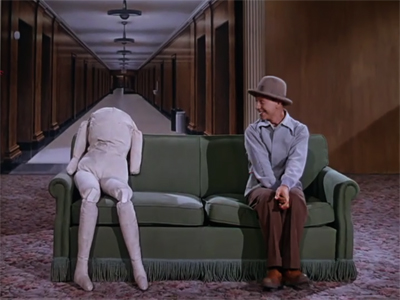
If you’re having a hard time imagining what this might look like, the sofa sequence from Donald O’Connor’s classic physical comedy piece, “Make ‘Em Laugh,” from Singing in the Rain (1952) is a short but sweet example:
Silent film comedian Charley Chase had actually taken this idea several steps further 26 years earlier in his wonderful Mighty Like A Moose, though his fight is heavily (and jokingly) dependent on film editing. The silly but useful premise is that Charley and his wife (Vivien Oakland) are embarrassingly homely, he with buck teeth, she with a big nose. They both have plastic surgery without telling the other, and when they accidentally meet, they flirt heavily without recognizing each other. (Yes, it takes more than a little suspension of disbelief, but then so does Twelfth Night.) Charley figures it out first and, as a staunch advocate of the double standard, is determined to teach her a lesson by staging a mock fight between husband and lover.
Now here’s Peter James from the old Spike Jones Show who says “I like to slap myself” and who was breakin’ way ahead of his time.
This is the talented Alex Pavlata from his show Francky O. Right, showing what happens when Romeo breaks up with Juliet.
And finally, here’s Rowan Atkinson (see this previous post) being tormented by an unseen adversary during his morning commute: A Day in the Life of the Invisible Man.
Drop me a line if you know any more examples!
July 4th Update:Blog reader Paul Reisman has done just that, providing us with a worthy addition to our collection. Paul writes: “It’s from a pretty horrible movie called Trial and Error [1997], but the clip of Michael Richards getting beat up by invisible enemies has always stuck with me.”
Let’s just say I liked it a whole lot better than that audience of casting directors.
July 18 Update: Steve Copeland writes that the physical comedian on the Spike Jonze show was Peter James. Click here to check Peter James out on IMDB. Click here for a very watchable video about Steve and his partner Ryan Combs and their life on the American one-ring show, the Kelly-Miller Circus.
October 29, 2012 Update: Here’s James Corden at the Tony Awards performing his schizoid self-fight from One-Man, Two Guvnors: