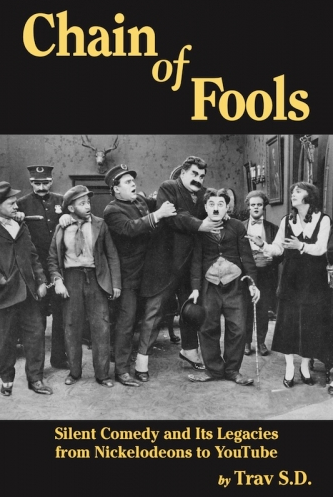
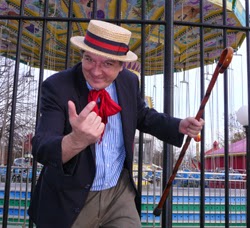
Chain of Fools Silent Comedy and Its Legacies from Nickelodeons to YouTube by Trav S.D. Trav S.D. —oddly enough named after his gritty home town in the middle of South Dakota’s Badlands — is a so-good-he’s-bad vaudevillian: a performer, producer, historian, popularizer, and blogger whose popular blog Travalanche is a must for the variety arts fan.
I remember when I first came across his book, No Applause, Just Throw Money: The Book that Made Vaudeville Famous. I couldn’t help but think “do we really need another history of vaudeville?” Then I read the book and discovered that the author was a really good writer, a prodigious researcher, and had a fresh slant on his subject matter. When I heard he was publishing a book on silent film comedy, I couldn’t help but think “do we really need another history of silent film comedy?” Then I read the book and… yep, you guessed it.
Trav S.D.
A lot of people read book reviews but don’t read books, but if you’re just the opposite and are already zoning out then let me cut to the chase and simply say that if you’re reading this blog (on purpose) then you’ll probably find Chain of Fools highly entertaining and informative.
Here’s just a few of the things you will like about it:
• I highlighted something on almost every page. It’s just chock full of info that was new to me and very interesting.
• He writes very lively and conversational prose, the kind I like to write but don’t always succeed at. Nothing pedantic here. He searches for and almost always finds an interesting way to say what he has to say.
• He’s very good at context. You really get the feeling what the work and artistic environment must have been for those creating this new medium.
• He makes a convincing case for silent film comedy as a unique art form and not just as a collection of funny performers.
• He doesn’t pretend that every silent film comedy was wonderful.
• He’s strong on the relationship between story and character.
• He appreciates what Paris and French culture meant to the arts and the growth of cinema.
• He makes Mack Sennett very interesting.
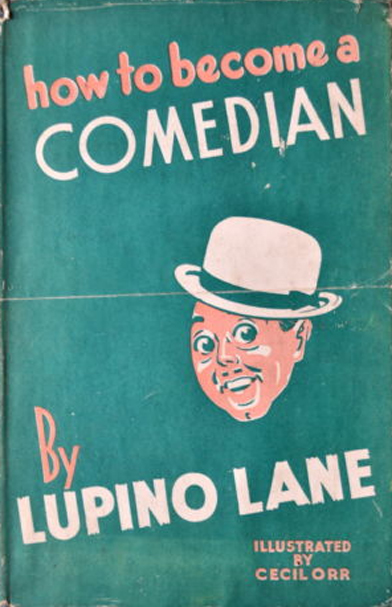
• He has fresh insights on many of the comedians; Harry Langdon and Lupino Lane, to name just two.
Any weaknesses, quibbles, reservations?
• It’s sparsely illustrated, and the discussion of individual films will have much more value if you have them on DVD or can find them online. Since he can’t assume you do, a lot of space has to be devoted to plot summaries. He handles them well, but exposition is exposition.
• His pre-cinema comedy history is sketchy and is missing some pretty clear links between the two eras.
• Physical techniques aren’t discussed in any detail.
• Max Linder’s feature films are given short shrift, and some of the comedians of the 40s and 50s (e.g., 3 Stooges; Abbott & Costello; Ritz Brothers; Jerry Lewis) are a little too summarily dismissed for my taste.
• There are a few errors I caught. For example, Keaton’s pole vault in College is lauded, but this was actually performed by gold medalist Lee Barnes, and it was apparently the only time (at least in the silent era) when Keaton used a stunt double. That being said, there’s no reason to doubt the overall accuracy of the work.
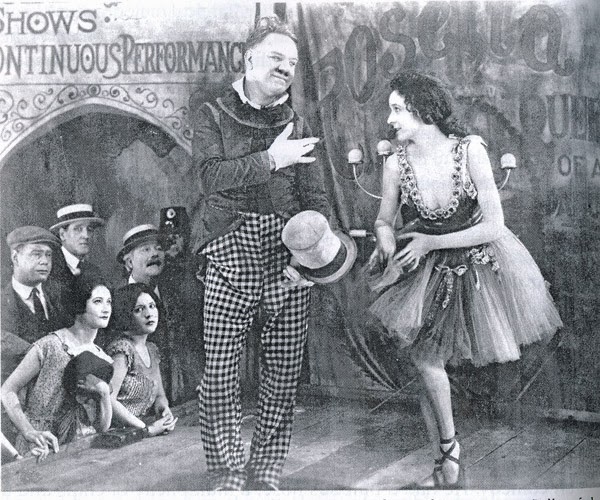
W.C. Fields in Sally of the Sawdust
Here are a few samples of his excellent writing:
I tend to think of Keaton as a verb; Chaplin as a noun.
This principle of ultimate action, of perpetual motion, was not discovered overnight, but came gradually, experimentally, in the same way Jackson Pollock arrived at drip painting or Charlie Parker came to bebop. It was a process of taking matters a little further, a little further, a little further over dozens of films until Sennett hit a new comedy dimension that looked like universal chaos.
There was very little precedent for what Sennett would now attempt. This would be the first time in history a studio head would endeavor to staff an entire company with absurd types. Sennett’s comedians resembled human cartoons: fat men, bean poles, vamps, men with funny mustaches, matronly wives and mothers-in-law wielding rolling pins and umbrellas; geezers with canes and long beards, bratty children with enormous lollipops. Diminutive heroes; terrifyingly large villains.
Keaton’s character may have a place in society, but he realizes that this is no guarantee of security or even tranquiity. What about the safe that may fall on your head? Or conversely, the wallet full of money that may miraculously fall into your hands. Rich or poor makes no difference. Fate makes playthings of us all. Man plans. God laughs. Keaton seems to feel no need to comfort us about this. No one emerges to make things better. The world is cruel, capricious, barren of any special benevolence. It is this lack of faith or optimism perhaps that causes Keaton’s comedies to speak more to our time than to his own, and made him a big hit with European audiences even as many Americans were scratching their heads.
Johnny Hutch, one of the unsung heroes of physical comedy, would have been 100 years old today. As things turned out, he not only made it past his 93rd birthday, but remained active as an acrobatic performer until age 69, and as a teacher and choreographer late into life, last working as a stunt coordinator for the Royal Shakespeare Company at the age of 87. He was also married to the same woman, Jane Phillips, for 66 years, passing away — probably not coincidentally — months after she did in 2006.
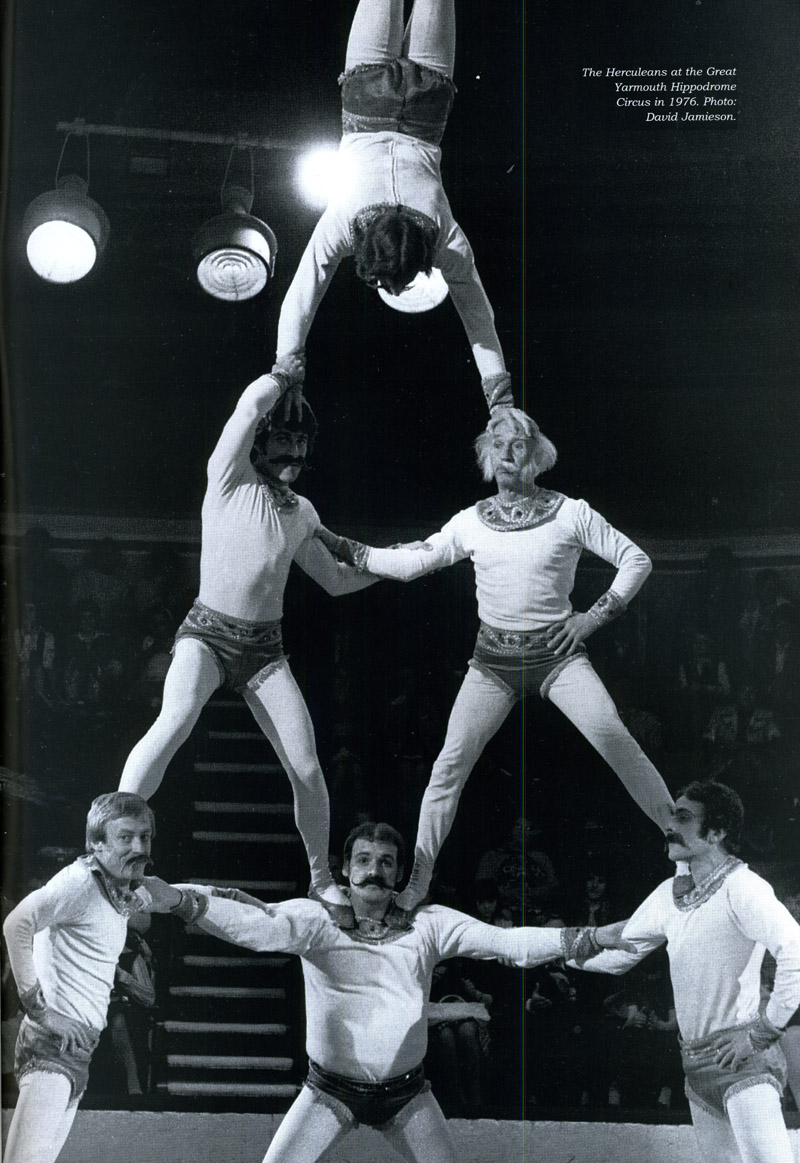
Hutch had a long and illustrious career as a comedy acrobat with such troupes as the Seven Hindustans, the Seven Volants, the Herculeans, and the Half-Wits, appearing more than any other artist ever at the London Palladium, and sharing the stage with such stars as Grock, Louis Armstrong, and Bob Hope. However, he probably gained greatest recognition as Benny Hill’s bald, elderly sidekick in the last two seasons of Hill’s BBC comedy show.
More significant to today’s performers (youse guys) is that Johnny Hutch deserves huge praise for generously sharing his knowledge with others, in the process becoming a key transitional figure between the circus/variety world of the mid-20th century and the alternative theatre world of the past fifty years. He created the Johnny Hutch School of Professional Acrobatics and Stagecraft —”Producers of High Class Specialty Acts. Knockabout and Fight Sequences. Traditional Trap Routines” and coached Robert Downey, Jr. for the title role in the movie Chaplin. He not only worked for established institutions such as the RSC, but also assisted fringier enterprises such asPeople Show and The Kosh, and helped establish Zippos Circus. So giving and dedicated was he to transmitting his skills that he was awarded an MBE (Member of the British Empire) by Queen Elizabeth for “service to young people of the theatrical profession.”
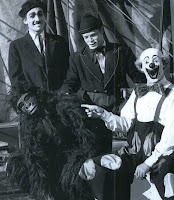
Johnny Hutch as a clown.
As usual, you can learn more about Johnny Hutch on the excellent Circopedia site or by reading his memoir of his early days, Somersaults and Some Aren’t, published as a special edition (no. 165) of King Pole, the British circus magazine.
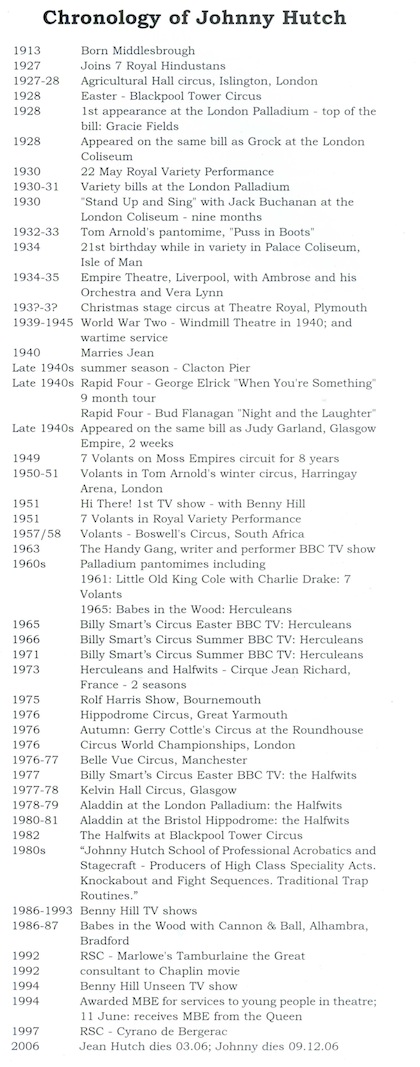
Here are a few video clips, followed by some remembrances by two huge fans, and finally a chronology of Hutch’s life taken from his memoir.
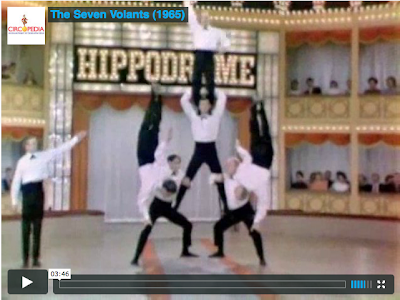
Click here to see Johnny and The Seven Volants on the Circopedia site. This is from 1965.
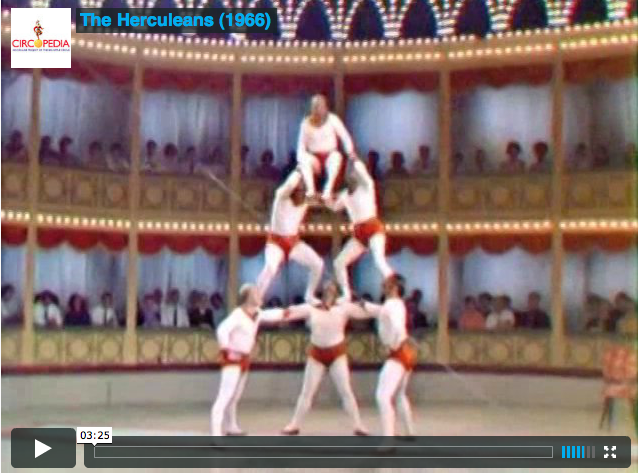
A year later, these are the Herculeans at the Royal Hippodrome. Click here to watch, again at Circopedia.
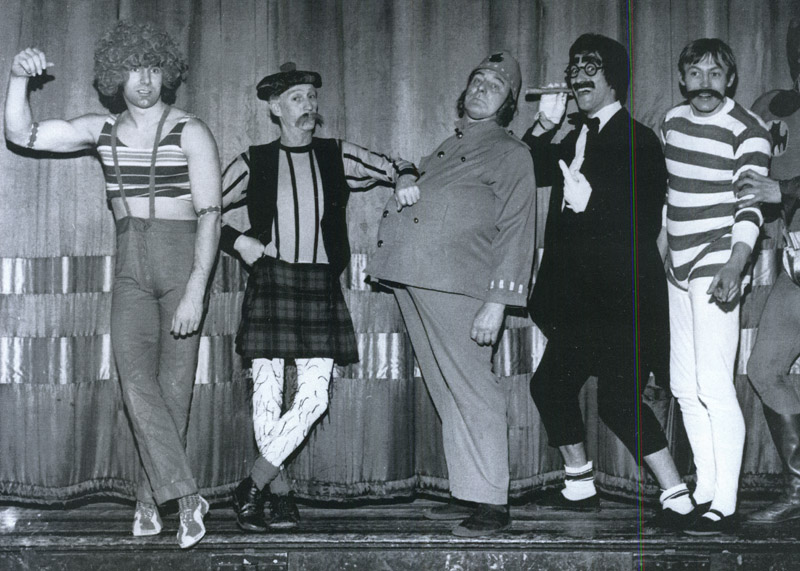
The Half-Wits
And in 1977, the Half-Wits on the Cliff Richard Seaside Special, filmed at Deauville, France. That’s him second from left in the photo.
This routine, by the way, reminds me of one Victor Gaona taught at Ringling’s Clown College back in 1973, and that has been seen in some form in that circus many times.
A skit from the Benny Hill Show. Recognize anyone?
An obituary by acclaimed British actor Anthony Sher, which first appeared in the London Guardian.
The acrobat Johnny Hutch, who has died aged 93, passed his skills on to actors as well as circus performers. He also became an actor himself – and was the little old man whose bald head was patted by Benny Hill on his television show.I first met Johnny when he trained me for the rope climbing and other acrobatics required for Terry Hands’ 1992 RSC production of Marlowe’s Tamburlaine the Great. I shall never forget the surprise of walking into the gym for our first session and discovering that my teacher was a diminutive man of 79. In reply to my “Hello, how are you?” he said in a broad Yorkshire accent, “No alright, ta, just a bit of arthritis in me wrists – it stops me walking on me hands, and I always like to start the day with a little walk on me hands.”
I was speechless. My own father was roughly the same age, and could barely walk on his feet. Who was this man? Quite a phenomenon, it turned out.
In the months that followed, as Johnny bullied and encouraged me through some punishing training sessions, I grew to love and respect him. He was a little gentleman entertainer who always wore a suit and bow tie to work, and who, with a twinkle in his eye, a story on his lips (“When I was on the bill with Judy Garland …”), and with his feet constantly sliding into a soft-shoe shuffle, led me to a world I did not know but found enchanting – the world of circus, music hall and variety.
Born John Hutchinson in Middlesbrough, Johnny was apprenticed to a troupe of acrobats when he was aged 14. They became the Seven Royal Hindustans, specialising in a mixture of European and Arab tumbling, with Johnny as their star performer. At the beginning of the second world war, he was performing in variety acts at the famous Windmill theatre in Soho, but he soon signed up and became a staff sergeant in the 2nd Independent Parachute Brigade, training men to drop behind enemy lines. He himself made 66 jumps, and fought in north Africa and Italy.
In the early 1950s, Johnny formed the Seven Volants, a fast-moving acrobatic act, which appeared regularly at the London Palladium. In 1957 they toured South Africa with Boswell’s Circus for a year, living on a train with all the other performers: trapeze artists, clowns and animals. Johnny went on to develop two successful comedy acts, the Herculeans and the Half-Wits. They appeared in Las Vegas, and spent two years touring France with Cirque Jean Richard.
In 1976, aged 64, Johnny achieved a remarkable feat: winning the world circus championships by performing a full-twisting backward somersault. But as he finally grew too old for these physical rigours, he simply reinvented himself again and again.
He became a comedy actor – appearing in the Benny Hill Show for eight years until the star’s death in 1993 – and was the stunt-choreographer for the theatre and dance groups, the People’s Show and the Kosh. In 1994 he was awarded an MBE for services to fringe theatre. He helped Martin Burton establish Zippo’s Circus, Britain’s prime touring circus, and was a consultant on Richard Attenborough’s 1992 film Chaplin, coaching Robert Downey Jr in the silent movie star’s slapstick routines. He also worked on the design of the Teletubbies, creating their particular walk.
But I always think that one of Johnny’s most daunting challenges in his later life was to try and turn an out-of-condition actor like me into a superman. As well as making me look good in Tamburlaine, he created some thrilling moments in our 1997 RSC production of Cyrano de Bergerac.
Johnny’s name was invariably linked to that of his wife, Jean, the dancer Jean Phillips, whom he married in 1940; they were a perfect double act, one of those matches made in heaven, inseparable. He was heartbroken when she died last March. He is survived by their son Brian, daughter-in-law Deborah, grandchildren Sophie, George and Eleanor, and great-grandchildren Molly and Clara.
Don Stacey writes: Looking back on his 80-year career in show business, Hutch said, “You had to be versatile to survive in music hall. I became Britain’s finest tumbler. It sounds big-headed but there was nobody to beat me.” He had started work with the Seven Royal Hindustans aged 13 as top mounter in their pyramid – at only 5ft, he was too small to get a job in the local mills. In 1928 he made his first appearance at the London Palladium on a bill topped by Gracie Fields, making her London debut.
Later, as well as the Seven Volants, he trained groups, such as the Herculeans, who wore old fashioned bloomers, tights and false moustaches. These acts were always in top demand for pantomines – at the Palladium, for instance, they Volants appeared in, among others, Robinson Crusoe, with Englebert Humperdinck, and Aladdin with Cliff Richard, while the Herculeans appeared in Babes in the Wood with Frank Ifield and Sid James.
Hutch continued to arrange knockabout comedy and trapdoor routines in Palladium pantomimes, although he retired from performing them in his 70s.
The Herculeans
And a fond remembrance by our own guest blogger, eccentric dancer and eccentric dance historian Betsy Baytos:
I had the immense pleasure of not only spending time, but filming an extraordinary interview with the great Johnny Hutch back in 1994, for my ‘Funny Feet’ Documentary. Minute and adorable, enthusiastic and funny, energetic, passionate and knowledgeable, it was Johnny, as one of my early interviews and my first in England, who cracked open the door of the Eccentric Dancer’s reach throughout Europe and its strong visual comedic roots.
The two hours on camera were pure delight and he clearly was one of my favorite interviews and greatest inspirations, and we remained in touch for years after. His demonstrations of ‘moonwalking’ and his spontaneous eccentric dance moves to deliver a point he was making, were nothing short of amazing.
He was generous of time and spirit, driving home the importance of having a certain ‘kind of body’ as a necessity in becoming an eccentric dancer. He was also the first to make me aware of how eccentric dance evolved from early pantomine and commedia, and how the French Music Hall had incorporated dance, which led to eccentric. We talked of so many great physical comics and dancers, but a favorite to us both was Grock, which he felt as one of the supreme visual comedians, led to the Eccentric’s character.
He spoke of working with Robert Downey Jr. and how much he enjoyed the experience of passing along Chaplin’s routines. He spoke of when Richard Attenborough called him to first request his assistance and how deflated Attenborough sounded when saying it was a shame no one remembered Chaplin’s routines. But Johnny piped in, “ I know ALL his routines! I used to watch him as a kid!” And he shared with me the incredible outtakes of his working with Downey on the set. I recall asking who might have inspired Chaplin, when he mentioned ‘Fred Kitchen’, whom I must research when back in the UK.
There is so much more, and I cannot wait to transfer his interview when archived, so it will be accessible to all of you! Happy Birthday Johnny! Love, Betsy
__________________________
___________________________
Thank you all! It is never too late to celebrate a life well lived.
I am excited to be continuing with our series of guest posts by eccentric dancer Betsy Baytos, whose Kickstarter campaign to complete a fabulous documentary film, Funny Feet: the Art of Eccentric I hope you will join me in supporting.
As you can see from the article below, Betsy truly knows her stuff. In fact, I doubt there’s anyone else out there who comes close to matching her personal work experience in eccentric dance and in animation, combined with years of thorough historical research and tireless dedication to the project. In this installment, you will read how the comic moves of eccentric dancers were directly translated into famous animation characters. Amazing stuff! —jt
When I was first hired as a trainee at the Disney Studios at age 18, I had no idea how animation worked. But my early background in dance proved to be a bonus while working with my mentor, the great Eric Larson, one of Disney’s “nine old men.” Not knowing any better, I would physically work out the movement (always dance), for the required personal tests. This instinctive ability to translate my extreme flexibility into cartoon characters was a match made in heaven, and I was soon hired as a full-time in-betweener on The Rescuers while assigned to a veteran animator who best suited my style, the amazing Cliff Nordberg (Three Little Pigs, alligators in Peter Pan, Evinrude in The Rescuers, etc.), renown for his over-the-top, character-driven animation.
I had just discovered and was studying eccentric dance and immediately saw a powerful connection. What astonished me most was that the process in creating character, building a gag, and making a step funny was virtually the same between the eccentric dancer and the animator. Their language was identical! I could not wait to get back to Disney and tell Eric, who only chuckled and mentioned that these dancers had been a staple of inspiration for many animated characters from the early beginnings of animation.
It made perfect sense. Windsor McCay, an early pioneer in animation, toured the vaudeville circuit in 1906 as an animated chalk talk act, and followed in 1914 with a stage performance teamed with his Gertie the Dinosaur, at that time breaking ground as one of the first developed personalities in a cartoon. Sharing the bill with the top eccentric dancers and witnessing their cartoonesque, exaggerated movement must have ignited character ideas as it had for many other aspiring animators.
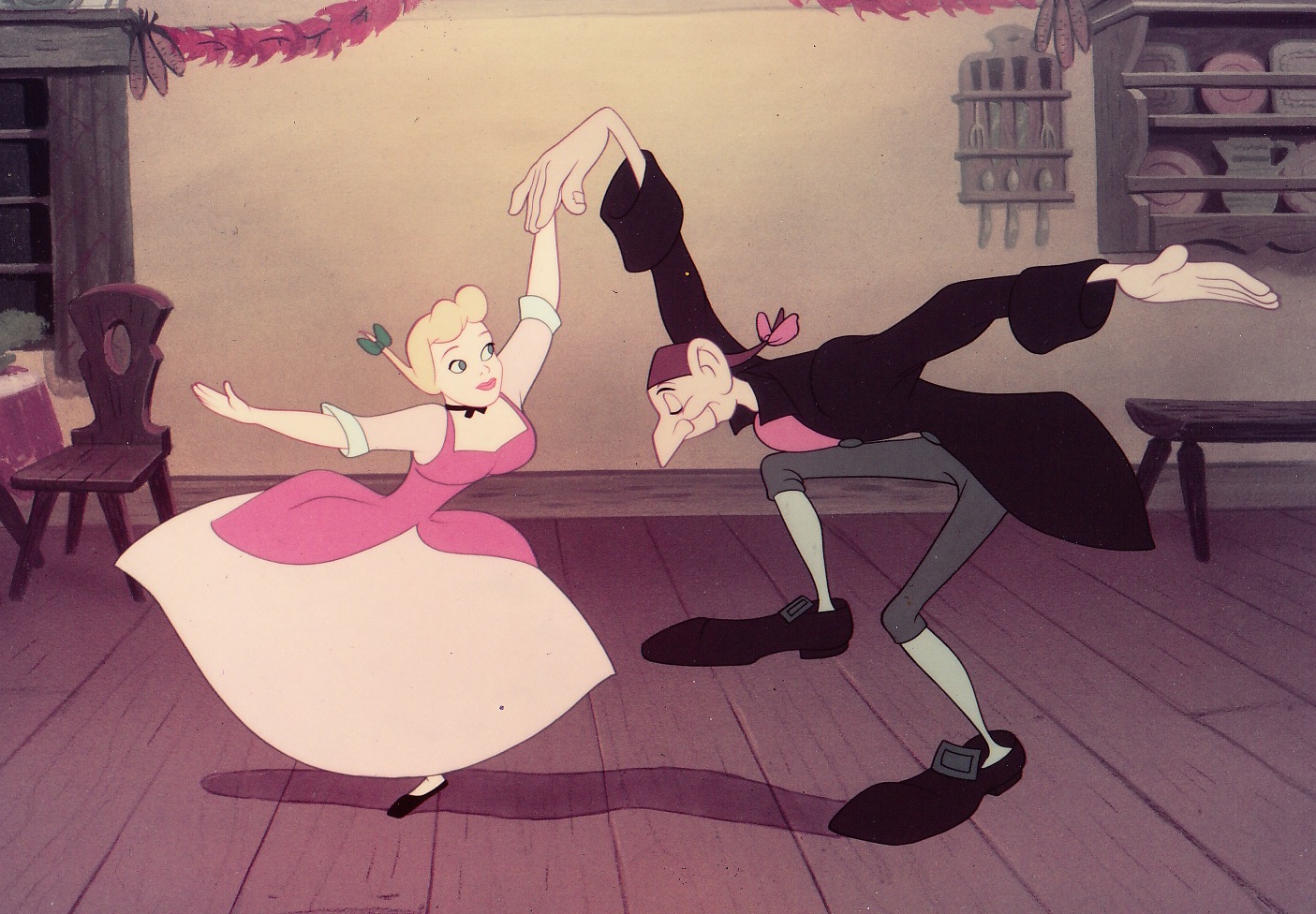
Ichabod Crane
I had to learn more and was stunned when learning that my eccentric mentor, Gil Lamb, turned out to be the spot-on model for Disney’s Ichabod Crane in Legend of Sleepy Hollow, as was Buddy Ebsen for Disneyland’s Country Bears. The link was getting stronger, as Disney artists Ken Anderson and Joe Grant spoke of the tremendous influence Chaplin had on animation. Grant himself began his career as a Keystone Cop and had used Eddie Cantor and Charlotte Greenwood often as models. The prolific animation historian and writer, John Canemaker, clarified this analogy with his great documentary short of Otto Messmer, who first translated Charlie Chaplin into an animated character.
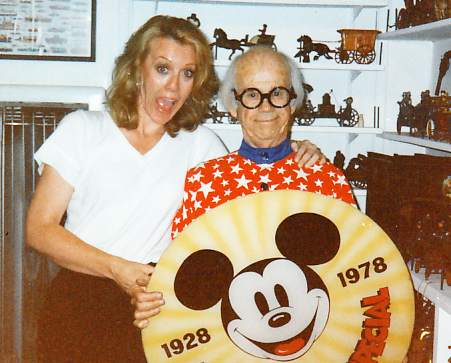
With Ward Kimball
As animation reflects our times, Chaplin’s “tramp” character was introduced the same time as the animated personality was evolving, and much of Chaplin’s movement was soon emulated by Messmer’s early Felix the Cat character. Vaudeville was a treasure chest of eccentric dancers and visual comedians and a bounty for animators to use as reference in their character work and still is.
I was still processing all this when the amazing Dixieland Band, the Firehouse Five, comprised of animators Frank Thomas, Ward Kimball and other visiting musicians, began playing outside the commissary during lunchtime. I could not help myself and began executing a rip-roaring charleston on the black-top. At first a shock to the Disney employees trying to eat lunch as well as to the animation staff, it opened up a life-changing opportunity — animation choreography! I was soon working with Don Bluthe on Pete’s Dragon, and dancing as the dragon Elliott in the parking lot, while tapping into the eccentric character process with a foam tail pinned to my arse. I worked again with Bluthe in Banjo soon afterwards. It was here that Disney allowed me to take an unprecedented leave to tour in Will B. Able‘s Baggy Pants & Co. vaudeville/burlesque show, followed by Jim Henson‘s Muppet Show, upon pleading how this rare opportunity would only strengthen my animation, which it certainly did!
Upon returning to Disney, I was thrilled to work on my alter-ego and hero, Goofy, the consummate eccentric dancer, in Mickey’s Christmas Carol, and then, again teamed with animator Cliff Nordberg, began work on The Fox and the Hound, animating the owl, Big Mama, and using the broadest character movement we could possibly conjure. It wasn’t long before the great animator Andreas Dejas called me in New York to stage the character movement in The Emperor’s New Groove. I was one step closer to bringing the eccentric style back into the animated cartoon.
I continued to animate and illustrate, while researching and studying eccentric dance, and when I made the decision to make this documentary, it was vital to film the animators themselves, discussing the eccentric dancer’s role in the evolution of animation.
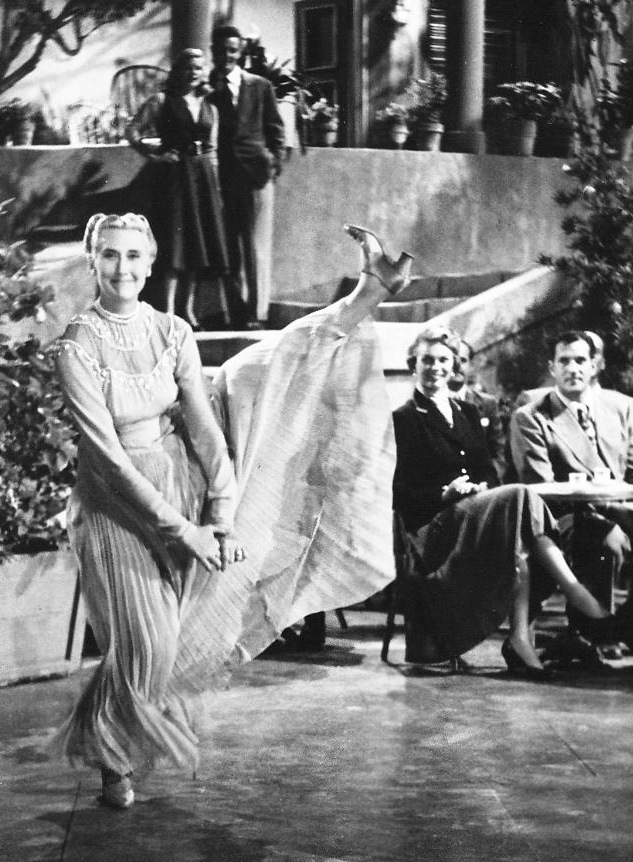
Charlotte Greenwood
Many are represented well in Funny Feet: Richard Fleischer, son of Max Fleisher and a renown Director (20,000 Leagues Under the Sea; Dr. Doolittle) spoke of his uncle Dave Fleischer, a great comic dancer in his own right, as the model for the first rotoscoped character (1915), Koko the Clown. Richard spoke of his sister (then dating a young Ray Bolger), and her eccentric dance act where she popped on and off the screen, and how his father, who loved eccentric dance, most likely modeled Olive Oyl from legmania dancer Charlotte Greenwood.
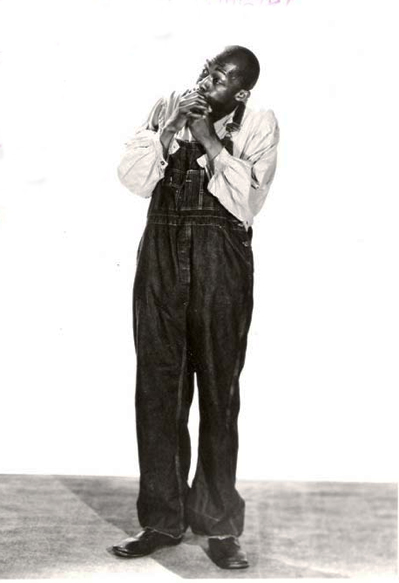
Steppin Fetchit
Animator Myron Waldman‘s interview details watching vaudeville/burlesque shows while creating Betty Boop and Popeye, and how Cab Calloway was the model for the “old man in the mountain” and other characters. Chuck Jones‘ interview was wonderful, detailing how he studied Chaplin, Laurel & Hardy and Keaton, but professed how Groucho’s walk became a signature in creating Bugs Bunny!
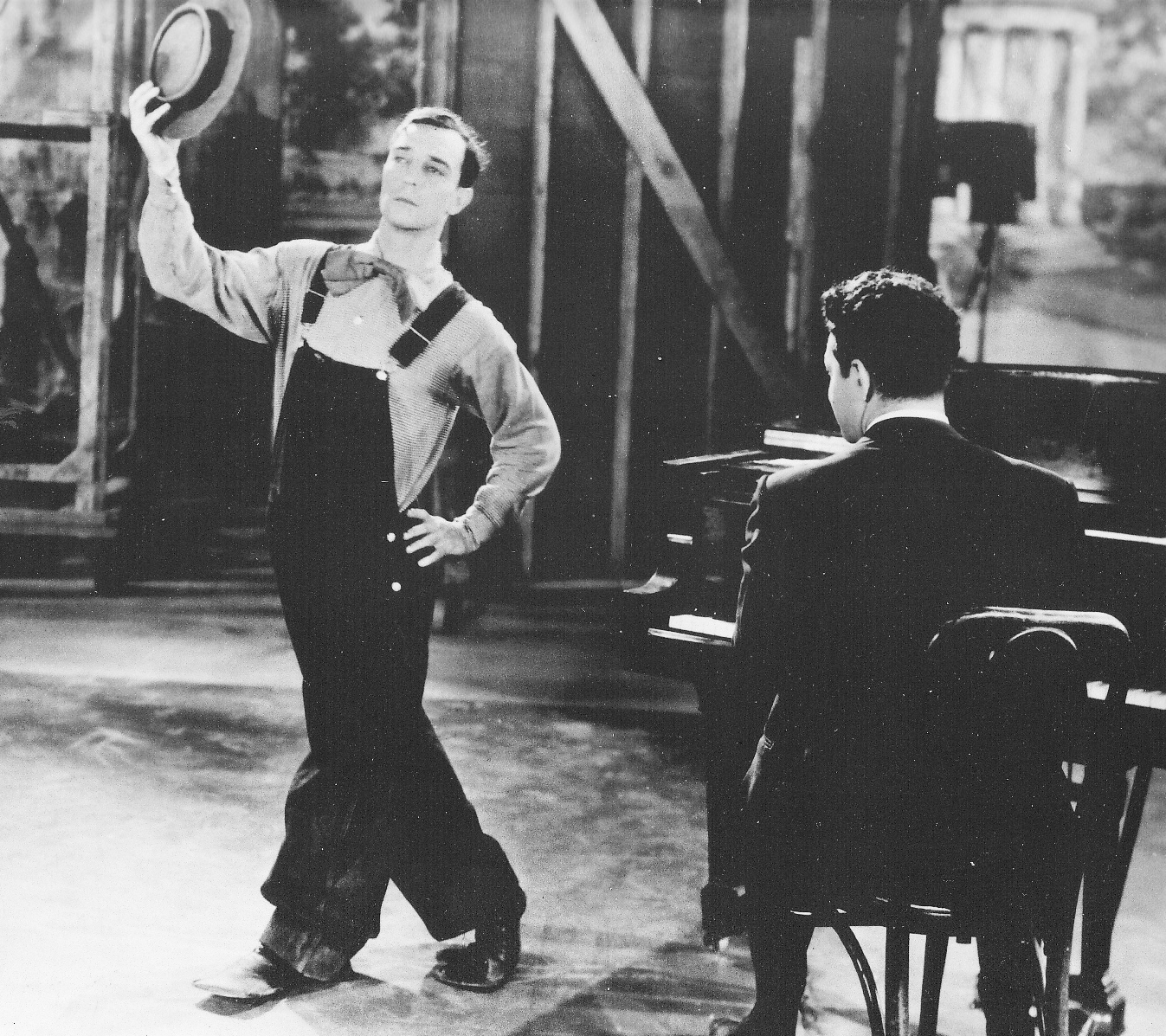
Buster Keaton
Frank Thomas & Ollie Johnston spoke a great deal about the physical comedians’ influence on their own work, specifically citing Chaplin, Laurel & Hardy, Red Skelton, and Buddy Ebsen. Ward Kimball elaborated on always searching for new walks, and how animator Art Babbitt‘s defining 360-degree walk for Goofy made him a star, and how Steppin’ Fetchitt and Keaton played an enormous role in the development of Goofy’s character movement and personality.
Joe Barbera
Joe Barbera, of Hannah Barbara provided incredible details on teaming Gene Kelly with Tom & Jerry, and later, on their ground-breaking collaboration for Invitation To The Dance. Al Hirschfeld, the renown NY Times caricaturist, eloquently spoke of observing, then capturing in line art, all the great eccentrics that graced the NY stage, and how Bolger specifically was inspired in his own movement by Hirschfeld’s illustrations.
And the tradition continues, as the next generation of animators (Andreas Dejas, Eric Goldberg and others) understand the importance of observing and tapping into these great ‘cartoon’ eccentric dancers.
The Princess and the Frog
It all came full circle when the talented animation directors John Musker and Ron Clements (Aladdin, Little Mermaid) approached me to bring the eccentric tradition into their next animated feature, The Princess and the Frog. I was thrilled to have the opportunity to again work with a wonderful animation team, and especially, to introduce this history, a pre-cursor to their own work, to the next generation of incredible hip-hop break dancers. The surprise was instantaneous and I pushed them hard to capture the extreme movement necessary for animation.
The result was the “reference” video below, This was the “Mama Odie” number (the 200-year-old blind sorceress), with two spoonbill birds in the background, which eventually they multiplied to make it look like a flock of birds in a choir. (It was a gospel-type number.) She pantomimes her sidekick, a boa snake which I staged like a boa feather. The key for me was to hire matching body types for the animated characters….so I was very specific on the audition call. I staged seven musical numbers and six dialogue sequences over all.
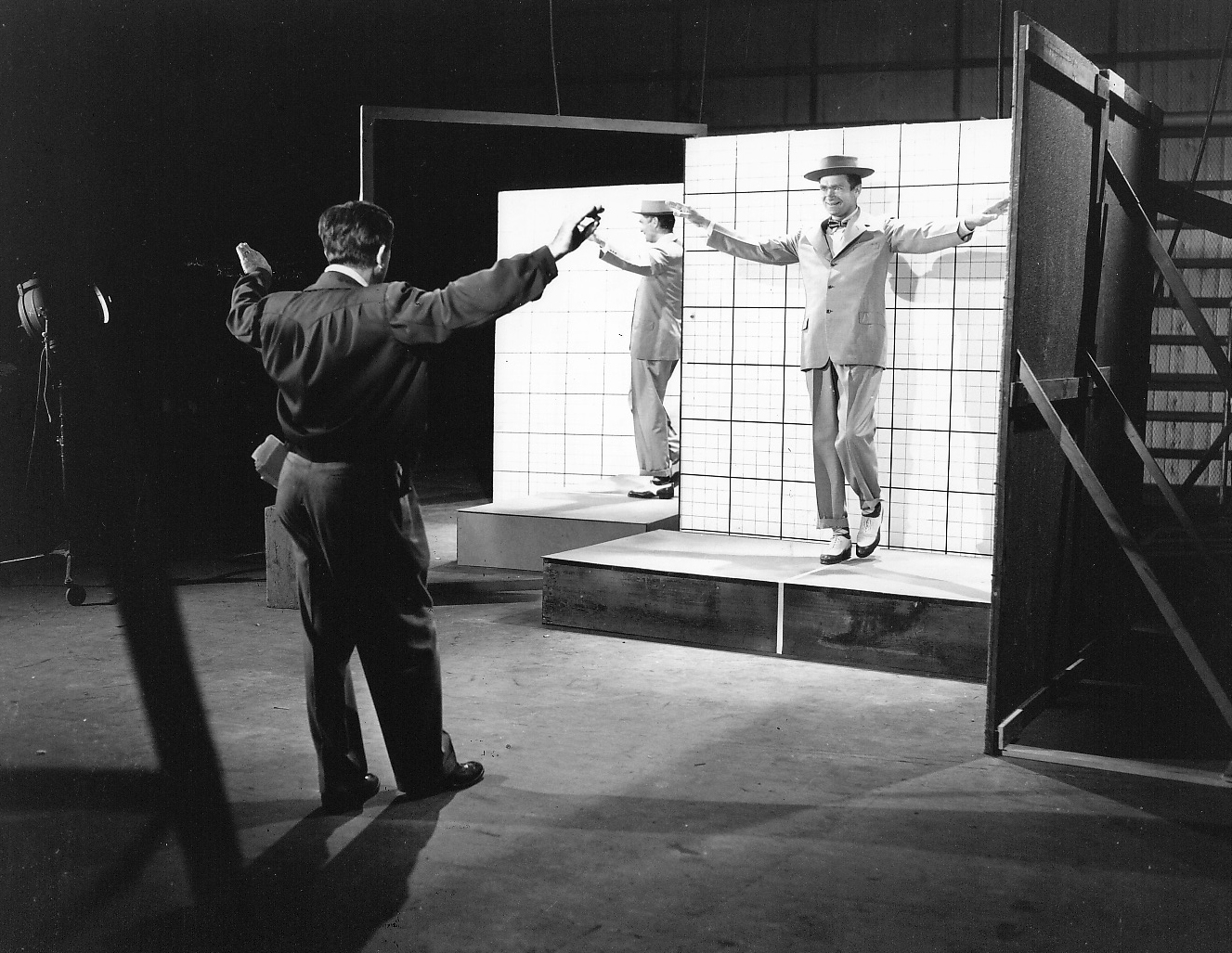
Buddy Ebsen and the animation grid
Before I even began, I sat with the directors and went over an animatic storyboard, frame by frame, so I could match precisely the sound effects, dialogue and musical punctuation. (As it is all recorded prior to any animation beginning). As you see here, every gesture (head tilt, arm swing, etc….) was broken down frame by frame, (24 drawings a second for feature quality) No motion capture or rotoscope — I staged each number per frame, then one as a looser version, and then a couple of variations on walks (very important) and then one with total improv (in case the performer had an idea, so just let them do what they do best!). They used all as reference only….so they would have the freedom to play with the choreography. Everything was shot against a grid, exactly as with Buddy Ebsen in this photo. It is also filmed in every variation….(overhead, below, side views, etc….)
Choreography to me is not just dance…..it is ‘character’…..it’s how a character sits, walks, gestures, and even more importantly….not moves, which is sometimes more powerful. It is the art of pantomime…and I make my characters think….why do you walk over there….why do you sigh and slump….why are you jubilant. There must be a reason for the movement. It’s all about action and reaction.
What the animators taught me, I heard directly from Ray Bolger when we talked about Once In Love With Amy. He said I had to have a reason for every move I made. It’s all the same process, fascinating to me, between an animator and an eccentric dancer. When I worked with the clowns at Cirque, it’s something I saw quite a bit. They walk out and do their schtick, but I made them think about character. How your walk on stage is different than another….how your body language defines who you are from the moment you step out onto that stage. Add to that a unique twist that becomes identifiable to your character, which your audience will identify you with. For example, for Dopey the animator Frank Thomas added a “hitch-kick” to his walk, which at first was an accident but became his trademark. All this is important: character, story, body language, and believability to your audience, so they can empathize with you. In animation and eccentric dance, the rules are the same!
Funny Feet can help me imagine a dream to strengthen the relationship between dance and animation, training the two genres to inspire each other once again!
Charlie Chaplin died on Christmas Day 1977 and — I’m not making this up — a little more than two months later his body was stolen from his grave and held for ransom. Surprise surprise, this tactic failed. After two months the body was recovered and the grave robbers caught.
Which brings us to this 1978 SNL “silent movie” skit featuring John Belushi and Dan Aykroyd as the criminals, Bill Murray as the policeman, and Gilda Radner as the corpse….
Trivia note: Fourteen years later, Dan Aykroyd played Mack Sennett in the film, Chaplin.
A standard formula for silent film comedy was for our shy and inept hero to pursue the girl of his dreams against all odds and somehow emerge triumphant in the end. Lloyd and Keaton stayed true to this narrative in most of their films, whereas Chaplin, with his penchant for pathos, would sometimes wistfully let the girl get away.
And then there’s Bob Dylan.
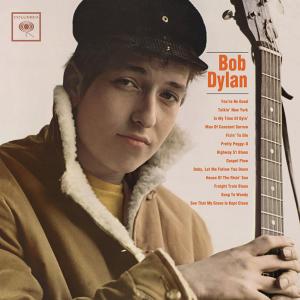
Did you know that in his early folk singing days in Greenwich Village (NYC), Dylan was known for his “Chaplinesque” comic antics onstage? That his first two albums have improvised comic songs?
From the liner notes of his first album (yes, I still own the original LP):
Devotees have found in him the image of a singing rebel, a musical Chaplin tramp . . . Another strong influence on Bob Dylan was not a musician primarily, although he has written music, but a comedian — Charlie Chaplin. After seeing many Chaplin films, Dylan found himself beginning to pick up some of the gestures of the classic tramp of silent films. Now as he appears on the stage in a humorous number, you can see Dylan nervously tapping his hat, adjusting it, using it as a prop, almost leaning on it, as the Chaplin tramp did before him.
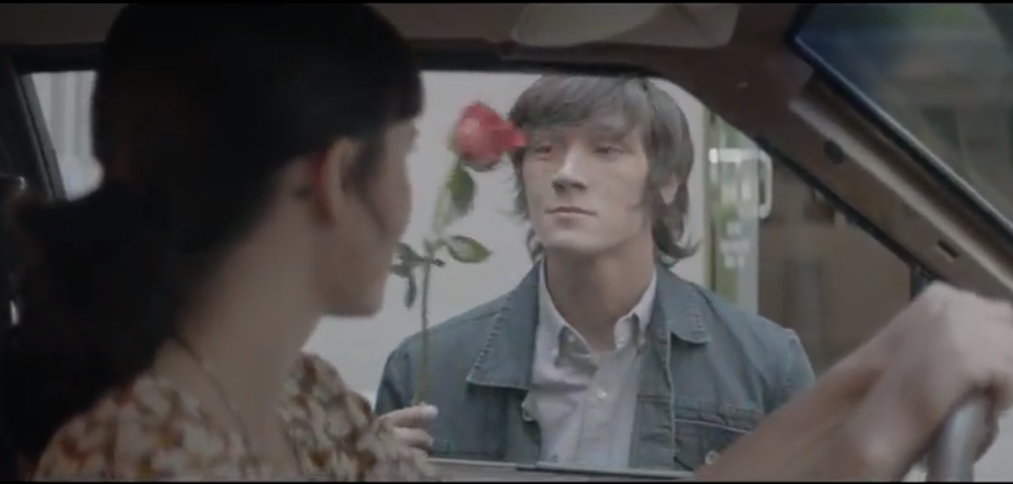
Again, those are album liner notes, which very likely means Dylan approved them, so it seems he did see himself in this light. But then what are we to make of Dylan’s newest music video, Duquesne Whistle?
At first it seems right out of Chaplin, a sweet comedy about a young man armed with nothing but comic schtick trying to get the attention of a pretty young woman he sees on the street. Each failure leads to a more desperate attempt to impress her. But — spoiler alert — after a chase scene ensues and an innocent bystander is injured, events take a macabre twist. Our hero gets thrown into a van, taken to a dark room, tied to a chair, gagged, and beaten to a pulp by the bystander and his friends. Instead of getting the girl, he is roughly deposited back on the same sidewalk, a sad piece of human rubbish. And who comes along and walks right past him without noticing? None other than Dylan and his crew.
Not sure what the message is there, but the video was done by Australian director and stuntman Nash Edgerton, whose music video for Brandon Flowers’ Crossfire also features a man tied to a chair in a dark room and being tortured, though this guy gets rescued by the beautiful lady. I guess one out of two ain’t bad.
Click here for an article on Dylan’s use of clown and circus imagery in his songs.
And if you’re wondering what the video has to do with the lyrics, here they are. You figure it out.
Listen to that Duquesne whistle blowing Blowing like it’s gonna sweep my world away I wanna stop at Carbondale and keep on going That Duquesne train gon’ rock me night and day You say I’m a gambler, you say I’m a pimp But I ain’t neither one Listen to that Duquesne whistle blowing Sounding like it’s on a final run Listen to that Duquesne whistle blowing Blowing like she never blowed before Blue light blinking, red light glowing Blowing like she’s at my chamber door You smiling through the fence at me Just like you always smiled before Listen to that Duquesne whistle blowing Blowing like she ain’t gon’ blow no more Can’t you hear that Duquesne whistle blowing? Blowing like the sky’s gonna blow apart You’re the only thing alive that keeps me going You’re like a time bomb in my heart I can hear a sweet voice steadily calling Must be the mother of our lord Listen to that Duquesne whistle blowing Blowing like my woman’s on board Listen to that Duquesne whistle blowing Blowing like it’s gon’ blow my blues away You old rascal, I know exactly where you’re going I’ll lead you there myself at the break of day I wake up every morning with that woman in my bed Everybody telling me she’s gone to my head Listen to that Duquesne whistle blowing Blowing like it’s gon’ kill me dead Can’t you hear that Duquesne whistle blowing? Blowing through another no good town The lights on my lady’s land are glowing I wonder if they’ll know me next time ’round I wonder if that old oak tree’s still standing That old oak tree, the one we used to climb Listen to that Duquesne whistle blowing Blowing like she’s blowing right on time
In his heyday almost 100 years ago, Charlie Chaplin was such a celebrity that his “little tramp” character was openly stolen by other comedians. According to David Trotter of the British Film Institute, “his rapidly escalating popularity encouraged a wide variety of imitators, from Stan Laurel, whose Chaplin imitation was overt, and thus flattering, to Billy West, a smalltime vaudevillian who copied Chaplin’s costume and make-up in more than fifty 1- and 2-reel comedies. In 1916, Charles Amador, a Mexican actor, changed his name to Charlie Aplin, and copied Chaplin’s most successful routines. Chaplin sued, and won, though not without difficulty.”
Amateur Chaplin wannabes got their chance at the many Chaplin imitation contests, which incidentally serve as the theme for the dance number that closes the first act of Chaplin: The Musical. The story that Chaplin himself entered one of these contests and failed to win is apparently historically accurate.
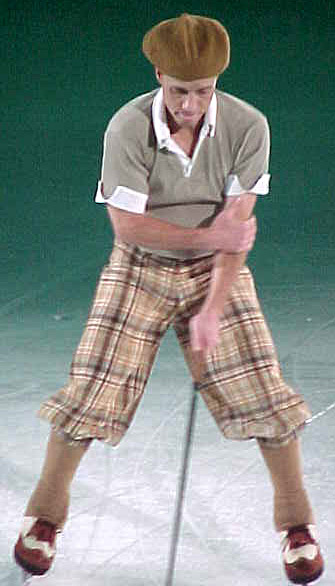
Of course many performers have donned the Chaplin look not as a rip-off but to pay homage to the great clown. One of the more interesting examples to cross my path is this 1997 piece by figure skater Scott Hamilton, Olympic gold-medalist and four-time world champion, here partnering another skating legend, Katia Gordeeva. After the 1984 Olympics, Hamilton’s fame grew along with his reputation as a comic skater through his work with the Ice Capades and then with his own company, Stars on Ice. By 1993, he was ranked one of the top eight most popular athletes in the United States.
Chaplin in The Rink
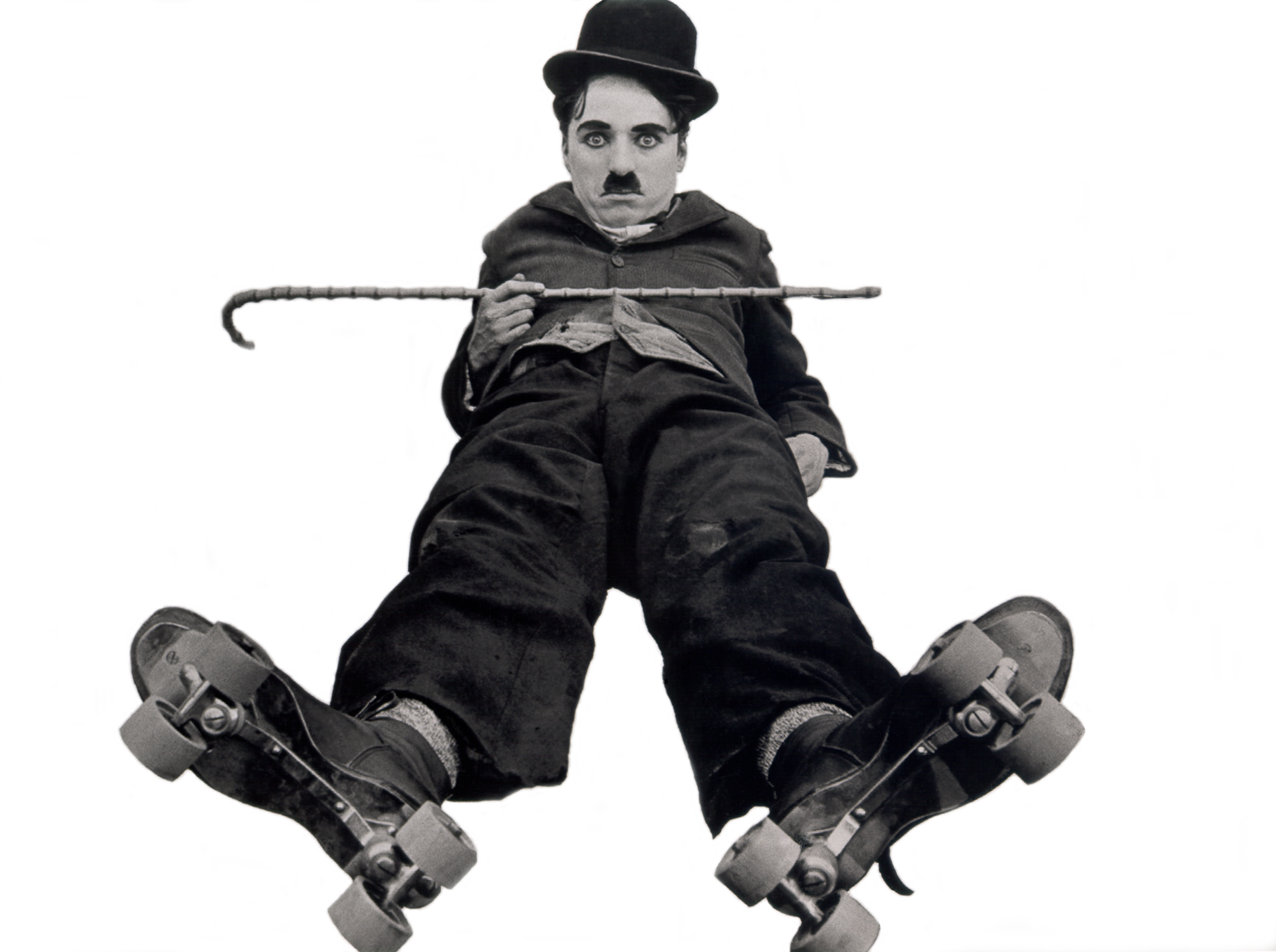
Why this piece makes sense is that Chaplin not only walked and ran funny, but was himself an extraordinary roller skater, so transferring these moves to the ice is a natural.Back in Chaplin’s British music hall days, therewasan old Fred Karno sketch, Skating, that may have inspired this extraordinary skating sequence in The Rink (1916).
That segment took Chaplin eight days to film.
Twenty years later, Chaplin proved he still had his skating chops in Modern Times— though his daredevil skating close to the edge of a balcony with no barrier was a special effect achieved with a glass shot to create the illusion of height.
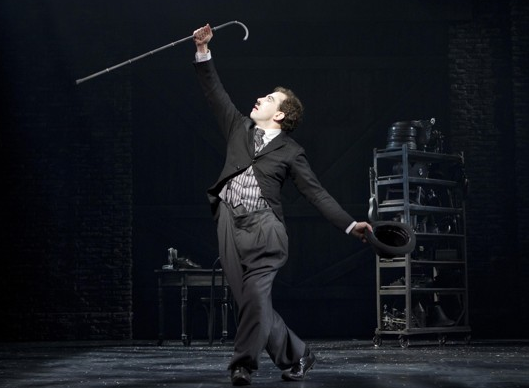
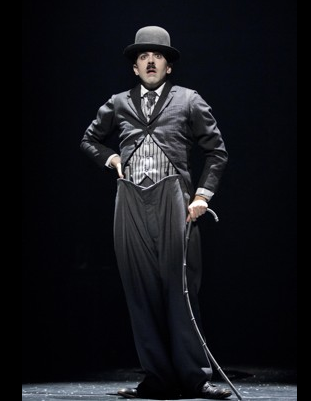
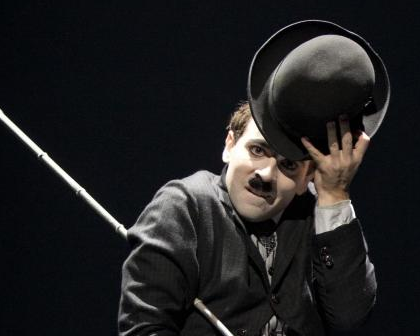
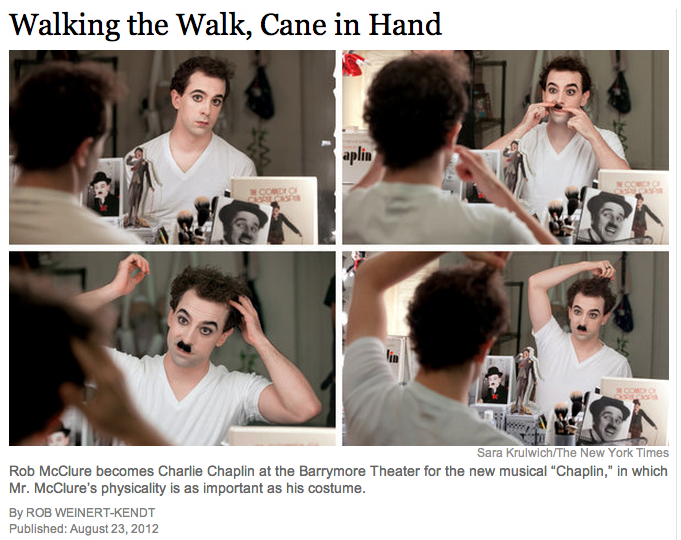
In my last post, I praised Rob McClure in the title role of Chaplin: The Musical but worried about the rest of the show — books, music, choreography, all those incidentals — being strong enough to justify Broadway prices. I was expecting lukewarm reviews but obviously I was way too optimistic. When I saw the word “soppy” in the second sentence of the NY Times review, I knew the show was in trouble.
Reviews are often all over the place, but so far these have been remarkably consistent: Mc Clure was great but under-utilized, while the show itself was flat and unimaginative, with the music and lyrics especially disappointing. A few sample critiques:
Ben Brantley, New York Times: “Chaplin made it clear that he had little use for most interpretations of his psyche, whether high-brow (via Freud or W. Somerset Maugham) or low (the gutter press and fan magazines). So I shudder to think what he might have made of the psychiatrist’s couch he’s been plopped on for Chaplin: The Musical…. “Mr. McClure… does a lovely impersonation of the Little Tramp that captures the heartbreaking grace in that character’s embattled dignity. Delivering the anguished lines of the self-destructive egotist that Chaplin became, he perversely tends to fade into the gray. This may be a mercy, given the lines he has to say. It’s hard not to sympathize with the character who tells him, ‘I miss the days when you didn’t speak.’”
Full reviewhere
Associated Press (from the Washington Post, name of writer not provided): “The new musical Chaplin opens with the sight of the Little Tramp balanced on a tightrope high above the stage. It’s a fitting metaphor for the show itself — a wobbly, high stakes attempt to avoid gravity. Guess what happens? Gravity wins.
“What opened Monday at the Ethel Barrymore Theatre tries hard to be something to everyone and in the process becomes less than anything. The great Charlie Chaplin deserves better… It’s technically a musical, but one without a single memorable song…. Save for one sublime scene in which the various inspirations behind Chaplin’s decision to embody the Little Tramp is revealed, the show McClure leads is equal parts flat, overwrought and tiresome.”
Full review here
Photo by Joan Marcus.
Joe Dziemianowicz, NY Daily News: “In the musical Chaplin, sets and costumes come in black and white. Unfortunately, so does the storytelling in this cut-and-dried bio about the complicated silent-film legend Charlie Chaplin…. The way Chaplin stands now, it’s modestly entertaining. But in a story in which Chaplin often talks about the magic of the flickers, one yearns for more flickers of magic.”
Full review here
Elysa Gardner, USA Today: “Even while trumpeting Chaplin’s accomplishments, the musical reduces one of the most distinctive talents of the 20th century to a sentimental figure largely defined by his relationships with women… Luckily, there are moments of levity and more direct nods to Chaplin’s artistic inspiration, and director/choreographer Warren Carlyle serves both with a deft mix of passion and playfulness.”
Full review here
The weeklies will be weighing in during the next few days and once they do you should be able to see all the reviews at stagegrade.com. I have a feeling, though, that if you want to catch Mc Clure’s performance, aim to get there sooner rather than later.
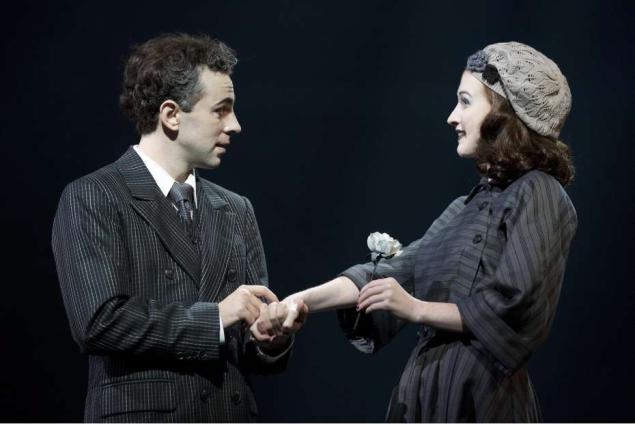
Thursday night I caught a preview performance of Chaplin: The Musical, a new Broadway show starring newcomer Rob McClure that was first developed at the La Jolla Playhouse under the title Limelight: The Story of Charlie Chaplin. That first draft did not get particularly good reviews, but that was a couple of years ago.
It’s been a breakthrough year for physical comedy in the mass entertainment world. First The Artist wins five Academy Awards, including best picture, best director, and best actor. And last weekend One Man, Two Guvnors concluded a pretty much sold-out run on Broadway, with James Corden’s comic servant of two masters beating out Philip Seymour Hoffman’s battered salesman, Willy Loman, for the Tony best actor award.
Could a trifecta be in the works? Chaplin: The Musical opens this Monday, and while it may not sound like sure-fire Broadway fare, no one predicted those other two pieces to appeal to such a wide audience either. And the book is by Thomas Meehan, whose name I didn’t know but probably should, since he’s won three Tony Awards — for mega hits Hairspray, The Producers, and Annie (the latter re-opening on Broadway next month).
Here’s a promo:
Of all the usual preview articles, this one from the NY Times about Rob McClure’s preparations for the role is the best. It actually talks about the movement and physical comedy elements:
Here’s an excerpt:
The show demands a veritable comedy decathlon of stunts, spills and specialty bits. “There’s been a bit of a Chaplin boot camp, with tightrope and roller-skating and violin lessons,” Mr. McClure said, in a tone more of exhilaration than complaint. “Every time I think, ‘Oh God, how am I going to learn all this?,’ I remember he did it. Chaplin did it all.”Mr. McClure said. “But once you put on the hat and the mustache and the cane, you can’t screw with that. You need to get that right, because anybody who cares about this coming in is looking for something very specific.” Mr. McClure became a detective of Chaplin’s film performances, studying them not only for how-to’s but why-to’s. “When I was first working on the Little Tramp shuffle, I noticed he would have these little bursts of energy, so as he’s waddling, a shoulder will pop or a knee will kick out,” Mr. McClure said. To go beyond mere imitation, he kept watching and eventually struck gold. A particular moment in Chaplin’s film The Circus caught Mr. McClure’s eye.“The Tramp gets turned down by a woman, and as he waddles away, the shoulder and the knee go,” Mr. McClure recalled. “I realized he’s brushing it off,” with each twitch essentially saying, “Shake it off, shake it off, Charlie.” Mr. McClure came to understand that Chaplin “had a physical vocabulary that was ultimately specific. Nothing was for silliness alone.”
It was entertaining, it was solid, it was sentimental, it offered a lot for your money — assuming that like me you buy half-price tickets — and it got an enthusiastic standing ovation from Thursday night’s sold-out audience. I have no idea if it will get the kind of reviews and buzz essential to a long Broadway run, but will let you know in a week or so once all of the notices are in.
For me the show’s main challenge is in compressing Chaplin’s long and tumultuous life into two hours of plot. With movie biopics we often end up getting a cartoon version of a genius’ life that rarely penetrates the nature of that genius, and this musical is no exception. His uniqueness is simply his “talent,” and it doesn’t get much deeper than that. Characters are combined, events oversimplified. Chaplin’s penchant for teenage girls and the political witch hunt that drove him out of the country are treated rather superficially. As history it’s ultimately unsatisfying, though the results can still be entertaining. Think Barnum — a big hit that played a lot more loosely with the facts than does Chaplin. But Barnum had better songs than Chaplin, which I have a feeling will be another factor dampening the critics’ enthusiasm.
The opening curtain
The choreography of Warren Carlyle (Follies; Hugh Jackman), who also directed, does a decent job of infusing the whole show with some nice bits. As in so many Chaplin films, the onstage world is a topsy-turvy place where bottles, canes, plates, wine glasses, chairs, and roller skates all lead a precarious existence and equilibrium cannot be taken for granted. Large-scale dance numbers that stick in my mind are the Chaplin impersonation contest, the Hall of Mirrors (from The Circus), the Mack Sennett pie fight, and the assembly line of ladies based on the factory scene in Modern Times, though I thought the first two of these could have been developed more.
And was Rob McClure up to the task of impersonating Chaplin?
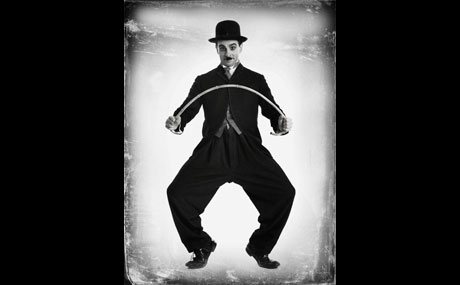
Yes, very much so. He can act and he can even sing, but he’s at his best when in motion. He’s picked up some solid skills — though (unlike Chaplin in The Circus) he is tethered for the wirewalking segments. In terms of movement, at least to my eye McClure nails the Little Tramp character and, if anything, I kept wishing they would give him juicier comedy material to impress with. The guy deserves his own show stopper and the musical needs more belly laughs. But all in all, a kinetic and intelligent performance, and you physical comedians out there need no other reason to try to catch this show. As a whole, Chaplin: The Musical does not totally dazzle, but Mc Clure is worth the price of admission.
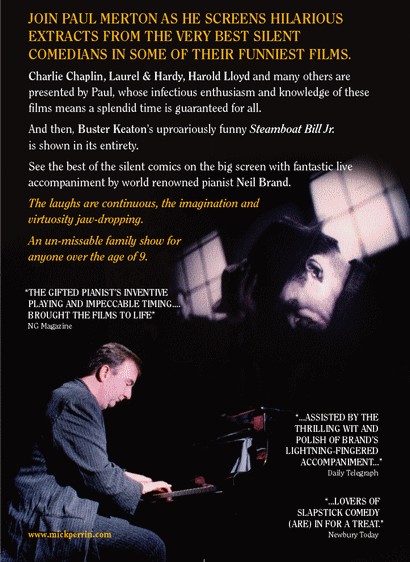
There are a ton of books about silent film comedy, many of them excellent, but they’re not written by performers. Paul Merton, author of Silent Comedy, is on the other hand a popular British comedian — mostly improv and stand-up, rarely silent —with a love for the heyday of slapstick. He has even done several lecture tours on the subject, bringing screenings with live music to theatre festivals and other venues throughout the U.K. In the past two years he has produced two documentaries on early film (not just comedy) for television: Paul Merton’s Weird and Wonderful World of Early Cinema (BBC Bristol, 2010) and The Birth of Hollywood (BBC2, 2011). He has also done an interactive presentation on early British film comedy for the British Film Institute, which you can view online here.
Merton is, first of all, a good writer! The problem I have with most historical works is that they’re too thorough. I know the impulse: you’ve done all that research, naturally you don’t want it to go to waste — “I suffered for my art; now it’s your turn!” — but the result is more info than the reader needs. You can’t see the forest for the trees. Merton’s chronicle is full of fascinating tidbits and anecdotes, but he marshalls those facts to make a point. They all contribute juice to the narrative flow and actually tell us something significant about the performer. The result is a rich and entertaining read, 329 mass-paperback pages, though obviously you’ll get a lot more out of it if you can view some of the films he’s talking about, easy enough with YouTube and a basic DVD collection. Think of it as a companion volume to the actual movies.
Merton chooses to limit his study to Chaplin, Keaton, Lloyd, and Laurel & Hardy. He is dismissive of Harry Langdon; other comedians such as Fatty Arbuckle and Charley Chase play only minor roles, and there’s no mention at all of Lupino Lane or Charley Bowers. Instead of separate sections on each comedian, the approach is chronological, which might sound boring and unimaginative, but isn’t because he switches back and forth between these powerhouses every year or two to show how they continually tried to outdo one another. This works very well, bringing fresh insights into their working methods; for example, how Lloyd’s success with the thrill comedy Safety Last spurred Keaton and Chaplin to create similar moments in Three Ages and The Gold Rush, respectively.
As a performer, Merton is always thinking from a performer’s point of view, getting inside their heads better than most silent film historians. To his credit, he notices what stunts are real, and very much appreciates the virtuoso skill and hours and hours of practice required. However, not being a physical performer, he’s not as sharply attuned to physical comedy vocabulary. It does not occur to him, for example, that the topmounter in the running 4-high in the elopement scene from Keaton’s Neighbors is — in most of the shots — very likely a rag-doll dummy, and not Virginia Fox.
________________________
“Slapstick comedy has a format, but it is hard to detect in its early stages unless you are one of those who can create it. The unexpected was our staple product, the unusual our object, and the unique was the ideal we were always hoping to achieve.” — Buster Keaton
________________________
As much as he admires the creativity of this golden age of cinema, Merton is not afraid to address its uglier aspects, specifically negative racial and gender stereotypes widely prevalent in those days. But he is also quick to point out progress made during the 20s in both areas, for example in Keaton ‘s ThePaleface (1922) and The Cameraman (1928).
Keaton and Chaplin in Limelight (1952)
With his successful silent film tours offering solid evidence, Merton is bully on the appeal of silent film comedy when presented in the right circumstances, a point I was emphasizing in my recent Revenge of the Silents post. Here are just a couple of examples Merton offers:
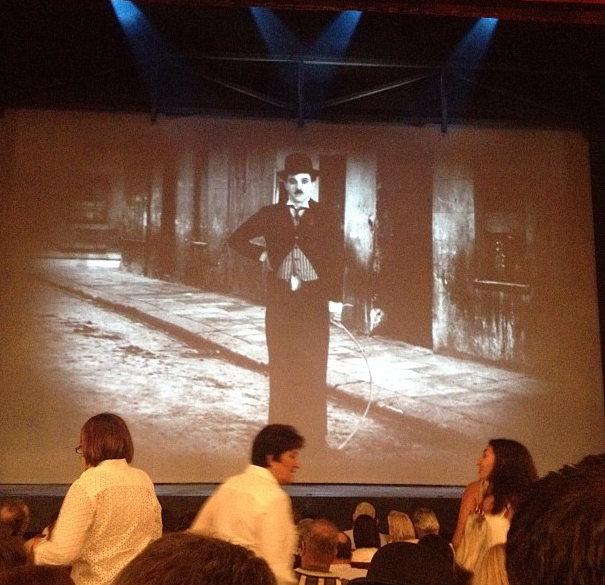
In January 2007 at the Colston Hall, Bristol, I presented Steamboat Bill Junior to over 1,500 people on a big screen with superb musical accompaniment from Neil Brand and Gunther Buchwald. The house front falling towards Buster is a tiny moment in a cyclone sequence that runs for nearly fifteen minutes, but when the stunt happened the audience cheered and applauded spontaneously. A few days after this ecstatic response I heard the playwright Mark Ravenhill extolling the virtues of Steamboat Bill Junior on a BBC Radio 4 arts programme. I seem to remember that he had seen the film on a big screen at an open-air festival many years before.
The other people in the studio, who sounded like professional critics, had each been given a DVD of the film to take home and watch. Their verdict was unanimous: it simply wasn’t funny because in their view humour dates very quickly, and black and white silent comedy couldn’t be more dated if it tried. How could they get it so wrong? Well, watching a silent film on a small television screen with inappropriate music as accompaniment can destroy the magic. It’s easy to see nothing….
Laurel and Hardy’s last silent film release before their first talkie has often been considered their best ever. I’ve watched Big Business more than thirty times with a live audience, and the responses have been remarkably uniform. They always laugh in the same places with the same regular rhythm. Stan and Leo [Mc Carey] previewed their films in exactly the same way as Harold, Buster and Charlie, and the films were recut according to the audiences’ reactions. That’s one of the reasons they still work so well today.
A page from Merton’s book, above, and a few more short selections below….
He [Keaton] was always proud that he didn’t use a stuntman. Larry Semon’s films are chockfull of stuntmen all pretending to be him, but it was Buster’s belief that stuntmen didn’t fall in a comical way. [NOTE: Keaton did have a stuntman pole-vault into the dorm window for him in College, which I believe was the only time he was doubled, at least in the silent era. —jt]
The tiresomely idiotic debate on Keaton versus Chaplin is, in my experience, overwhelmingly used by proponents of Buster to attempt to rubbish Charlie… It’s an appealing mind-set for some people, who say: “We’ve all heard that Charlie Chaplin was meant to be the greatest comedian in the world, but my preference for Buster Keaton demonstrates my ability to think for myself. Chaplin was overly sentimental, but Keaton’s coolness and cynical eye chime exactly with our Modern Times….” Well, the good news is that they are both fantastic. There’s no need to choose between them. Enjoy them both! That’s one of the main aims in my book. I shall examine the films of Charlie Chaplin and Buster Keaton, not in isolation, as has been the usual practice, but showing how they influenced each other in a creative rivalry that also featured Harold Lloyd. This rivalry and desire to make better and better comedies ensured a stream of high-quality pictures. Great works of art were created.
As much as he [Keaton] liked Roscoe [Arbuckle], he was trying to get away from unmotivated slapstick. In all the years they worked together, the only disagreement Buster had with Roscoe was over Roscoe’s assertion that the average mental age of an audience was twelve and that you should pitch your comedy at that level.
_______________________________
As for Paul Merton the comic, he is hardly silent, known instead for his surreal rants, often delivered dead pan, though he denies mimicking the Great Stone Face, Buster Keaton: “It comes from one of the first things I did as a stand-up in the early 80s called A Policeman on Acid, which was basically this policeman recounting in court the time someone gave him some acid and describing his trip. And I realized then it was much funnier if the policeman himself didn’t find anything he was saying funny, so the deadpan approach came from there, and I suppose that kind of set a style. I wasn’t deliberately copying Keaton at that point.”
Here’s the clip:
Merton is returning to touring his own comedy in 2012 in a “night of sketches, music, magic, variety, and dancing girls (two of them aren’t girls).” Click here for more information.
Everyone makes movies these days so why not clowns? Recent efforts I’ve come across range from filmed clown gags to full-blown attempts to recreate silent film comedies. You saw several of these in this recent post; at least you did if you know what’s good for you! Those were all pieces presented this fall at the NY Clown-Theatre Festival. Here are some more that have come to my attention over the past couple of years, though I wouldn’t be surprised if this is just the tip of the proverbial iceberg.
Before undertaking such a project, there are a lot of choices you’d have to make. Is it silent or sound? If silent, why? Modern or retro? Color or black & white? Do the comic characters dress and speak more or less naturalistically, or are they heavily stylized? Do we see them as “clowns” or as “normal people” whose behavior just happens to be highly eccentric? Do they live in 1911 or 2011? — or in some twilight zone?
The movies we showed in the festival and the movies in this post all have different answers to these questions, so judge for yourself!
The Blind Date
Let’s start with the movie that sticks closest to original silent comedy style, Patrick McCarthy’s Chaplin tribute film, The Blind Date. According to Ben Model, who supplied the link, “it was shown at the Chaplin conference last year, where David Robinson saw it and invited Patrick and his film to Pordenone this year.” [Robinson is the author of the definitive bio, Chaplin: His Life and Art.]
In case you’re wondering, the idea of imitating Chaplin goes way back to the heyday of his popularity, back before 1920, when an international Chaplin craze led to many a Chaplin imitation contest. Chaplin himself once entered one of these as a joke — and lost!
Wally on the Run
Next up is a short piece by veteran American circus clowns Trick Kelly and Steve Copeland, former Ringling performers who have worked with the one-ring Kelly Miller Circus for the past four years. That show, by the way, has received rave reviews as a very strong traditional one-ring circus, and I’m still kicking myself for having missed it last summer. In this piece, made for a music video contest for a Steve Martin banjo album, they bring the circus clown outdoors, in full makeup and costume, making good use of the camera so that the choreography nicely fills the larger setting.
There’s a funny video interview with the duo here, and you can visit Steve’s life-on-the-road bloghere.
Rebound! Happy Hour is or was a physical comedy trio comprised of Ambrose Martos, Mark Gindick, and Matthew Morgan. I’ve seen their stage show twice, and it has some pretty robust physical clowning. Rebound! is a zany film that transports their wacky characters from the stage to their own special urban playground.
See three more Happy Hour movies by going hereand clicking on Video.
How to Quiet a Screaming Child Drew Richardson, aka Drew the Dramatic Fool, is a solo theatre clown who has also made a continuing series of silent films. In fact, he bills himself as the “first person in the 21st century to make new short silent movies for mainstream movie theaters.” Although these are solo pieces, usually filmed indoors, the cinematography and music lend them a vintage silent movie quality. In this one, Drew uses visual effects to play against himself. If that seems too modern to you, check out the use of the same effect by that brilliant Hollywood VFX artist, Buster Keaton, in The Playhouse (1921) and other movies!
• More silent movies starring Drew here.
• Purchase a DVD of twelve silent shorts by Drew here.
• A silent movie with students from Gallaudet University, directed by Drew.
• A silent movie Drew made with Joe’s Movement Emporium Theatre Tech Program
The Big Lock Out Bello Nock has a well-deserved reputation as a top-notch daredevil circus clown, but did you know he also makes silent films? Well, sorta-kinda. Back in 2007, Colorado businessmen Mark Marguiles and Kerry Berman decided that there weren’t enough wholesome movies for families to watch, so they looked to the heyday of silent film comedy for inspiration. Feeling that Bello Nock was a perfect match for the project — “he was born eighty years too late,” says Mark — and eager to get Bello’s formidable comedic talents before a broader (movie theatre) public, they managed to pry Bello away from the circus ring long enough to feature him in a series of four short silent movies.
Unfortunately, distribution did not live up to expectations and the company, Family Flickers, has since been dissolved, though Mark says they’d be interested in reviving the effort if the sponsorship were there. Personally I find it amazing that in this day and age, when we all watch videos of different lengths and styles on the internet, that commercial movie houses still adhere to the same rigid format of having the same feature film run repeatedly throughout the day. What if every feature were preceded by a short film? Wouldn’t that introduce variety and encourage all sorts of talent? Seems like a no brainer to me.
End of rant. Thanks once again to Ben Model for turning me on to this, and of course to Mark, Kerry, and Bello for their production efforts and for sharing The Big Lock Out with us!
12 Steps to Making a Slapstick Film
I’m sure at least half of you are starting to entertain the idea of making your own slapstick movie. If so, here’s all you’ll ever need to know (heh-heh), courtesy of the Bristol Silents Slapstick Festival, by way of Jonathan Lyons.
Somehow I think there’ll be a part four to this one of these days….