This very funny parody of a ballet pas de deux, choreographed by Christian Spuck of the Stuttgarter Ballet, has apparently become a repertoire favorite. Here are two versions. The first, from the year 2000, features Julia Krämer and Robert Tewsley , and is performed in front of a live audience. The second, with ballerina Alicia Amatriain (male dancer not identified), has no audience but better lighting and tighter camerawork. Spoiler Alert: Neither has a dancing cow, much to my disappointment.
Another scrumptious treat from our resident eccentric dance expert, Betsy Baytos. I don’t know much about Jack Stanford, but the Pathé site where this 1935 clip comes from at least explains that he is dancing to the Hungarian Rhapsody (Franz Liszt)… but the web version is just a “preview” without the audio.
(Click image to play.)
Here’s a much shorter clip of Stanford, but you do get the music, and he’s even singing.
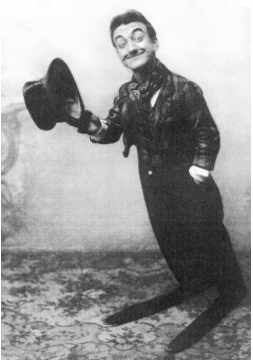
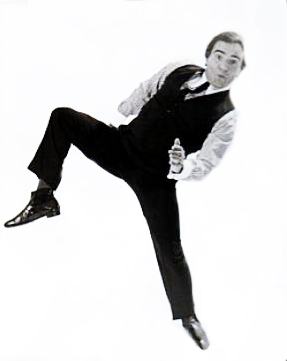
Comments on the Pathé site feature this pointed exchange between descendants of Stanford and of American eccentric dancer Hal Sherman:
Well, it certainly looks like Hal Sherman’s dance routine to me! It’s almost step-for-Moonwalk-step.
In response to the above comment, can I quote the review from The Brighton and Hove Herald circa 1928 of the show at The Brighton Hippodrome with The Houston Sisters. “Jack Stanford is surely the greatest eccentric dancer of the day. He is at one time amazing and uproariously funny. If you have seen Ben Blue, you have seen good eccentric dancing. If you have seen Hal Sherman, you have seen eccentric dancing almost as good as it can be. But not until you have seen Jack Stanford have you seen eccentric dancing at its amazing best. The original cutting of this is in his personal scrapbook, along with his reviews from The Folies Bergere in 1927 with Josephine Baker, The Scala Berlin, The Royal Variety Performance at The London Palladium in 1931 and so many more.
When I use the term “physical comedy,” I’m usually thinking full-body involvement, and I often cite not only comedians such as Buster Keaton and Bill Irwin, but dance troupes such as Pilobolus and Momix. Lately I’ve taken to calling it “(Very) Physical Comedy” to distinguish it from certain clown work that, though mostly non-verbal and often making very imaginative use of objects, is more static, less kinetically explosive.
Here’s another example from the dance world, “Brothers,” choreographed and performed by David Parsons and Daniel Ezralow, and still in the repertoire of the Parsons Dance Company. The partnering is brilliant and full of little comic moments, though the Stravinsky music tends to bring out the drama more than the humor.
After six months with only a handful of posts, this blog is back, and what better way to restart than with something sublimely silly: Japanese Synchronized Walking!
It just so happens that I’m a big fan of snazzy group movement — Busby Berkeley, marching bands, and massive chase scenes are all A-OK in my book — but this is different. It’s… it’s…. oh just watch first, then I’ll tell you what I’ve learned.
On one level, it’s all so serious, yet a lot of the humor seems intentional, and of course I couldn’t help but enjoy the costume change (0:55,) the domino fall (5:04), the character poses (8:00), and all the intersecting patterns.
Here’s the background, as provided by Makiko Itoh on the web site quora.com.
It is not a competition at all, but an exhibition put on by the Nippon Sport Science University (NSSU), a university dedicated to physical education. Most of the graduates go on to become PE teachers, trainers and coaches.
The movement is called “shuudan koudou”(集団行動)or group movement. It’s similar to military movement exercises, or synchronized marches by marching bands, but more intricate. Among other things it’s supposed to help train the NSSU students to manage large groups in the future. (Japanese schools often have morning exercises and assemblies and such where the entire student body is gathered together. They’re expected to line up at equidistant from each other, stand at attention when the principal comes to the podium and that kind of thing.) I’m guessing though that it’s just a fun thing to do.
Group movement is a tradition at NSSU along with things like cheerleading. As far as I know it’s unique to NSSU. There are no open group movement competitions.
Most people love the synchonized movement and humor, but some find it uncomfortable to watch since it reminds them of military demonstrations that are similarily synchronized.
I’m thinking maybe the unease with it seeming to be too militaristic (or corporate) is what inspired the comic touches.
You can find some variations here and of course via a YouTube search.
[Some of you must have noticed that I’ve neglected the blog big time this year. It’s not that I’ve lost interest in physical comedy. In fact, in New York I’ve been busy directing physical comedy, and this week I’m in Barcelona teaching it at Jango Edwards’ Nouveau Clown Institute. Nope, the problem is that I’ve gotten involved with other stuff, the main one being learning Spanish! Had been meaning to do it for over 40 years, and now I’ve thrown much of my spare time into it. But the plan is to get back to the blog, and here’s a post to prove it.]
My favorite eccentric dancer, our guest blogger Betsy Baytos, sent me this clip of the comedy dancing duo Jean Larraine and Roy Rognan, who I must admit I had never heard of. It’s from the 1942 movie The Fleet’s In, whose plot — much like the better-know Stage Door Canteen a year later — involves visiting a USO canteen, a night club catering to World War II soldiers on leave. In other words, an excuse to present variety acts, for which we can be very grateful.
Here’s the very funny clip, Larraine & Rognan performing with a bemused Jimmy Dorsey & His Orchestra. The switching back and forth between sheer elegance and pure cartoon is dazzling and well-nigh perfect.
The duet, who were husband and wife, also appeared in the 1943 musical, Salute for Three, but I haven’t been able to locate that, even on VHS. Their career was cut tragically short while on tour in ’43 with the USO when their plane carrying 39 people, including 7 entertainers, crashed off the coast of Portugal, killing 14.
Larraine survived; Rognan did not.
According to this report, “Jean Lorraine, in addition to losing her husband, had seven teeth knocked out, hurt her back, and crushed her right leg. She had been a comedy dancer with her husband, but after the tragedy she became a singing comedienne. She changed her name to Lorraine Rognan to keep her husband’s name alive. She was on crutches for seven and a half months, but she showed the same kind of bravery as the men in her audiences. She entertained at the Hollywood canteen while still on crutches, then went overseas again a year after the accident to fulfil her contract with the USO. Her husband’s death didn’t meet the criteria spelled out in the literature, which said the life insurance was ”valid in case of death from all causes except airplane accident or act of war.’ In what surely must have been one of the cruellest blows of all, Time Magazine reported that Jean’s accident cost her fourteen thousand dollars.”
I hope she had at least some inkling that her work would live on for future generations.
It’s almost Thanksgiving. Much to lament, much that needs fixing, much that can’t be fixed, but as always ever so much to be thankful for. Somewhere on that list be sure to include all the talented physical comedians who have left us such a wonderful legacy. And to that list I’m adding guest blogger Betsy Baytos, who once again is favoring us with some more insights and fantastic footage on the subject of eccentric dance. —jt
___________________________________
“Welcome to the Eccentric Club (UK), formerly known in its various incarnations as The Illustrious Society of Eccentrics, The Everlasting Society of Eccentrics, The Eccentric Society Club and, finally, The Eccentric Club.” Is this fate?
A Quick Eccentric History:
Ever since the caveman first spoke and gestured, there must have been some sort of “silly walks” around the proverbial camp fire. Unfortunately we haven’t found those cave drawings yet, but we do know that it is a genre of popular theatrical dance that can be traced from early Greek and Roman entertainment, revolving around ridiculous re-enactments of life. Back then it was surely safer not to speak (bald emperor jokes were strictly forbidden), but the visual comedian had inadvertently created a universal language, as classic mime slid into comic drama. I was amazed to learn how pantomime shaped the eccentric’s path early on, through the Roman pantomimists’ wearing of various masks, and the reliance on body language and gesture, which were and still are expressive and important in the eccentric’s vocabulary. The Eccentric’s tricks are ancient, from medieval graffiti as church carvings to English hieroglyphics….hmmm, that must be where those “wild and crazy” sand dancers, Wilson & Kepple come in!
Dancing in character has been around for centuries. Asia, India and Balinese movement can be seen in the eccentric’s sometimes angular and “silhouette style. According to Lincoln Kirstein (ABT, NYC Ballet), “Noverre and the 18th century ballet masters called such work “grotesque dancing” and acknowledged it as an old and definite tradition. The French still have a recognizable vocabulary in La Danse Eccentrique. In contemporary terms it immediately suggests the can-can or chahut…. The Venetian baller master, Gregorio Lambranzi, issued his New and Curious School of Theatrical Dancing (1716). One hundred and two plates suggest all manner of acrobatic and eccentric dance combinations.”
But what changed everything was the French Arlequin comic dances, which led to the English Pantomime, with commedia dell’arte characters, music, and dance.
With the advent of the music hall, specialty acts, schooled in the French and commedia slapstick tradition, flourished and provided the perfect training ground for the eccentric character. Grimaldi became a star and the “joey clown” was born! Even Charles “Boz” Dickens, whose first book was Memoirs of Grimaldi, would dance the ‘hornpipe’, an eccentric staple, for his friends. The music hall provided a refuge for the eccentric’s development, as Dan Leno, Little Tich and countless others perfected their craft.
Here’s a clip of the incomparable Little Tich:
The arrival of the American minstrel show in the mid-1800’s was the turning point in the eccentric’s evolution. Three distinct styles of eccentric emerged:
• Legmania — spun from the extreme French can-can kicks. Here’s Melissa Mason, who could rotate her hips a full 360°!
• Classic Eccentric — Celtic influence with frenetic “below the waist” leg flips, performed here by Al Norman (entering at the 1:10 mark):
• Snakehips — with West African undulating hip swings & extreme body fluidity, performed here by Snakehips Tucker:
FYI: The word itself: So far the earliest I have found the actual term “eccentric dance” in print was 1842, in an old, little book, The Variety Stage, but I may well find earlier references when I return to the UK….I know you were all wondering….)
To me, the beauty of eccentric dance is how everything depends on the solo dancer. Their physical idiosyncracies, fexibility and comic mannerisms, make it unique to them. Add to that a character, a narrative, and a costume to accentuate or disguise the dancer’s physicality, music to punctuate the routine, and you have the quintessential eccentric dancer. Eeccentrics work on the basis of deliberate caricature & parody, often bringing them in subtle conflict with classic dance, as seen in this wonderful Fanny Brice ballet parody, Be Yourself (first 2 1/2 minutes of clip):
Billy Dainty
Or spoofing any kind of “classic” dance, as seen here with the wonderful English eccentric Billy Dainty as Mr. Pastry. I love Mr. Pastry for being such a silly character, doing such a profoundly ridiculous Edwardian dance. It never fails to make me laugh!
Here’s another favorite to enjoy: The Ritz Brothers in the number He Ain’t Got Rhythm, from Wake Up & Live (1937)
One of my earliest research references was the first Dance Magazines (circa 1919-1934) loaned to me by the vaudeville historian, Kendall Capps, a child star in vaudeville who worked with the Marx Brothers and whose father had done an eccentric act. I was shocked at the numerous reference to eccentric dancers, documented routines & costuming ideas, sheet music and ads for Selva shoes, featuring the famous “eccentric dance” team of Fred and Adele Astaire! These magazines covered the New York Broadway stage & vaudeville houses, and boasted over 150 schools, including the Russian Ballet, which taught eccentric dance! This was a turning point and I knew this was more than just schtick!
And as they say, the rest is history! I will include another update of some of my favorite routines….but I need to say once more how wonderful it has been to meet you all! Have a wonderful Thanksgiving!
We continue our series of popular guest posts on eccentric dance by Betsy Baytos with a piece on the multi-talentedRed Skelton. I was actually on his show (in a skit with Jackie Gleason!) a few days after my seventh birthday, and 28 years later he consented to be honorary chairperson of the first NY International Clown-Theatre Festival, but (unlike Betsy) this time around I did not get to meet him. Click here for all of Betsy’s posts on eccentric dance. —jt
_________________________________
Red Skelton had always been a favorite of mine growing up, but I never dreamed I would have the opportunity to meet, let alone interview, the great comic. I had just made the decision to work on the documentary but I had no clue how I, with no financial backing or studio supporting me, could make these great artists sit down and talk intimately about their careers. But I had to try.
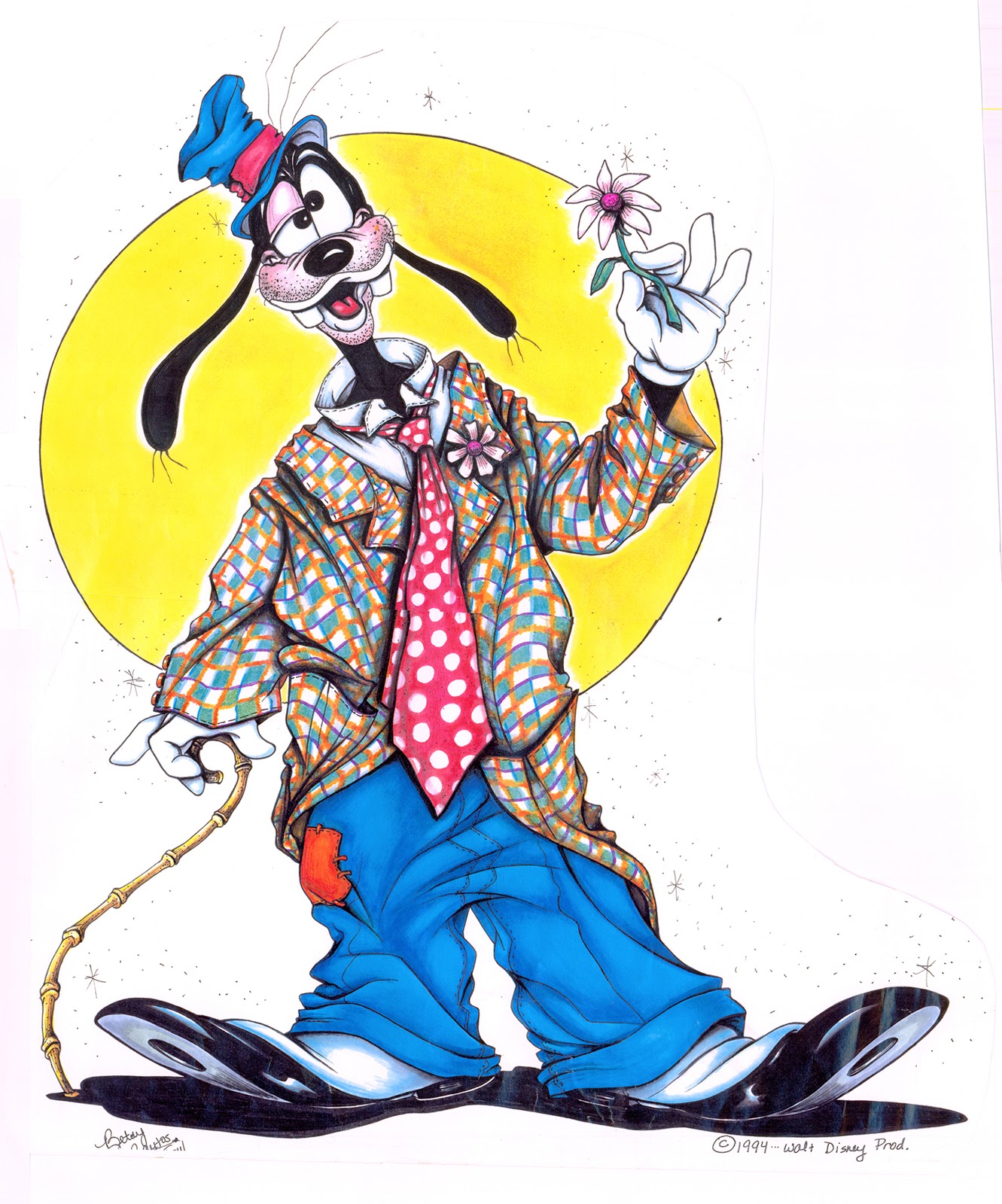
I was living in New York at the time, freelancing and touring for Disney, and somehow managed to get a contact to Red. He was to be my first interview for the film, but how? Aha! I knew of his clown paintings and I worked hard on a full color Goofy as Freddie the Freeloader, sending it off to Rancho Mirage, while hoping for a reaction. When I followed up with a call, an old German woman answered, “Mr. Skelton does not take interviews!” I asked her to verify that the illustration arrived safely, and she was gone a long while. Finally she returned, surprised as I was. “He said YES!” and I jumped, “I’m on my way!”
I flew out the very next day, rented a car, and spent a sleepless night at a motel near Red’s house, as the interview was early in the morning. I was nervous as Red, over six feet tall, opened the door smiling, cane in hand, and chomping on a cigar, ushered me in. His wife, Lothian, daughter of the great cinematographer Gregg Toland, walked in, curious as to my agenda.
He sat down as I babbled about eccentric dancers, and kindly listened, commenting about the dancers he knew, while signing plates depicting his clowns. I had brought footage on a small portable television but needed to somehow divert his attention. I then mentioned Charlotte Greenwood and placed my leg straight up the door frame. Red, taken aback, sat back staring, got up and left the room, leaving me alone with my leg attached to the door frame, aghast as what to do next! Minutes seemed like hours…..
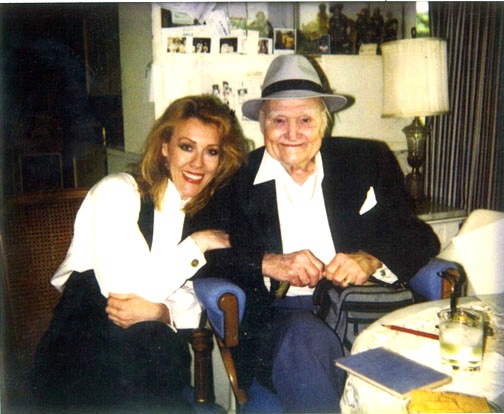
Betsy & Red
Red returned, camera in hand, chuckling heartily. Whew, I did it! I quickly made space in the living room and proceeded to dance eccentric, with Red filming away in delight! He then agreed to do an interview at a later time. With the backing of the New York Performing Arts Library and a grant from Jerome Robbins, I managed to sit him down a few months later, for one of the most extraordinary interviews in Funny Feet. For over two and a half hours, Red graciously made me feel at ease, sharing his incredible background, and regaling me with timeless stories. My focus with this film had always been on a performer’s technique, the process of character development, and setting up a gag, and essentially how to make a step “funny.” Red delivered over and above, with insight on how he studied babies for his drunk act and how you “have to get right up on a pratfall or the audience will think you are hurt!” Pure gold and I was so grateful for this rare opportunity.
Betsy & Lothian
I kept his wife, Lothian, informed, and when Red passed, she reached out, saying how Red had planned to continue touring, and how he considered me as his opening act! What a thrill that would have been! Lothian and I have since become close friends, and that experience and interview compelled me to push on, making me realize how much these great artists have yet to give!
Here are two amazing Red Skelton clips, the classic Guzzler’s Gin, followed by the lesser known dance class sequence from Bathing Beauty (1944). Skelton’s pantomime is pure “eccentric” in how he uses his character and has a specific reason for everything he does, in every gesture, every move. There is action and reaction. His body language as a ballerina, from a slumped position as he enters, to the extreme pulling up as he gets slapped around, is what makes that piece so effective.
The same in animation: it’s all about the extreme pose and how you build a gag. An eccentric dancer doesn’t give away what is about to happen, instead looking just as baffled as we are at the results of their antics. Surprise is the key, and as the music escalates, so does Red. It’s musicality, not just in dance but in his pantomime. Choreography is not steps, but movement; no matter how small, it’s all important to the development of the routine.
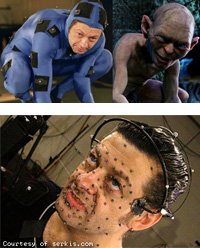
Pop quiz:What do King Kong and eccentric dance have in common? I had no idea, but it turns out the missing link isAndy Serkis,known to millions as Gollum in Lord of the Rings and The Hobbit, as the giant ape in King Kong, as the chimpanzee Caesar in Rise of the Planet of the Apes, and as Captain Haddock in The Adventures of Tintin. Millions except for me, that is, but now thanks to our resident eccentric dance expert,Funny Feetdirector, and guest poster Betsy Baytos, I am being properly schooled. In addition to voicing these characters, Serkis’ body language and facial expressions were digitized by means of motion capture technology and formed the basis for animating each one of them. Not surprisingly, this leading motion capture actor with the circus name is also a student of eccentric dance. Take it away, Betsy! —jt ____________________________________
Many wonder why on earth do I need to reach across the pond for eccentric dancers, but there are several reasons, and here is only one: Andy Serkis, a celebrated actor and director, whose brilliant character work has galvanized motion capture technology! What a surprise when English actor and friend Tim Spalls suggested I seek Andy out for his role in Topsy-Turvy, the highly acclaimed musical drama about Gilbert & Sullivan. I soon came upon this blog post he wrote on studying eccentric dance for the role! He is one of many contemporary actors and physical performers the U.K. who I must include in Funny Feet!
Topsy-Turvy Notes from Andy Serkis
In Topsy-Turvy, Mike Leigh’s award-winning, highly authentic investigation into the lives of Gilbert & Sullivan and the D’Oyly Carte company circa 1885, I play the Savoy choreographer. The character was based on the real life of John D’Auban, an eccentric performer and consummate theatrical. Stepping into his shoes was an immensely pleasurable but physically challenging experience. D’Auban was known in his day as a grotesque pantomimic dancer, a music-hall artist, and a choreographer of ballet, of burlesques, and of practically all Gilbert & Sullivan’s works. He also taught dance and invented the “star-trap,” a rather dangerous piece of stage machinery.
In the six months leading up to filming, I studied ballet, Irish dancing, and (for four hours a day) eccentric dance with choreographer Fran Jaynes. Research on the Internet unearthed an extensive thesis about D’Auban, which revealed where he was born, lived, got married, died and was buried. I visited all these locales. Along with the entire company of actors researching their own roles, I delved deeply into the business of living day-to-day in Victorian London. What trams or buses did one travel on? Where did one eat? What sorts of street food existed, what were the buzzwords of the day? Etiquette, the social and political scene. Nothing that pertained to the lives of these characters was left unresearched, all so that when the actors came together “in character” they had so much ballast to sustain the imagination and keep them completely submerged in the moment, able to improvise freely for hours.
The most memorable times were when we came together to improvise the D’Oyly Carte Company “rehearsal” scenes. The Savoy Theatre (created by reshaping Richmond Theatre) was bustling with sometimes 60 or 70 actors wandering around in character, carrying out their daily business in full Victorian garb. It was extraordinary hurrying to “rehearsal”, greeting members of the chorus, stage managers, principal actors such as Grossman and Temple, and then Gilbert himself would stride in and the rehearsal would commence. D’Auban would inevitably be late, having dashed from some pantomime or dance class, arriving like a whirling dervish. He was a very busy man. Egos would clash, tempers flare, life and death decisions about a particular gesture or dance step were thrashed out. Anyone walking in off the street witnessing these moments would honestly have believed they had traveled in time — it was that potent.
The scene that encapsulates D’Auban’s spirit in the film revolves around a rehearsal for which Gilbert has brought in three genuine Japanese women in an attempt to authenticate the Three Little Maids choreography that D’Auban had lashed together from stock “oriental” pantomime steps. Where Gilbert wants reality, D’Auban wants comedy. It is wonderfully reminiscent of the eternal battle of “art” versus “bums on seats.” D’Auban’s parting shot is “I haven’t laughed so much since my tights caught fire in Harlequin Meets Itchity Witch and the Snitch.”
Duck Soup is my favorite Marx Brothers movie, but it was not a big box office hit. I loved the satire and anarchy, but the general public apparently less so. The reaction of Irving Thalberg at MGM was next time to bring in playwright George S. Kaufmann (You Can’t Take It with You) and give the boys a script where they’d have more pompous (and nasty) straightmen to do battle with. The happy result was the mega hit, A Night at the Opera.
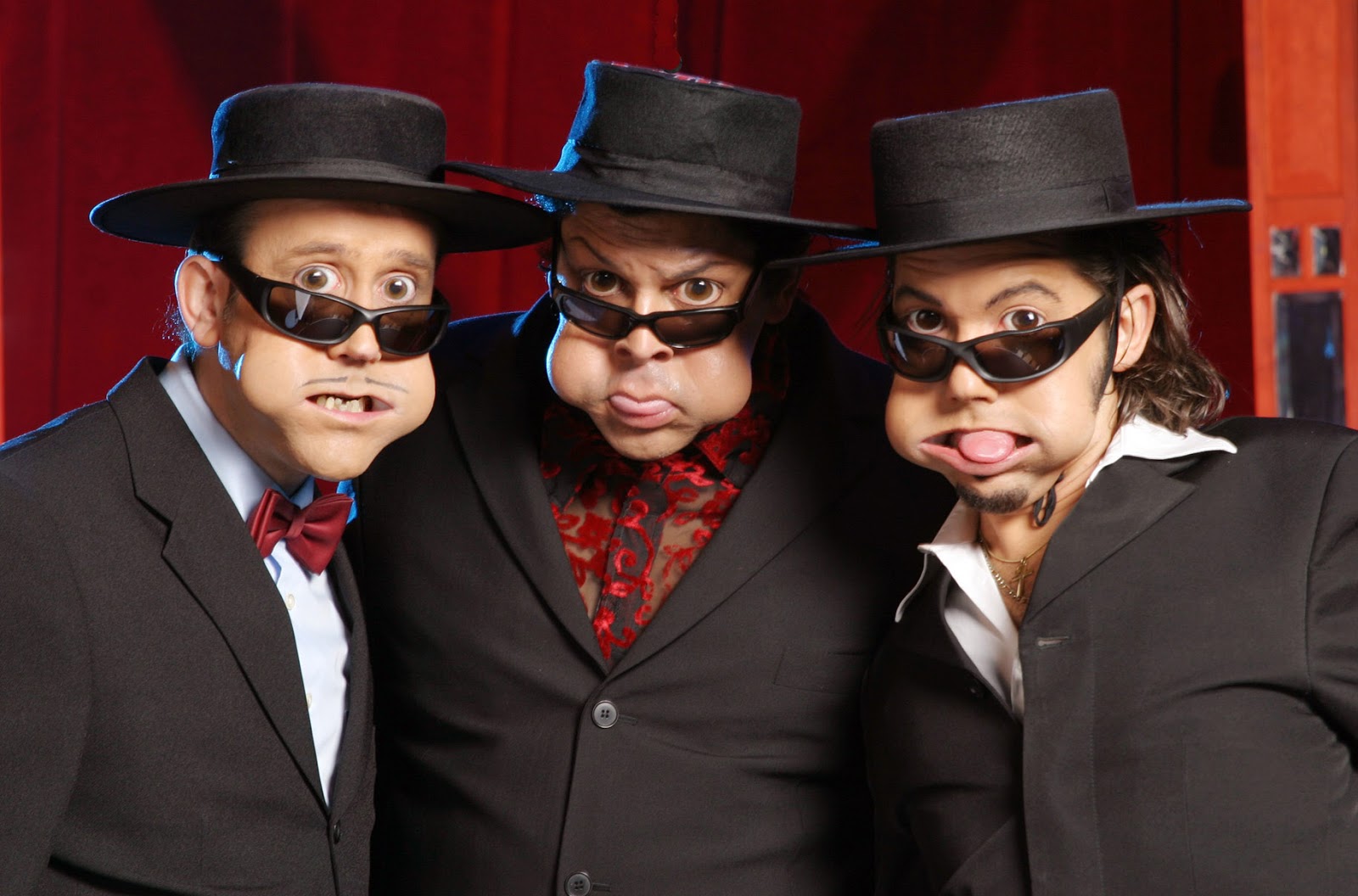
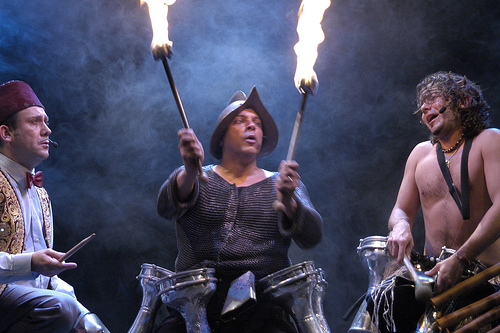
I mention this because clowns thrive when they have something to play off of — contrasto! — and are most appreciated when juxtaposed to people and behavior that are dignified and highly formal, and what could be more dignified and formal than flamenco dancing? Flamenco is great, but it’s so serious! Which brings us to Paul Morocco & Olé, musicians and jugglers, who wreak some very funny havoc from this classical Andalusian dance form.
[TOTAL ASIDE: Did you know there are more flamenco academies in Japan than in Spain?]
Here’s a one-minute trailer, followed by a more informative 8-minute video of an entire numéro:








Alice (Sherman) Simpson
“Jack Stanford is surely the greatest eccentric dancer of the day. He is at one time amazing and uproariously funny. If you have seen Ben Blue, you have seen good eccentric dancing. If you have seen Hal Sherman, you have seen eccentric dancing almost as good as it can be. But not until you have seen Jack Stanford have you seen eccentric dancing at its amazing best.
The original cutting of this is in his personal scrapbook, along with his reviews from The Folies Bergere in 1927 with Josephine Baker, The Scala Berlin, The Royal Variety Performance at The London Palladium in 1931 and so many more.