David Carlyon is an old friend and quite the Renaissance man. A bio that includes fighting forest fires, serving as an MP in the Army, and selling beer at Philadelphia’s Vet stadium grabs your attention even before you get to the three years as a clown with Ringling Brothers and the Ph.D. from Northwestern University. David has been a professional clown, actor, director, and both a creative and scholarly writer, and is perhaps best known for his definitive biography of Dan Rice, the great 19th-century American clown: Dan Rice: The Most Famous Man You’ve Never Heard Of. We welcome David to the blog and hope he will continue to favor us with his informed insights. For more information on David and to buy his book, check out his web site.
— jt
_______________________________________________
Comedians Want Their Feet In
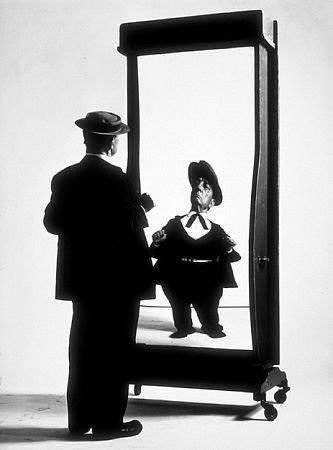
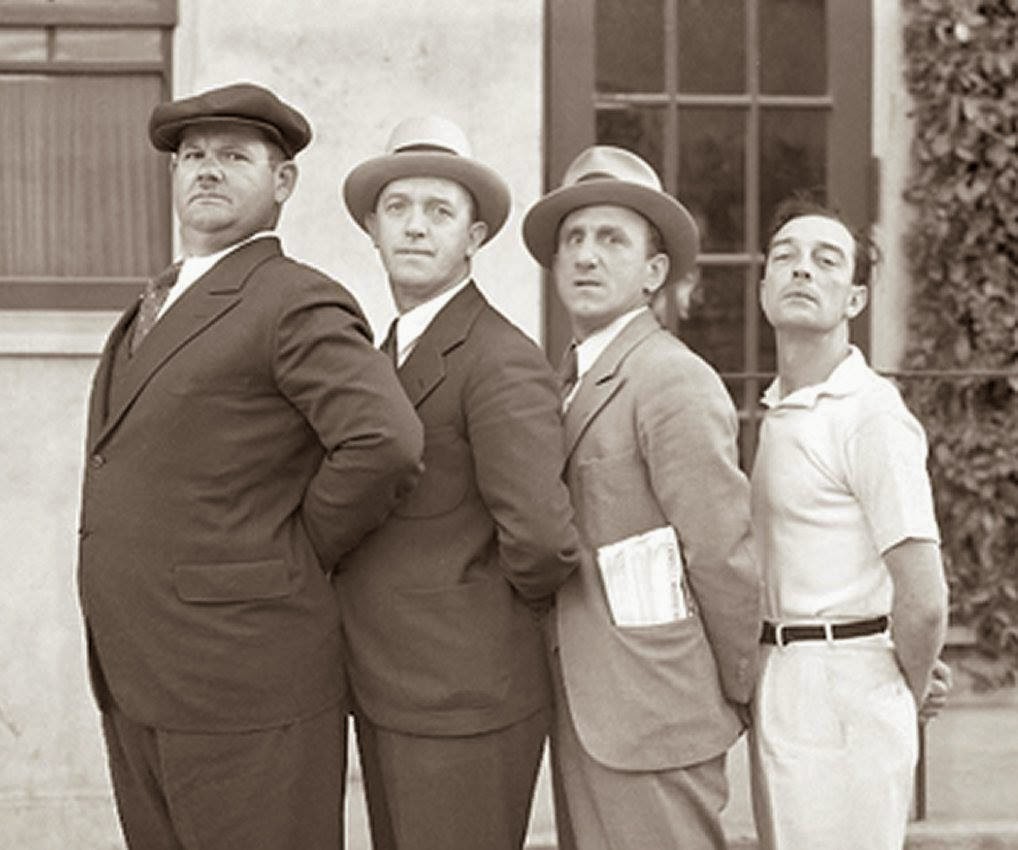
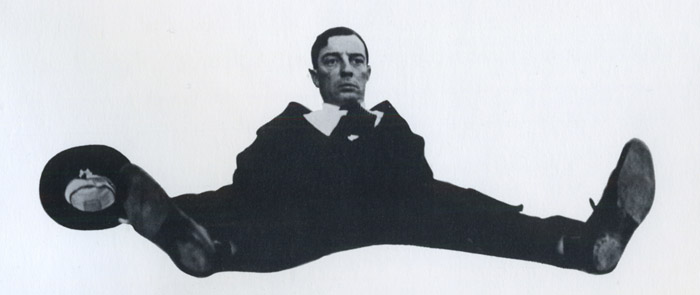
Buster Keaton once said, “All comedians want their feet in.”
While Keaton was referring to a long shot in the movies, showing the whole body, the same thing applies to clowns in live performance. The full body for full expression. This doesn’t mean flailing legs and arms to look clowny, but a good clown in control, skillfully using the entire body as an expressive tool.
Alastair Macaulay, writing about dance in The New York Times. — “Notice the Feet In That Body of Work” (12-13-09) — highlighted the feet’s disproportionate effect in movement. Using hands creates a local effect; using the feet engages the whole body. Consider Barry Lubin. His clown character “Grandma” suggests small and slow movements, like a grandmother, but Barry’s a good physical comedian using a broad range of motion. That includes his feet, from a slow shuffle to legs flying on a treadmill.
However, too often things have gotten turned upside down. Instead of feet, clowns want the head in.  That is, clowns want to show off their ideas. The aim, circus or nouveau, becomes to string a bunch of ideas together without story, structure or theme and call it a gag, a show. Or more grandly to display a message, to flaunt a philosophy, to demonstrate a theory, about clowning or politics or oppression or humanity. Even sentimentality, that spreading cancer of clowning, is an idea, of what people think they’re supposed to feel about clowning.
This isn’t to scorn ideas. I’ve had one or two myself. And ideas are important. John’s blog catalogs all sorts of nifty work based on all sorts of nifty ideas. They help us understand the past, appreciate what other clowns are doing, and push us beyond our comfort zones. They prepare us, shaping what we’ll perform. The head — ideas — and feet can work together. (On a personal note, in some of the best acting I’ve ever seen, Michael Gambon sat still in a scene in David Hare’s play Skylight, his head, torso and legs motionless as he calmly chatted, yet he somehow conveyed longing and loss with his feet.)
Ideas also help externally. Audiences like it when we telegraph our ideas; it makes them feel like knowing insiders. Critics like ideas, especially when conveniently laid out in press kits; it makes them feel smart. And getting a grant is easier if your application emphasizes that you’re using ideas to forge meaning.
But clowning wobbles when the feet get left out. When the head looks down on the feet, so to speak, transforming ideas as a tool into ideas being shown off.
I blame college.
Interest in clowning exploded in the 60s, in large part because it was the 60s. The Clown represented the ultimate free spirit, a pie in the face of the Establishment. (Ringling Brothers and Barnum & Bailey Circus’s Clown College has to be included. While anti-establishment rebels may rebel — re-rebel? — at being associated with something relatively mainstream, the school flourished in the same hippie-ish impulse.) But much of that interest came from campuses — and so did clowns.
Sporting rainbow suspenders and antic attitudes, they — we — learned about clowning in college and took clown classes, we found congenial audiences among the college-educated, and we taught workshops at colleges. When critics give us credit for good jokes, they usually mean references from the college curriculum. Many clowns get financing from foundations and boards, mostly composed of people with advanced degrees.
Individually this collegiate spirit has led to good stuff, sometimes great stuff. But weaving through the academic emphasis is a didactic message that clowning is itself insufficient: It must mean something. Read clown mission statements, manifestos, interviews, websites. Explicitly or implicitly, the same self-congratulatory message pops up: This particular clown / clown method / clown theory does more than typical clowning. This clown will “transcend mere entertainment,” “push the envelope,” “challenge audiences,” “make people think.” (Considering the determination to defy conventional wisdom, the arsenal of phrases is drearily conventional.)
This narrow emphasis also ignores the scientific work that’s been done on the mutual influence of body and mind. In another New York Times article, in the Feb. 2, 2010 Science section, Natalie Angier discussed how significantly our bodies match our thoughts. For instance, holding a hot coffee makes people more like to judge a described character as warm; when we talk about the future, we tend to lean forward.
Putting the head over the feet, so to speak, might be fine if it improved the quality of clowning. That’s the claim of the mission statements and manifesti. However, the clowning of ideas has the same range of quality as clowning of other kinds. That is, some is good, most is in the middle, and some is bad. In a way, the clowning of ideas is worse because it assumes it’s better: When the mere fact of having ideas generates automatic status, rigor wavers and clowning suffers.
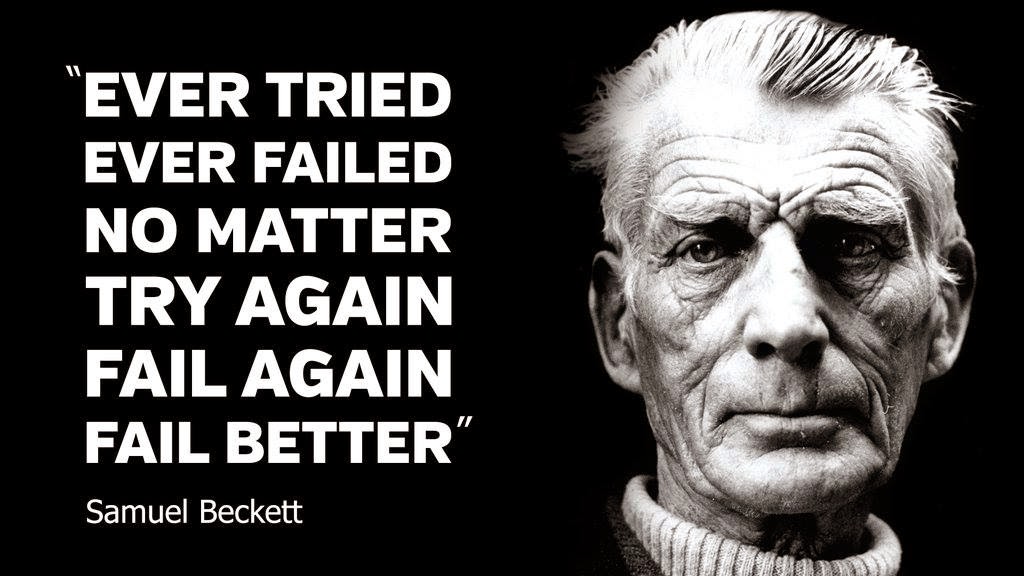
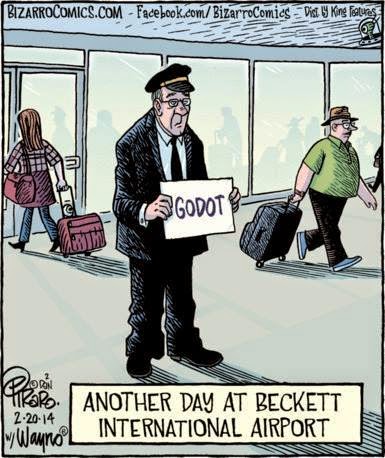
Compare what I will call the Godot Syndrome. Cast really good clowns in Waiting for Godot and chances for really good clowning dim. Wanting to be taken seriously, actor-clowns tie themselves in knots to prove they’re smart enough to understand the play’s existential angst. This isn’t schtick, says the actor’s subtext, I’m dealing with Samuel Beckett’s fundamental questions of the meaning of life and the inevitability of death. Meanwhile the vaudeville bits Beckett included fade and flop.
The “serious” actor-clown doesn’t want the feet in, except for Estragon’s stinky feet, and then to display whatever meaning the actor playing Gogo has decided is in the feet or the boots or the stink. Having directed the play, I’d argue that meaning bubbles up better when the actors avoid all that earnest stuff. When the comedy’s played straight, without intellectual apology, the play can be genuinely funny, prompting more than the cheesy laughs that announce Aha-I-get-that. And funny makes it a more effective play: The contrast of comedy renders the questions about life and death more poignant, more potent.
Sticking the head in without the feet is a dubious feat. It turns us into what clowns used to make fun of.