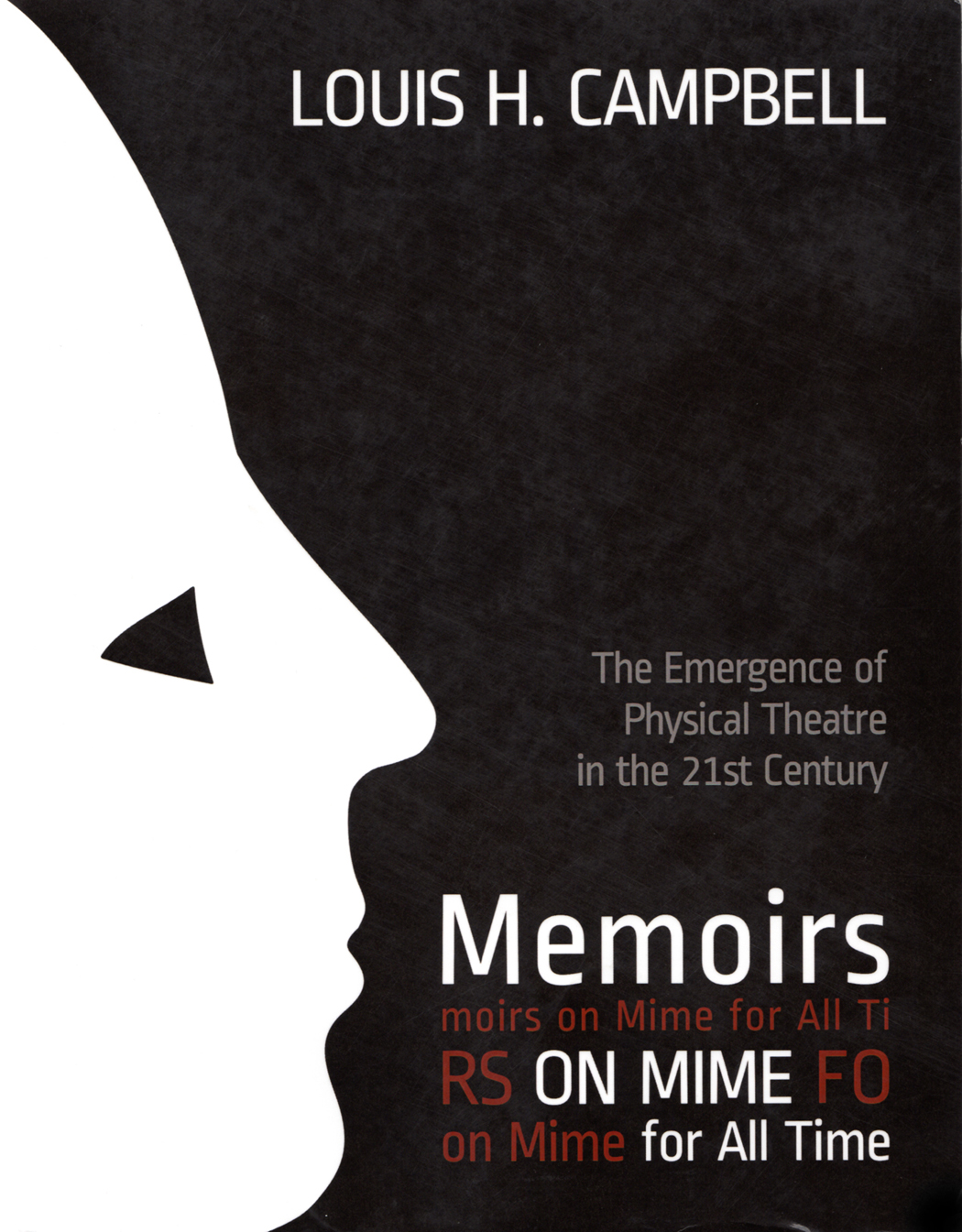
“Memoirs of Mime for all Time –The Emergence of Physical Theatre in the 21st Century” by Louis H. Campbell [Michael Evans is author of the book “The Great Salt Lake Mime Saga and Amsterdam’s Festival of Fools.” He graduated from art school, but spent a long career as an engineer and technician in private industry, higher education, theatre, and the arts. He is webmaster for the Cosmic Aeroplane Archive Site, about the early history of Salt Lake City’s still-vibrant Alternative Culture.]
Lou Campbell
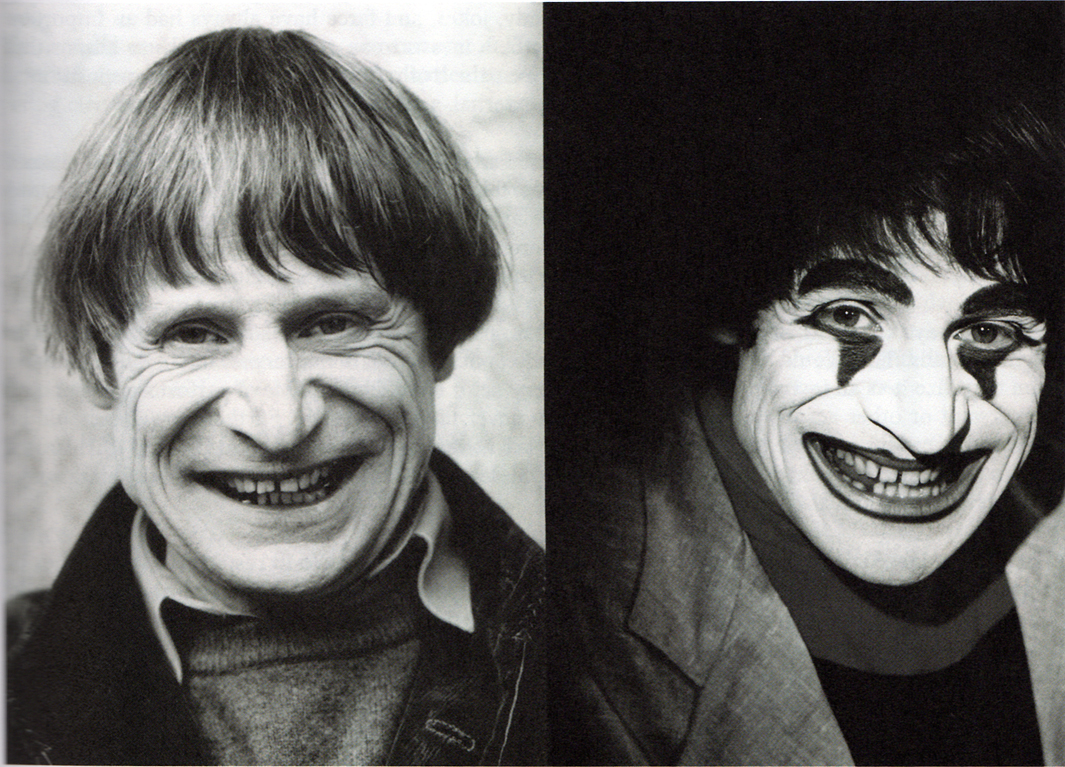
Dr. Louis Campbell is a teacher and theatrical director who has published about eighteen other books —all except one outside the field of physical theatre. Dimitri Mueller’s death at the age of 80 was my main impetus for undertaking this review. I acquired a previous version of this book in the 2000s and promised to write about it. Some very positive theater-related travel interfered with completing the project. The experience of writing my own book also modified my point of view of what it takes to publish these sorts of things.
Dr. Campbell’s book relies on dozens of names. I’ve chosen to review it according to its overall structure, keeping these metaphorical eggs in their cartons, and making the context clear.
Diversity in Mime Terminology
This chapter has only six pages but many viewpoints. It features a lot of names and matches them with quotes and concepts, so we might as well start this review with a baker’s dozen personalities encountered in the book: Etienne Decroux; Ladislav Fialka; Louis Dezseran; Yass Hakoshima; James Donlon; Claude Kipnis; Bob Francesconi; Tony Montanaro; Jacques Lecoq; Mamako Yoneyama; Adrian Pecknold; Richmond Shepard; Bari Rolfe; David Alberts; Antonin Hodek; and Geoffery Buckley, who states: “Mime is a very loose word.”
Major Influences and Solo Acts
Substantial historical sketches make this section a valuable resource on its own. There are also quotes, explanations, and anecdotes galore, along with a few references to other theatrical figures including: Isabella Canali Andreini (1562-1604); Joseph Grimaldi (1779-1837); Jean Gaspard Debarau or Debureau (1796-1846); François Delsarte (1811-1871); Jacques Copeau (1879-1949);Vsevolod Meyerhold (1874-1940); Charles Dullin (1885-1949); Jean-Louis Barrault (1910-1994); Etienne Decroux (1898-1991); Jacques Lecoq (1921-1999); Jerzy Grotowski (1933-1999); Marcel Marceau (1923-2007); Geoffrey Buckley (of England); Ctibor Turba (1944-); Adrian Pecknold (1920-2000); and Sigfido Aguilar (of Mexico).
Clown Dimitri A Major Force in Physical Theatre
This chapter starts with a short professional biography, and an appreciative quote by theatrical director Max Frisch. It continues with an outline of the curriculum at Dimitri’s own school in Ticino, Switzerland, told in clear colloquial English by the great man himself. A coda of appreciation finishes the chapter, with a few more quotes from Dimitri and his fellow performers.
Specialty Acts
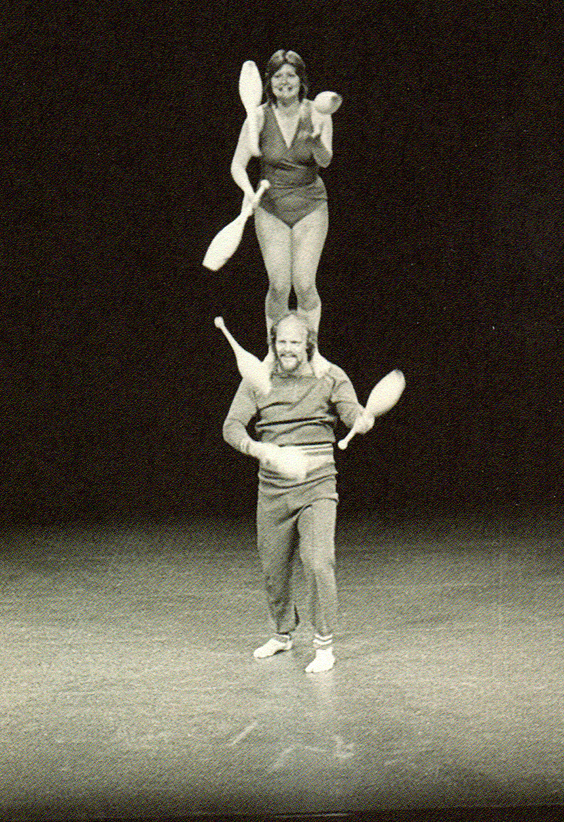
Hovey Burgess & Judy Finelli
1974 International Mime Festival
These dozen pages include the great Swiss performing company Mummenschanz, plus educators such as Hovey Burgess and Carlo Mazzone-Clementi. These pages embody the theme “… Emergence of Physical Theatre” in the title of the book. Other performers and their philosophies are described in this chapter, along with a mix of color and monochrome photos. They include: Avner Eisenberg; Mamako Yoneyama; Lotte Goslar; Ladislav Fialka; Charles E. Weidman; and Tom Leabhart.
Exploratory Glossary of Terms
These twelve pages contain innumerable quotes and reflections by practitioners introduced in the previous chapters. They are applied to seven subjects: The Value of Mime to the Actor; Techniques of Character Development; Circus Techniques in Mime Training; Commedia Dell’Arte in Relationship to Mime; Improvisation, and Mime and Dance in Physical Theatre. It barely touches on subjects that could make a whole shelf of books, but agreements and disagreements are stated, plus personal theories are expounded by various artists.
Mummenschanz at 1974 International Mime Festival
Forms of Mime
This is a chapter about hair-splitting. It is also a sincere attempt to articulate, in words, a visual art form that is supposed to be independent of words. Quite challenging, to say the least! There are more quotes and cross- references from most of the other practitioners found in the book, and Dr. Campbell tries hard to have the many artists speak for their own artistic practices.
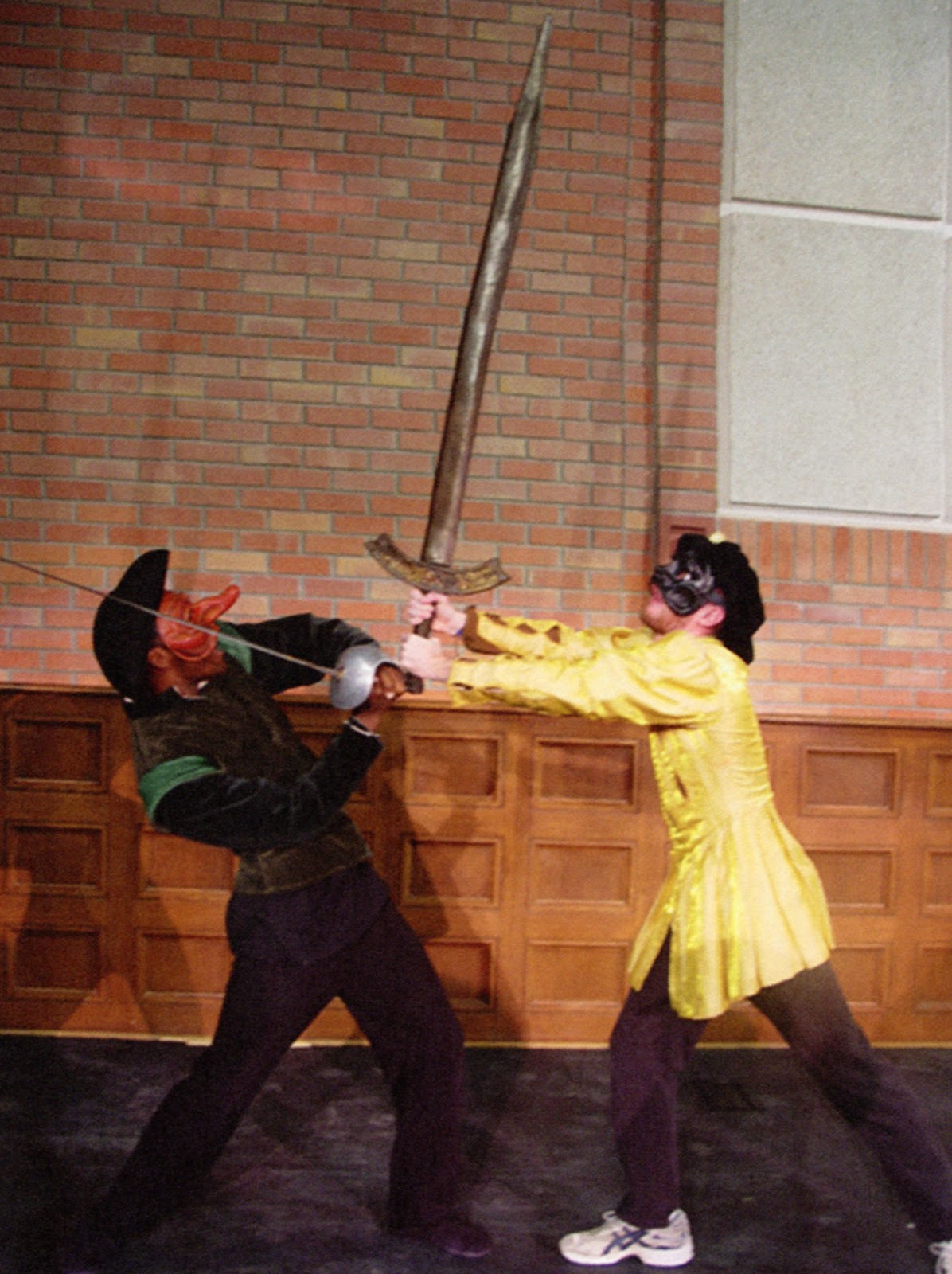
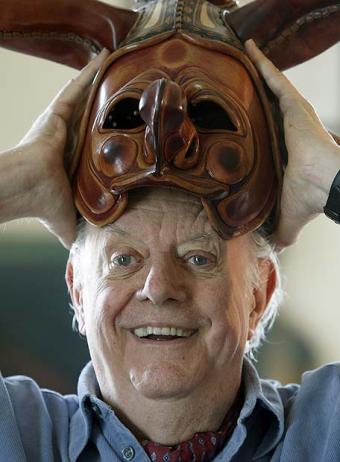
Mask
Commedia & stage fighting
This is a short essay about a vast subject, where the various dramatic functions of masks are bravely outlined in Dr. Campbell’s own voice.
Commedia Dell’Arte Overview —Timeline and Characters
This book starts getting personal as Dr. Campbell expounds about the rich history of these Italian stock characters. They still haunt the backgrounds of innumerable books, movies, and stage works, though! This chapter is illustrated with classic prints of major zany archetypes, and provides a graceful transition into Campbell’s most personal chapter of all.
Joshua Squad
This chapter seems to come right from Dr. Campbell’s heart, and delightfully so! There are forty-two pages of illustrations and descriptions of an international performing company (Joshua Squad) that put Dr. Campbell’s ideas and aesthetics into practice onstage. Commedia Dell’Arte seems to be their point of departure, but they look timeless rather than archaic. This is a book within a book with some early explanations, outlines, and policies constituting a de facto manifesto. It expresses so much in visual terms with lovely photographs from as late as 2011. Chapters Eight and Nine seem to be the soul of the book to me.
The Ultimate Gesture
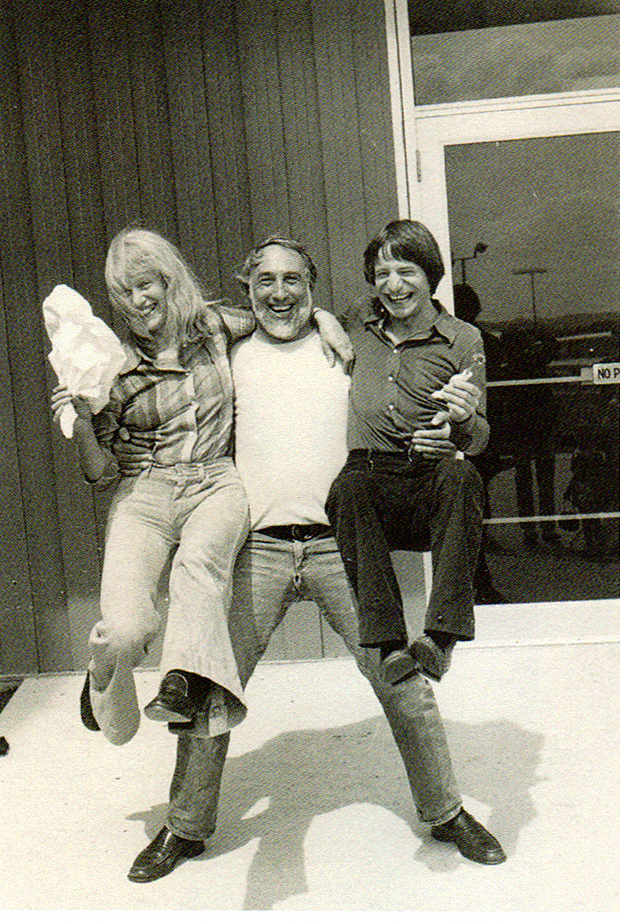
Carlo Mazzone-Clementi
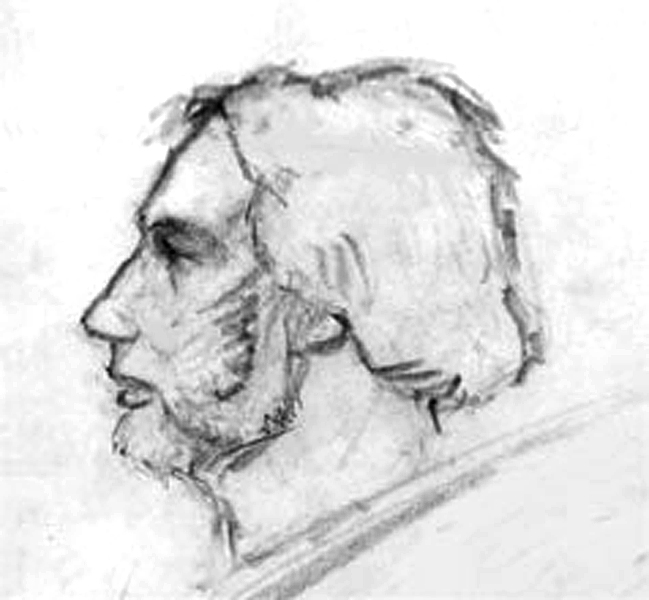
Sketch by Michael Evans
This chapter is an amalgamation of a workbook, more definitions, written exercises, a review of the previous material. There is a deeply personal essay about the International Mime Festival and Institute in 1974, with lots of names and stories about contacts with important individuals. Mary Wigman is mentioned, along with her association with important movement master, Rudolph Laban… like Laban, Dr. Campbell suggests drills of his concepts, and summarizes his interpretations of the work of Geoffrey Buckley, Robert Shields, Ladislav Fialka, Marcel Marceau, Charles Weidman, Antonin Hodek, Carlo Mazzone-Clementi, Mummenschanz, Lecoq, and Mamako.
Carlo Mazzone-Clementi
with Gunda & Dimitri, 1974
International Mime Festival
More Photos The final chapter consists mostly of pictures taken at the International Mime Festival and Institute in 1974. I saw a number of these artists myself. It is enjoyable to see these images, along with pictures of performances I missed.
Reviewer’s Random Thoughts
My own definition is simple —“Mime is the visual aspect of theater,” which even includes radio dramas. One needs to make decisions about what to say when there is nothing to see! The use of labels can help, or not help, but the decision is really up to people who are putting themselves on the line for their art. Some of this material was previously printed in a small hardback called: “Mime and Pantomime in the Twentieth Century – History Theory and Techniques” by Dr. Lou Campbell in 2008. The Foreword by Jewel Walker is much longer, with a separate Preface by Campbell. There were a couple of paragraphs about Leonard Pitt in Chapter One which aren’t in “Memoirs,” and the chapter “Mask” was not present at all. The content is almost identical through the first six chapters, except for “some textual errors,” as Campbell said to me. The quantity and quality of photos and illustration is much superior in “Memoirs of Mime for All Time.” The larger physical size of the second book is much friendlier to visual content, and Campbell’s wonderful personal chapters at the heart of the bigger book simply outdo the smaller volume.
Afterword
Dr. Campbell’s generosity has resulted in my making contact with Mamako Yoneyama. The fine lady is working on an essay about her career after 1980. She still performs in Japan.
Mamako
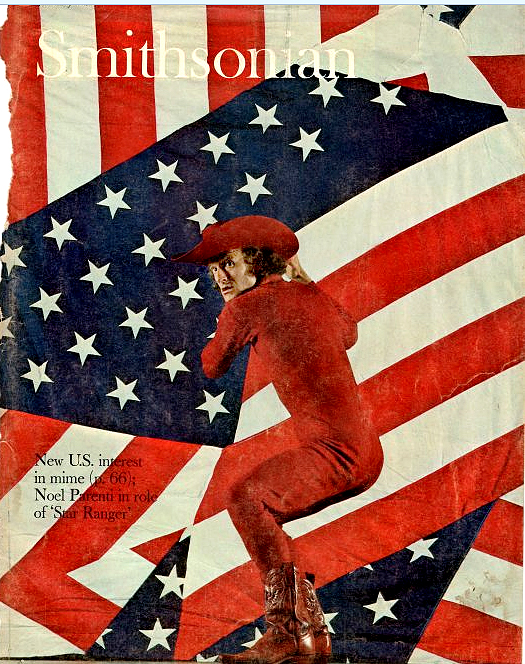
Dr. Campbell barely mentions Cirque du Soliel, arguably the most successful theatrical company of all time, and I vividly remember Noel Parenti’s performance and presence at the International Mime Festival, but nothing is said about him in this book. Parenti was on the cover of Smithsonian Magazine, which did a pictorial about this landmark event. I also wonder about the videotaped interviews recorded throughout the festival.
Noel Parenti
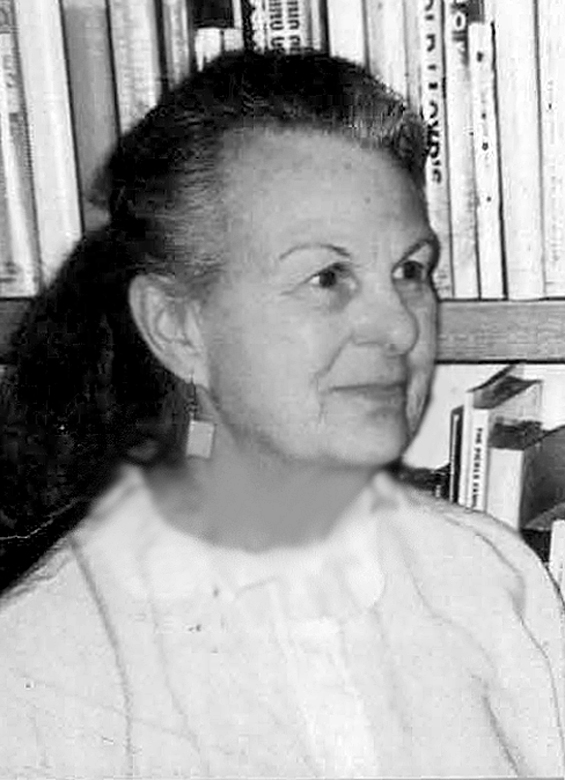
I would recommend any reference library possessing a copy of Dr. Lou Campbell’s “Memoirs of Mime …” without hesitation, but I’d also recommend having a copy of “Mimes on Miming” (1979) sitting on the shelf too. It was edited by Bari Rolfe, with essays by and about major figures in the art form. Ms. Rolfe was co-director of the International Mime Festival and Institute in 1974. The two books together provide a sweeping overview of Mime from differing perspectives.
Bari Rolfe
“Mimes on Miming” contains of historical sketches, attempted definitions, essays, and interviews —but with more artists than those included in Campbell’s survey, although there are overlapping subjects:
Mime in Greece and Rome; Lucian: On Pantomime; John Weaver: Pylades and Bathyllus; Charles Hacks: A Roman Premiere; Mime Through the Seventeenth Century; Two Miracle Plays; Paul Hippeau: Pantomime in Italian Comedy; Evaristo Gherardi: The Italian Theatre; Elizabethan Dumb Shows: Gorboduc; Hamlet; Herod and Antipater; Mime in Asia; Cecilia Sieu-Ling Zung: Some Symbolic Actions; Motokiyo Zeami: On the Noh; Ananda Coomaraswamy: Notes on Indian Dramatic Technique; Mime in the Eighteenth Century; R. J. Broadbent: Rich’s Miming; jean Georges Noverre: Ballet Pantomime; Jonathan Swift: A Pantomime Audience; Glaskull, the Edinburgh Butcher; Mime in the Nineteenth Century: France with Theodore de Banville: Deburau-Pierrot; Horace Bertin: How to Listen to a Pantomime; Raoul de Najac: Souvenirs of a Mime; Paul Margueritte: Pierrot Yesterday and Today; Saverin: The Last of the Pierrots by Barrett Clark; Mime in the Nineteenth Century: England, Europe: Grimaldi; Paul Hugounet: The Hanlon-Lees Go To America; Jacques Charles: Dan Leno; Ronald S. Wilson: The Pantomime Theatre of Tivoli Gardens; Carlo Blasis : On Pantomime.
Mime in the Twentieth Century to 1950 – France: Georges Wague: Resources of the Silent Art; Colette: Music Halls; The Cinema According to Max Linder; Etienne Decroux: Each Art Has Its Own Territory; Jean-Louis Barrault: Dramatic Art and the Mime; Serge Lifar: The Mime and the Dancer; Europe — Grock: Life’s a Lark; Rudolf Laban: The Mastery of Movement; USA — Charles Chaplin: My Sense of Drama; Buster Keaton: My Wonderful World of Slapstick; Harold Lloyd: My World of Comedy; Stan Laurel: Mr. Laurel and Mr. Hardy; Bert Williams, Everybody by Ann Charters; Angna Enters: Mime Is a Lonely Art; Charles Weidman: Random Remarks; Red Skelton: I’ll Tell All; Mime in the Twentieth Century: Contemporary – France: Marcel Marceau: The Adventure of Silence; Jacques Lecoq: Mime, Movement, Theatre; Jacques Tati: The Cinema According to Tati; Pinok and Matha: Mime and Something Else; Europe, Asia — Clifford Williams: Mime in Great Britain; Oleg Popov: Russian Clown; Henryk Tomaszewski: Movement Theatre; Dario Fo: The Art of Dario Fo; Ladislav Fialka: The Fools, or a Strange Dream of a Clown; Ctibor Turba: A Topsy-Turba World by Kuster Beaton; Dimitri: Dimitri, Clown; Mummenschanz: Mask, Mime and Mummenschanz, with Bari Rolfe; Mamako Yoneyama: Zen Mime; USA — Lotte Goslar: How Sweet It Is; Dick Van Dyke: Mime in the Medium; Paul J. Curtis: American Mime; Carlo Mazzone-Clementi: Commedia and the Actor; Antonin Hodek: Price of Folly; Samuel Avital: Mime, Self-Imposed Silence; Bernard Bragg: Signs of Silence, by Helen Powers; R. G. Davis: Method in Mime; and Robert Shields: Mime in the Streets, by Jack Fincher
In the last chapter, “Anti-Mime,” there are catty maunderings by Max Beerbohm, Marc Blanquet, and Woody Allen. They act as a record that there were warnings against artistic stasis by peers and competitors. The term “mime” would lose its luster in the USA, and become the butt of unfair jokes. However, Cirque du Soliel, Blue Man Group, Julie (Lion King) Taymor, and others associated with Lecoq’s school carried the art form to great heights of success, rarely using the term at all.
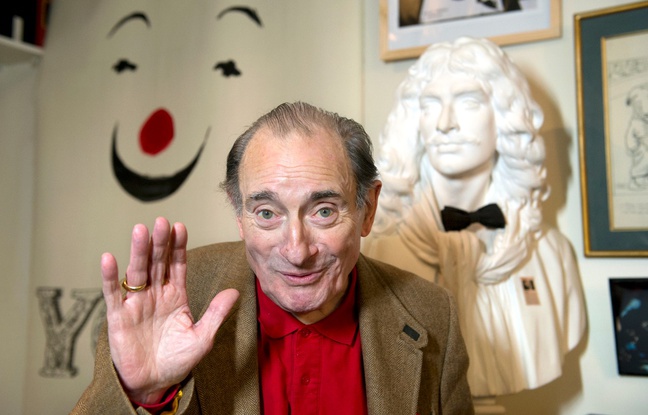
It seems that the world we know is being torn asunder. I speak not of Donald Trump and the wreckage and foul taste of his campaign, though it’s in some ways related. I’m thinking of all the wonderful clown sages we’ve just lost —first Dimitri, and then in the past two days, both Dario Fo and Pierre Etaix. (Which reminds me of U.S. presidents #2 and #3, John Adams and Thomas Jefferson, staying friends and pen pals in their later years, and then dying on the same day.)
These losses were inevitable, but more stinging in a time when the media is suddenly obsessed with sightings of so-called “clowns” frightening people, as if these idiots were the real deal. Dressing up as an astronaut wouldn’t get me on the space shuttle, but a costume, make-up, and fright wig somehow make me a clown.
The craze started here in the United States, spread to England, and is apparently headed for the rest of Europe. It is not only damaging the image of clown performers, but costing them gigs as well.
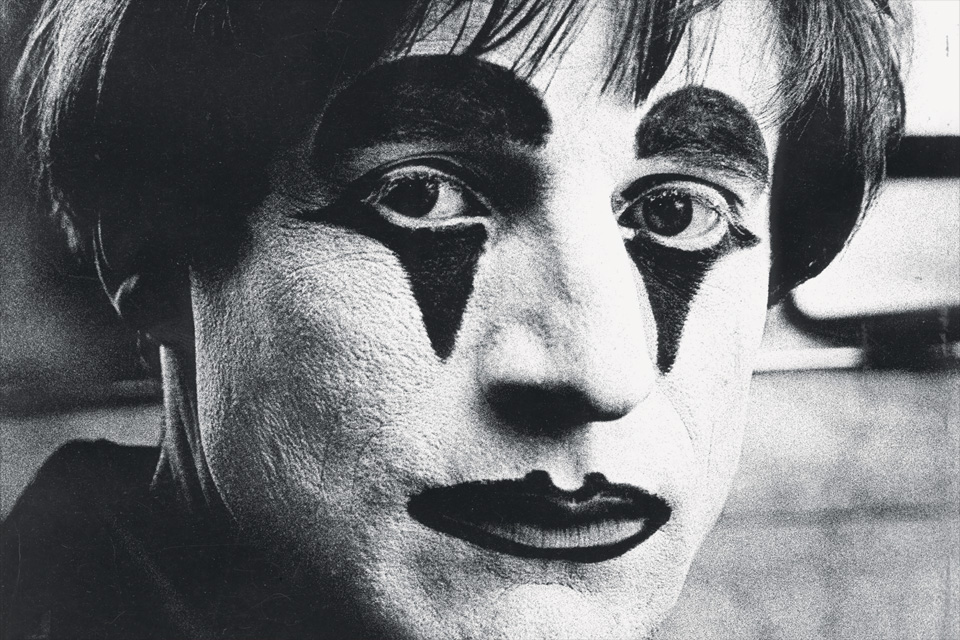
Pierre Etaix
Just as the media has allowed Trump to drastically lower the level of discourse, they have allowed these masqueraders to be taken seriously. Once again, real clowns have to defend their art and answer the same stupid questions, which are on a par with “when did you stop beating your wife?” And that’s if they can find anyone to interview them. Part of me wants to write an Op Ed piece for the newspapers, patiently explaining that these are “Halloween clowns,” people dressing up as clowns with an exaggerated, macabre look designed to scare people, and have nothing to do with the noble and quite loving tradition of clowning.
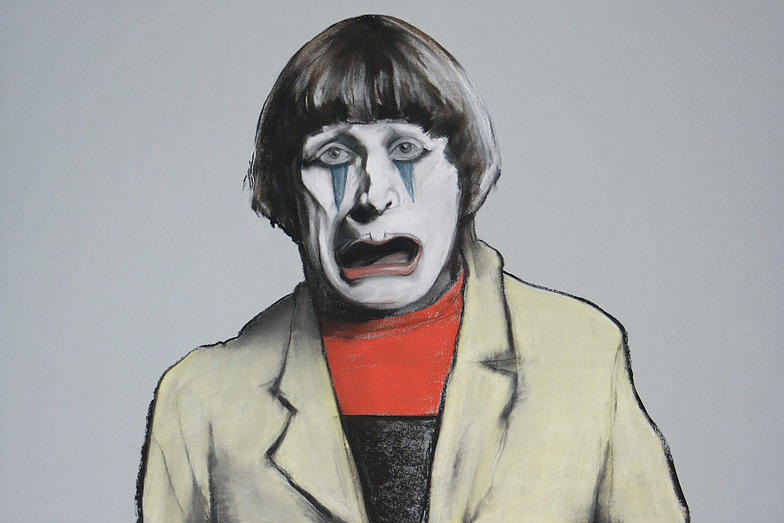
Dimitri
But I haven’t bothered to write this, and won’t. The media is the media, and they will take this and run with it until it runs its course. Which it will. It’s a fad, and even its shallow-minded perpetrators will soon grow tired of it. The good news is that true clowns, who value and delight in the tradition of Dimitri, Fo, and Etaix, will honor these grand fools by continuing to do their good work tomorrow, next year, and centuries from now.
Here’s an à propos discovery I’d like to share with you. As some of you may know, I am working on a revised and expanded version of my book, Clowns. I’m not updating it, which is why I think of it as Clowns: Volume 1, but but but I know a lot more than I did forty years ago, when it was first published (Nov. 1, 1976!), so some sections are being significantly improved. One of them is the very beginning of the book, which starts with the clowning traditions of the native American cultures of the U.S. southwest, especially the Hopi peoples. What I am emphasizing more this time around is that the clown is a central part of the Hopi creation stories; the clown is there from the very beginning, is part of the fabric of life.
For the Hopi, in the beginning was The Emergence, and it was the clowns who led humans from the underworld to a higher level of existence. It was the clowns because they were the ones who could cross borders and teach lessons. And this is not just some myth gathering dust in the archives; rather, versions of it are re-enacted time and again in countless Pueblo ceremonies. Which is why this wonderful sculpture, The Emergence (1989), by Hopi artist Roxanne Swentzell, will be the first illustration in the new edition of my book.
But that’s not the discovery, this is:
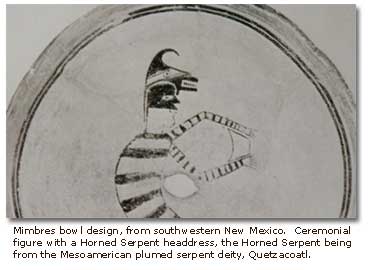
This Mimbres bowl, whose subject shows a clear kinship with Hopi koshare, is from the same southwest region and dates all the way back to between 1000 and 1250 A.D. I know what you’re saying! “It’s been a thousand years and they couldn’t even afford a new costume?” Point well taken, but that is how we know this stuff has been going on forever! My point is that what we should be talking about when we are talking about clowns is an elemental life force, and a very positive one. When pundits trash politics as a “circus” and politicians as “clowns,” my only response is, “ah, if only they could rise to that high level…”
And here are some more reasons to remain positive. Those performance traditions that we group under such labels as clown, circus, vaudeville, physical comedy, etc. —and which are repeatedly pronounced dead— are actually becoming a more widespread part of our culture. Clown training and performance is everywhere, with hundreds of times more practitioners than half a century ago. Clowns are in circuses and hospitals; in the theatre, in the street, and in refugee camps. Circus training is no longer just a family tradition. There are professional schools everywhere, especially in France and Australia. Circus education that’s not just for those with career goals is now contributing to positive youth development throughout the world. Social circuses —yes, I’m thinking of you, Circus Harmony— are doing amazing things to bring people and cultures together. There may be no formal vaudeville circuit, but countless individuals have embraced the variety arts as a means of self-expression, of sharing what they do best and what they love… and the staggering variety is a wonder to behold.
Likewise impressive are all the self-taught enthusiasts who do it for fun and only occasionally for profit. Think of all the slackliners executing incredible tricks between two trees. Or all the excellent jugglers who juggle because they love juggling. All the subway acrobats doing amazing hat moves with baseball caps. All the bartenders learning flair juggling to impress their customers. All the trick cyclists and parkour practitioners…. Clown and circus have indeed arrived, they just take different shapes and forms.
And this just today, which gave me a chuckle: a NY Times article on a new craze for bottle flipping, which is flipping a bottle so it lands upright on its own. (Depressingly, the last line in the article quotes the mother of an avid bottle flipper saying, well, at least he’s not dressing up as a scary clown —as if these were somehow either-or choices.)
Here’s the short video they share, but you can find more on YouTube.
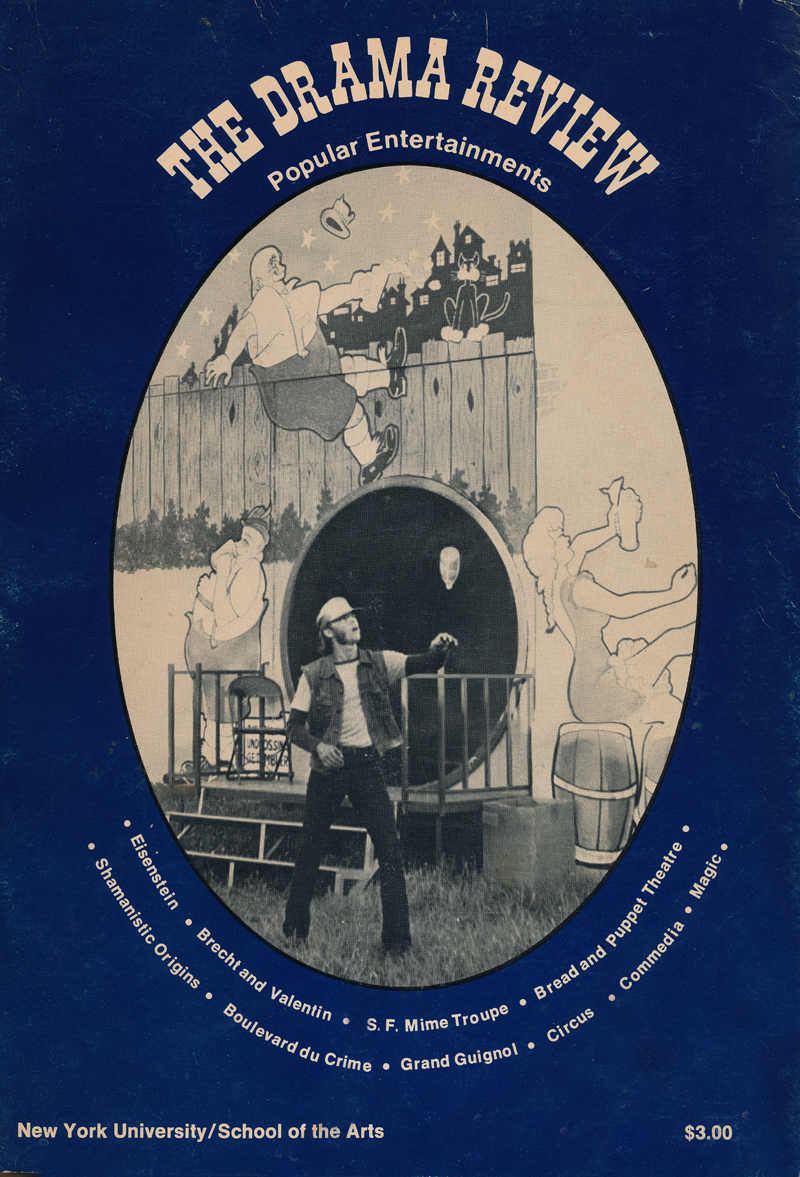
And why do I chuckle? Because in 1973, as an NYU grad student and TDR Assistant Editor, I co-edited a special popular entertainments edition of The Drama Review, and had to fight to use this Diane L. Goodman photo on the cover. We had seen this guy at a carnival in Ypsilanti, Michigan earlier that year. I knew what he was doing with that bottle, but my TDR colleagues didn’t think it was clear enough. Maybe they were right… or maybe I was just 43 years ahead of my time!
So my conclusion is: Don’t panic! Try to take the long-range view. This crap shall pass (so to speak) and the good shall endure. Meanwhile, here’s my recent tribute to Dimitri, and a tribute to Pierre Etaixthat I wrote back in 2010. I subsequently got to meet Etaix in Paris and he was a very sweet man. Such an honor. And in 1990, I was likewise honored to attend rehearsals at the Comédie Française for Dario Fo’s production of two Molière plays. I wrote an article about it for Yale Theater, which I will share with you in a future post.
To be continued… so keep on doing what you’re doing!
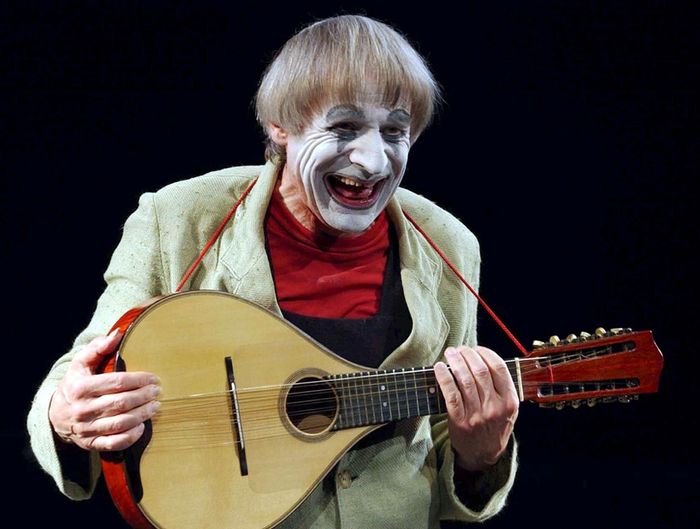
There are professional clowns today who have never even heard of the great Swiss clown Dimitri, though they owe him a big debt. Dimitri died this week at the age of 80 in the Italian region of Switzerland, where he lived and, since 1975, operated the still-thriving Scuola Teatro Dimitri. But he sure should be remembered, because he played a major role in elevating the status of the clown as a performing artist. And I’ll tell you why…
Flashback to October, 1975, when Dimitri made his New York debut at the age of 40, performing his one-man show on stage to a packed house at Hunter College. (Yes, I was there.) Sure, Marcel Marceau was filling theatres bigger than that on a regular basis, but Dimitri was a CLOWN, not a mime. Audiences loved him and came away with a heightened understanding of what a clown could be. And aspiring clowns took inspiration from his success and began taking themselves more seriously. This was especially true in the United States, where clowns rarely got to play in theatres. And Dimitri reminded us that clowns were traditionally highly skilled, as he played ten different instruments (including four at a time), juggled ping-pong balls out of his mouth, and performed sleight-of-hand and balancing feats, all to great comic effect, as he got himself in and out of endless troubles.
Interesting connection: It was another great Swiss clown, Grock, who earlier in the 20th century packed European theatres with his full-length show and demonstrated that the clown could be a star in his own right, outside of the circus ring. Early on, one of Grock’s whiteface partners was the French clown Louis Maïss Decades later, after studying with Decroux and Marceau, Dimitri launched his clown career playing the auguste to —you guessed it— Louis Maïss.
Here’s what the great Swiss playwright Max Frisch had to say about Dimitri: Look at him, I say, this is a real clown. But, what is a real clown? I don’t know, but look at him – he can do practically anything, and yet remains calm and serene when he accomplishes something new and incredible. He’s a delight to behold, like watching a child discovering the pits and traps of the world who manages, as though by some miracle, to avoid falling. I was tense during the whole performance until someone started to laugh, roaring out loud as though alone – not how one laughs at a joke, but a laugh of joy, the laughter of a child. I was the person laughing, and the clown was Dimitri.
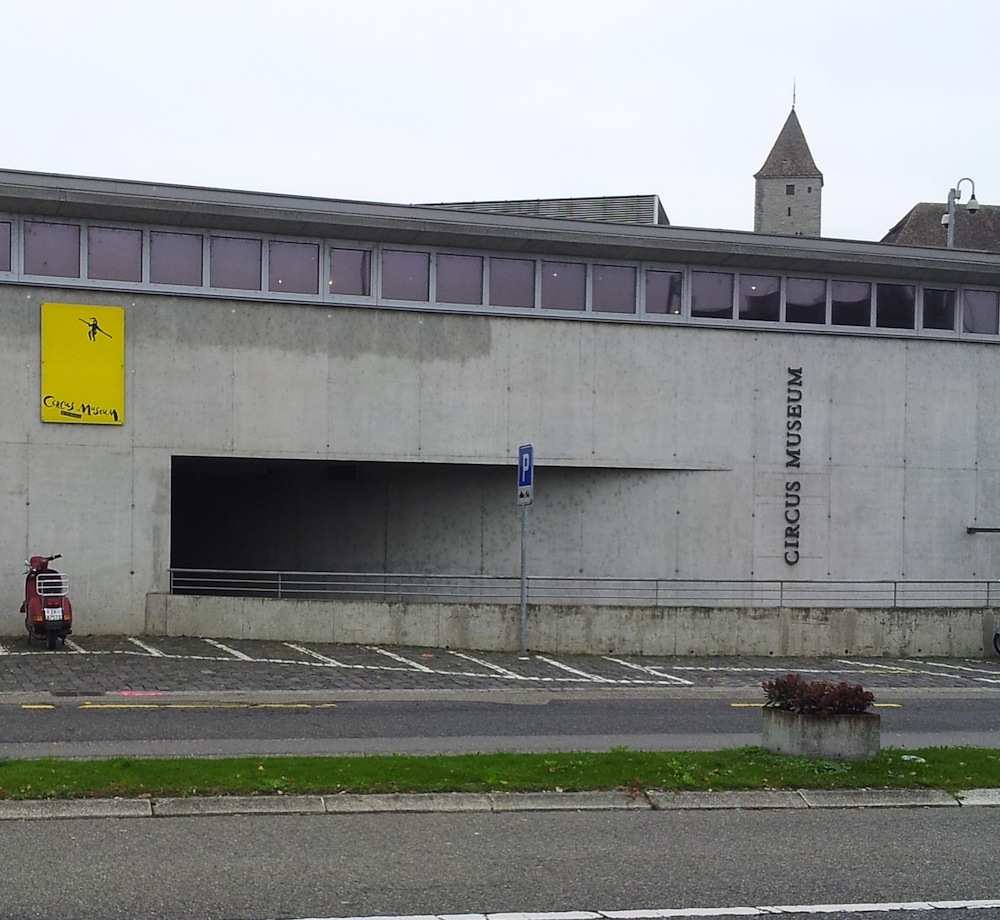
It seems every time I take a bike ride I make an interesting discovery. Yeah, I know I said I wouldn’t be posting until I got back to New York next week, but there I was in Switzerland on Thursday, cycling the loop around Lake Zurich, and as I entered the town of Rapperswil, this is what I saw on the other side of the road:
Needless to say I paid my three Swiss francs ($3.20, or about 1/10th the price of a meal in Zurich) and went in. Despite the generic “Circus Museum” title, this is actually a collection devoted to Circus Knie , the national circus of Switzerland which, I soon learned, makes its home in Rapperswil and even operates a small zoo there.
It’s a modest collection, but well worth the visit if you’re in the area. Clown costumes, posters, tons of photos, video, artifacts… but all annotations in German. Here’s a slideshow for all of you museum aficionados . [Use controls at bottom of Scribd window to view full screen.]
This was all cool enough, but this is a physical comedy blog and I like me some actual funny performance — and figure you do too. You’re not exactly sitting at home wishing Towsen would write you up a museum review, now are you… honestly?
So of course I got my hopes up when I saw the video kiosk whose button was set to CLOWN. Only the screen was frozen. Far be it for me to despair! Much like the Tiresias of old, I blindly stuck my hand deep into the entrails of the wooden kiosk box, and lo and behold I eventually managed to push the right buttons on a DVD deck hidden in the shadows, emerging victorious — much like the raider of the lost ark of old — with the videos found below. Of course I proceeded to shoot them off the monitor with my phone camera (sorry for the glare from the screen but….), perhaps violating Swiss law and jeopardizing the billions I hold there in a joint account with Mitt Romney (more on that after January 20th)‚ but hey, you’re worth it. And all I’m doing is publicizing Knie and Rapperswil, right?
So here’s a funny bit of the legendary Swiss clown Dimitri trying to clean an elephant. I love it when clowns get their comedy from what’s actually going on in the circus.
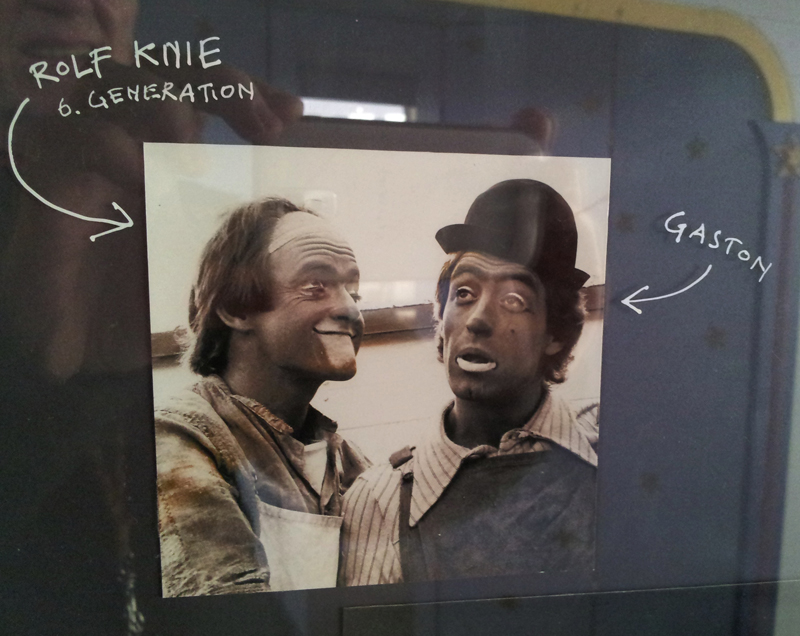
This entrée by Freddy Knie and Gaston was another exciting find. Fred (aka Freddy) Yockers, my clown partner of ten yesteryears, saw the Knie Circus in the 70s, loved it, and was fond of quoting Freddy Knie’s “ooh-ee, ooh-ee, ooh-ee” (sp?) trademark sound. And here I was on a bike ride discovering it for the first time nearly forty years later. (It’s in the dressing room scene at the 0:15 mark.) History aside, these guys are good. Probably the best clown boxing scene I’ve ever seen.
Before posting this and risking indictment by the World Court, I checked to see if this was on YouTube. Nope, but instead I discovered pretty much the same material being performed by Gaston and, this time, his brother Rolf. (If I have the chronology right, they are sixth generation Knie family performers, but check out the Circopedia article here.)
I’d rate Freddy the better clown, but there are some real nice new additions in this version, plus the video quality is, er, slightly better.
So the moral of this story is: get off your ass, hop on a bike, and start exploring, he proselytized.