Category: Uncategorized

Sid Caesar’s “Gallipacci” or the Fine Art of Gibberish

POST 442
Monday, April 16, 2018

Sid Caesar (1922–2014), who I worked with VERY briefly (full story here), was one of the truly great American comedians. He was also the King of Gibberish, fluent in faking many a foreign language. I hadn’t seen Gallipacci until Riley Kellogg recently ran across it and clued me in, but it’s already one of my favorite Caesar pieces. And what an ensemble! That’s Nanette Fabray as Pagliacci’s wife, who in fact had opera training at Juilliard (despite a serious childhood hearing problem). Carl Reiner, partner to Mel Brooks and father to Rob, is the rival. And Howard Morris is the elfish Vesuvio. The score is —shall we say?— eclectic.


Hey, there is a lot of good sketch comedy these days on TV and elsewhere, but you would be hard pressed to find anything as ambitious and accomplished and, dare I say, as feckin’ brilliant as this.

Hard to believe, but…

•  In real life, Caesar spoke only English and Yiddish
• This piece is thirteen and a half minutes long, and in those days Caesar’s show was on for 39 episodes a year. Compare that to today’s television “seasons” and the complexity of today’s sketches.
• In 2007, an 85-year-old Caesar hobbled onto the stage of the tv improv show Whose Line Is It Anyway? to do battle with Drew Carey in a game matching skills at foreign language “double talk,” and proceeded to run gibberish circles around the younger comedian.

I’m in Torino, so I showed this piece to Italian clown compatriots Angela Delfini and Giuseppi Vetti, curious as to how it would work for them, what with them actually speaking Italian and all. They laughed a lot, and it got me to thinking that I’m familiar with all sorts of non-English gibberish, but there must be gibberish versions of English that I haven’t heard. And of course there are. One of the most famous of these was Prisencolinensinainciusol, an Italian version of English by Adriano Celentano. (Full history here.)


 I must say there have been actual American rock songs that I didn’t understand much more of.

And of course anyone with any clown or improv training has probably played gibberish games, which can be a very funny way of animating expression without depending on actual language. You can find a list of some of these here.

UPDATE:  Kendall Cornell just reminded me of this amazing woman who does gibberish in twenty plus languages remarkably well.

SHARE
EXPLORE FURTHER

Women In Clowning, Part Three

POST 441
Monday, April 2, 2018


In their own words: 

A Gallery of Contemporary Clown Women

or, 

They Self-Identify as Women, They Self-Identify as Clowns, Here are their Stories…


Reminder: just click on the images to enlarge, including this one!

But start here if you missed these:


Women in Clowning, Part One

In the Circus (pre-1975)
Women in Clowning, Part Two
A Research Guide to (pre-1975) Clown(esque) Women (outside of the circus)


The year 1975 was when I finished writing my book Clowns. It was also around then that a whole lot was starting to change in the world of clowning, all of which is detailed in Clowns, Volume 2 (which I will write when I’m 90). But these were some of the major developments:


The world changed. Slowly but surely, the feminist movement changed society’s prevailing attitudes and opened up many professions to women. When I was a boy, a female doctor was rare. Now they’re the majority in med school. 

• Alternate theatre movements showed that there were other ways of creating shows that were less commercial, more interactive, and more daring, and that this could be done by non-professionals who had talent and a dream —and were willing to work very hard. These non-elitist convictions led many experimenters to explore traditional popular entertainments, especially circus and the variety stage.
• The evolution of the mime and movement arts, as articulated (get it?) by such French maestros as Étienne Decroux, Jacques Copeau, Jean-Louis Barrault, Marcel Marceau, and especially Jacques Lecoq contributed to a new approach to clown that did not necessarily depend upon the world of the circus. 
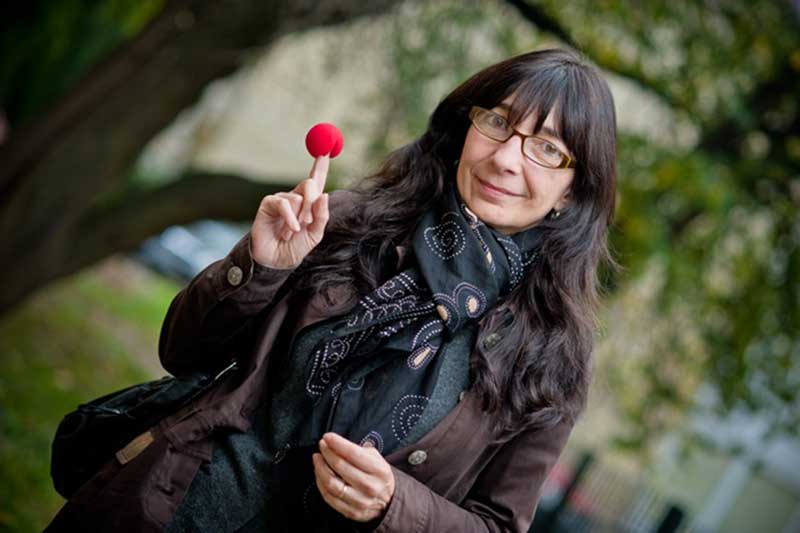
• The definition of what a clown could be broadened dramatically. New vaudeville and clown-theatre became recognized as valid styles of performance. The small red nose associated with Lecoq and Gaulier became an acceptable alternative to full clown makeup. As did no nose at all.
• Circus and clown arts started to find their way into university and professional theatre schools.
• Social clowning blossomed locally in hospitals and eldercare facilities and internationally in refugee camps and other situations of crisis, often bringing with it more of an emphasis on personable and heartfelt interaction than on slick, highly polished material.

But let’s cut to the chase and let the women speak for themselves. Just keep in mind that this is an incomplete gallery that I offer as a contribution toward a more thorough effort by someone else. I live in New York and don’t know all the clowns here, much less in the rest of the world, so there is no way that this gallery is comprehensive. I’m sure every reader will want to point out glaring omissions. But let me point out that there are also only 24 hours in a day, and I didn’t have the time to do more than I did. This is a single blog post, but maybe someone else will (soon!) create a website with ten times more clowns and where each one gets her own page and more than 150 words! And I also wouldn’t be surprised to see some budding authors tackling the subject as well. Yes, I mean YOU! Yes, I mean BOOKS! Yes, I mean SOON!


Sophie Amieva
France & New York City

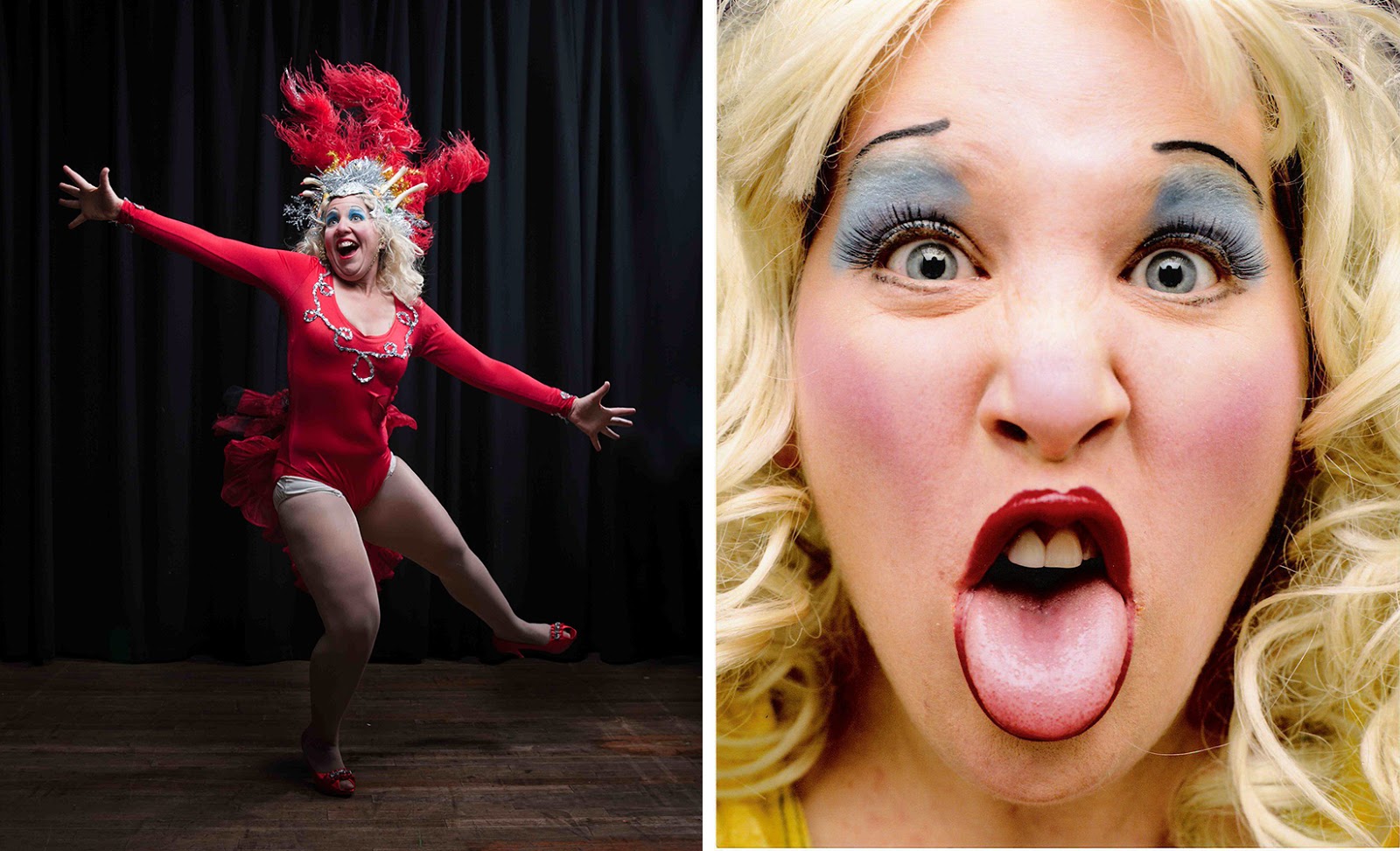
While studying classical theater, it quickly became clear that I was a Clown. Since that liberation, my mission has been the Art of the Fools. I have explored Clown and Bouffon as a performer, director, and teacher for over 15 years, crackling the varnish of prettiness to unleash madness and beauty. We are the outcasts of society, the ones who mock and laugh in its face. We play with our fear of death and magnify the reality of oppression. We take no sides and rejoice in conflict. But there is one dirty secret I have learned over and over… Bouffons are the true masters of compassion.  Sorry! 
As my alter ego Valérie Chameaux has preached all over America and Europe, “It is all your fault! Live you fools, Live!”

 “… a fine talent for comedy”— the NY Times
 “…has an extraordinarily expressive face and grand presence.” —American Theater Web
 https://www.sophieamieva.com 


Antoschka 

(Antoschka Ekaterina Mozhaeva)
Germany

at right is with Oleg Popov

After theatre and circus studies at the University of Moscow,  she became as Antoschka the star clown of the Moscow State Circus, and went on to perform Antoschka’s Dream with Holiday on Ice. Her tours took her to more than 40 countries, performing more than 10,000 times in the circus ring, on ice, or on stage. She also teaches medical clowning at Steinbeis University in Berlin and offers clown workshops all over the world, directs and chairs theatre and circus projects, and developed Clownetic and the World Parliament of Clowns. She is engaged in performing for invalid and underprivileged children of the world (very often cooperating with Patch Adams). 
YouTube Channel: KLUNNI TV
www.antoschka.de


Molly Brennan

Chicago
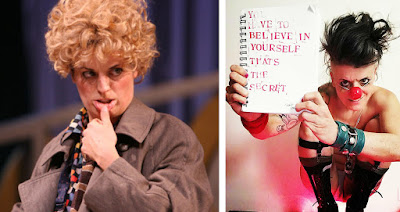

Molly Brennan practices the active State of Clown through the notion of “Herself as Poetry. Raw and Refined. Chaotic and Ordered. Magnified and Specified with an Acute Awareness of the Environment and Immediate Access to Impulses and Responses.” She brings her emotional availability and physical prowess to the stages of Chicago: the Goodman, Lookingglass, Steppenwolf, Second City, American Theatre Company, and more. A pivotal role was Harpo in the Goodman’s “Animal Crackers”. She was “Kevin” of 500 Clown from 2000-2012. She is the Director of Physical Theatre at the Actors Gymnasium, and consistently builds new solo and collaborative work. She was named “Chicago’s Queen of Mischief and Make-Believe” by American Theatre Magazine in 2015, and was one of New City Stage’s top 50 Players in 2018. 


Muriel Brugman
The Netherlands
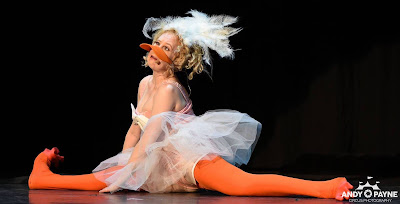

In spite of everything, I am a female clown. With no female examples to watch and learn from in the pre-internet era, becoming a clown was like learning to play the piano and writing the music at the same time. As a female, you can’t simply be “one of the guys.”  What works for them won’t work for you, was a painful lesson from the early days, when I bombed to infinity and back. It took years to find out what clowning was about and to discover and develop the character. For me, character is everything. Being an organic clown, I keep my emotions right underneath the surface, as I transform into my out-of-control alter ego.  And from there, when lucky, funny stuff magically happens.

http://www.scottandmuriel.com

Shannan Calcutt

Las Vegas
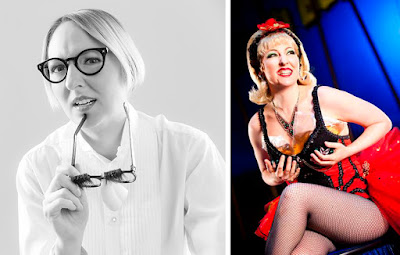

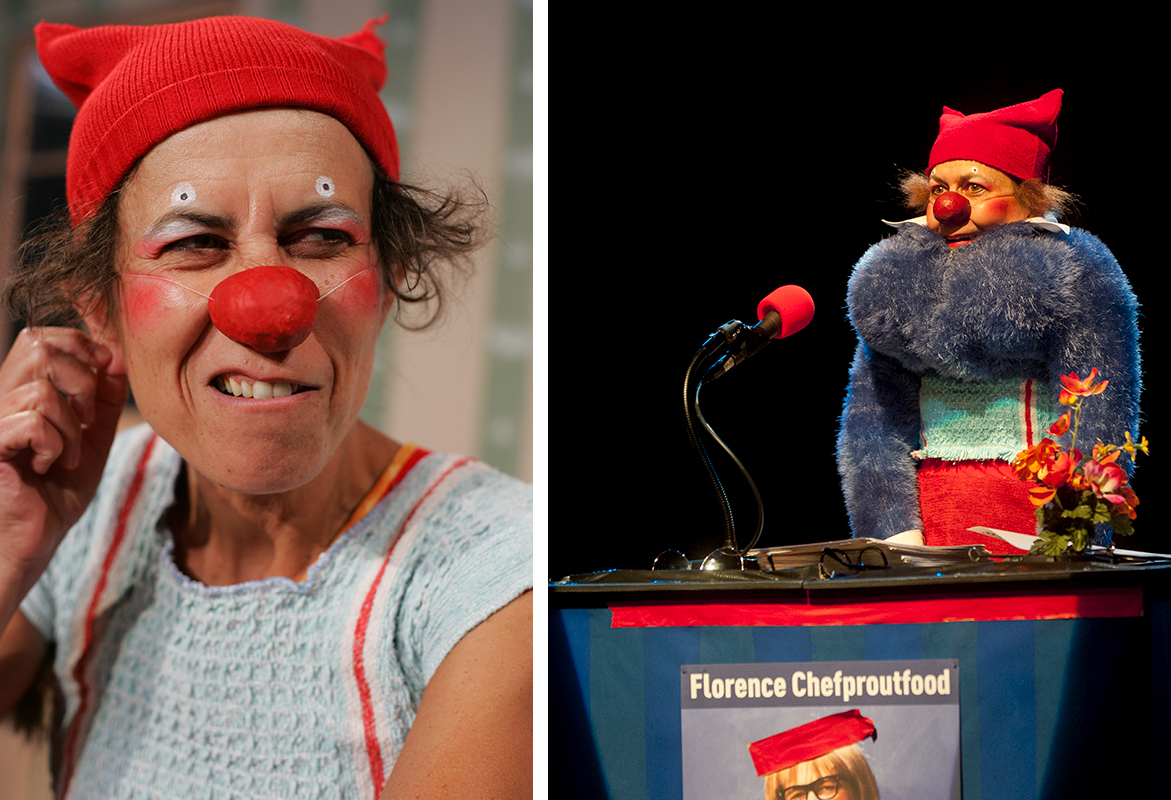
When I was touring one of my solo shows in Orlando years ago, Elizabeth Mauphin wrote in the Orlando Sentinel: “Her fearlessness is breathtaking.” I think this is true of all women in comedy. Still, in this day and age, women are expected to act a certain way, talk a certain way, dress a certain way… who better than the clown to blow up these expectations? I think that’s my favorite thing about playing my clown Izzy, she flaunts her flaws, says what she thinks, dresses how she pleases, wears her heart on her sleeve, follows her impulses  – and has tons of joy doing it! Perhaps Lucille Ball said it best, “I’m not funny. What I am is brave.” To all my fellow fabulous female clowns, I salute you! 

shannancalcutt.com


Claudia Cantone

Rome & Barcelona
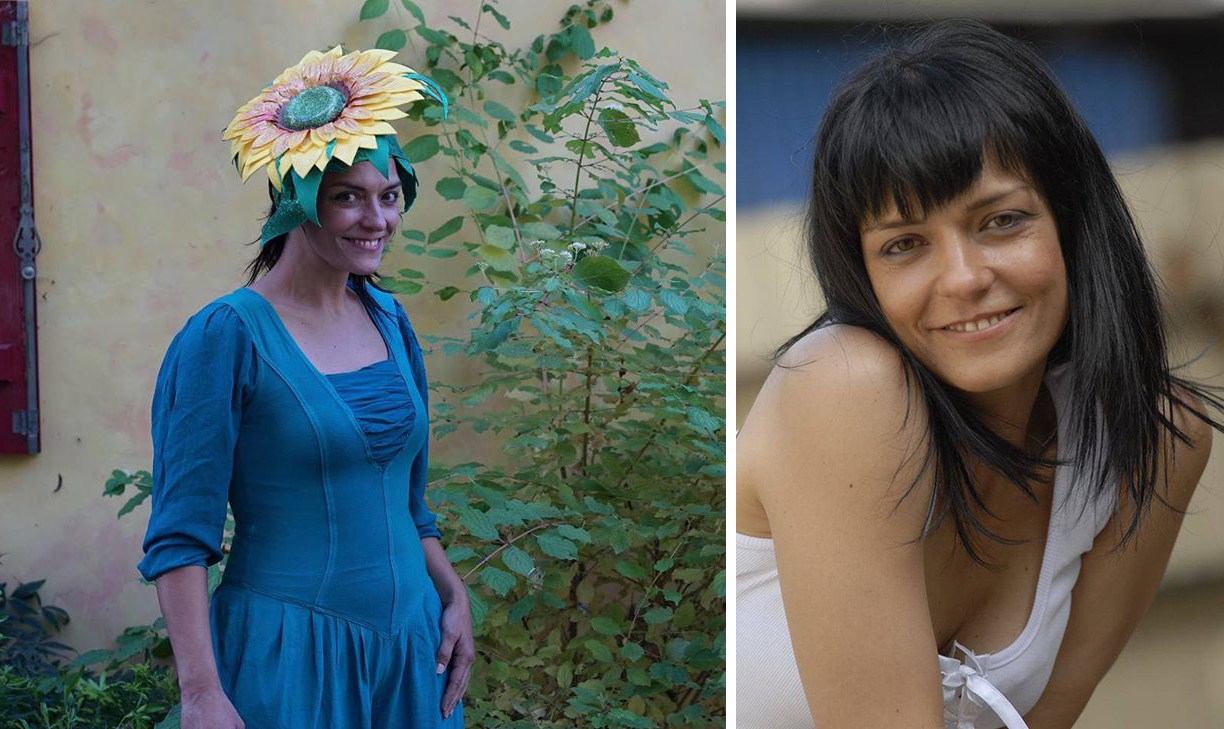

I served for 17 years as an officer in the national police force in Italy, but I was not happy. I knew I needed to find out more about life and change it! I began to dive into the art world of theater and cinema, enrolling in the 3-year theatre school La Scaletta, earning my diploma in 1998. I discovered that the stage was the habitat that attracted me and it was the clown art I loved the most! To follow the clown’s art I left the police, but I am happy now!
I focused on the art of clown, completing several master class programs, training with Jango Edwards, Leo Bassi, Virginia Imaz, and others. I studied corporeal mime at Escuela de Mimo Moveo in Barcelona, where I founded the female clown company, Las EnclownadasI created, produced, and toured three solo shows: Zero Zero Clown; The Secret Annex; and Yaya in the Moon.  I am an assistant director at the Nouveau Clown Institute (NCI) in Barcelona, where I also present my workshop. I have a degree in art therapy and I did my apprenticeship as an art therapist for the blind at the Institute Sant’Alessio in Rome. 
https://www.youtube.com/watch?v=WMeXOo_jjP4
https://vimeo.com/ondemand/fooloflife


Elena Casotto

London


After theatre studies in Italy, I came to London to join the National Centre for Circus Arts. Mick Barnfather was my theatre teacher at the circus school, he allowed me to be free on stage and I owe to him the discovery of my clown. Since then it has been an amazing journey of freedom, anarchy, love, and presence. Discovering clown for me was like coming home. Accepting my stupidity was extremely liberating. I saw that people liked me when I was not pretending to be good, when I was not trying to do too much. I love games, I love to play. Clowning allowed me to express my desires, my anarchic inner child, and my innocence. For me, clowning is about loving life, being full of fun, accepting yourself, and loving the audience. I was lucky to learn from many clown masters, including Philippe Gaulier, John Wright, Marcello Magni, and Dr. Brown (Philip Burgers). I have performed my own acts and with many companies in the UK and abroad. I create absurd characters that fuse acting, clowning, dancing, and circus.
elenacasotto8@gmail.com


Clara Cenoz

Catalonia


Since I bumped into clowning by accident, it’s been the center of my life. Understanding it, fascinated by its unlimited possibilities, enjoying its beauty and the thrill of creating humor and magic, along with the passion I feel in sharing it with students … has been my creed, healed me, and kept me sane. So far reaches my love for clowning that I created a residential clown school in the middle of nature and I have been living with my students for years intermittently. It amazes me how easily students tune into the natural knowledge and healing of clowning. After that, the science of how to create numbers is also a real turn-on! My new fascination is to teach and coach clown using technology online and looking for ways to clown from home and reach many people through video. If only I could make films like Chaplin or Tati!

www.escoladeclown.eu


Hilary Chaplain
New York City
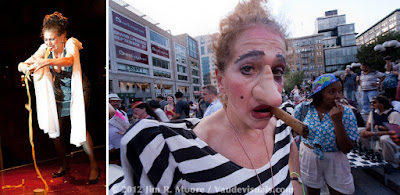

It was never my intention to become a clown; I trained as an actor and I was heading to Broadway! Red noses and suspenders had nothing to do with my idea of who I was. I loved the clown work I saw, but it was almost exclusively men and I just didn’t fit into that world. I didn’t understand the depth of the clown and felt that, as an actor, I would get more respect. Then it happened; I began to understand that I didn’t have to fit into anyone else’s image of a clown, I just had to be myself. It was suggested early on that I should make myself look funny, but I wanted to challenge the idea that you have to look funny as a woman to be funny. When things fall apart in my high-status world, my loss of dignity has much further to go. Why shouldn’t a beautiful woman get laughs! That said, I’m always game to look ridiculous.

hilarychaplain.com


Kendall Cornell

New York City
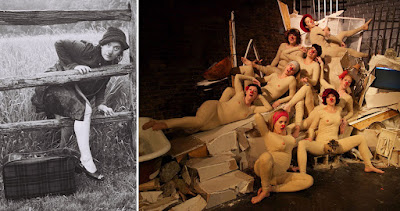
B&W photo by Sulai Lopez; group color photo by Niav Conty
I dreamt that I was in a world where women were free to be funny all the time.  Where if they ran and their skirts hiked up to reveal their underpants, it was comical and not scandalous.  No one saw London.  No one saw France.   Oh, for a world where dropping your drawers meant comedy, not promiscuity!   A world devoid of vanilla caricatures, but rather filled with the complex, deep, multi-layered, poignant fools that women can be.   A world where a woman, too, can claim the job of village idiot, or be anointed the skewering high jester of the realm.

www.ClownsExMachina.com


Mooky Cornish
Canada


In the beginning of my work, I did find it challenging to create material, as most frames of reference for clown and variety were male-oriented. Bowler hats and canes were just not true to me, and hurt penis gags were just out of the question. (And that’s A LOT of material right there! 😉 Not being able to rely on stock material and the existing image of what a clown looked like actually thrust me into a whole other realm of creation. I began to explore high heels and twirls, and came to realize there was a whole world of fresh, funny material yet to be discovered from a female perspective.

mooky.eu


Jackie Leigh Davis

New Hampshire
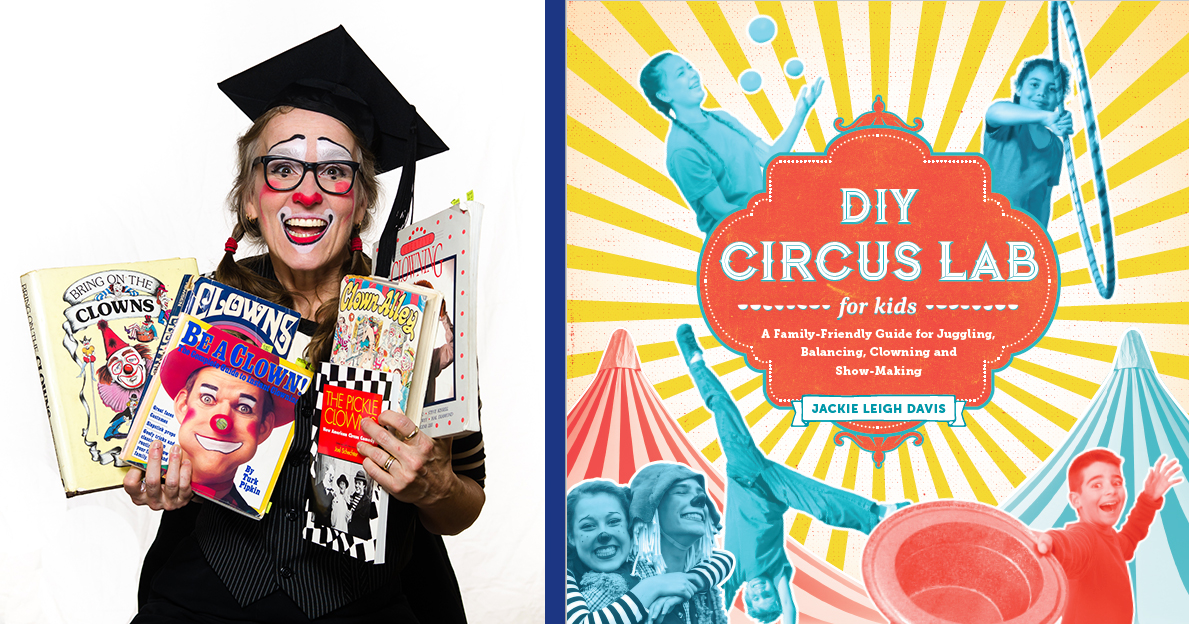


As a young mime artist, I had been too snooty to fraternize with clowns. That is, until: (1) my inner clown escaped at a retreat with the Bond Street Theatre Coalition; and (2) I married one! Best way ever to fall in love with clowning (Rick Davis, Clown College class of ’74; Ringling Blue Unit). We performed for a couple decades, then discovered a passion for teaching circus to kids. Fast forward: Nowadays I nourish my clown by teaching the lore to the next generation. Once they get past the Creepy Clown Bias, kids love clowning — the old gags, the business —it’s all new to them. And truly, laughter is something kids need now, more than ever. 

www.DIYCircusLab.com

Reminder: just click on the images to enlarge!

Elena Day
Washington, D.C.


My love of clowning began when I helped develop Oberlin College’s first circus, “The Plum Loco Circus.” I went on to study at the École Jacques Lecoq. This experience formalized and expanded my skills, and gave me the foundation for my next step, joining Cirque du Soleil’s “La Nouba.” I developed the role of The Green Bird, performed in over 2500 shows, and traveled worldwide with their events company. In 2013, I co-produced “on the nOse,” a show that alternated live performance with original video interviews of clowns discussing clowning. Based in Washington, DC, I direct, perform, and teach. 

www.elenaday.com


Angela DeCastro

London


I have been performing since I was 17 years old, beginning in my native Brazil, where I acted in theatre, film, and television, and was director of my own theatre company. In 1986 I moved to London to pursue my dream of studying, performing, and reclaiming theatre clowning as a modern art form. I’ve toured the UK and internationally with major contemporary theatre and circus companies and have had great success with my master class “How To Be a Stupid.” For me, the combination of the work of the actor and the clown is of vital importance as it creates a new way of performing. Theatre clowning is my life’s passion and a way of life. I don’t stop working. I’m always working on shows, directing and mentoring other companies, developing my own clown personas, and learning how to play the ukulele. When I have any free time, I can be seen browsing around street markets, riding my beloved motorbike, and feeding the ducks in the park near my house.

thewhynotinstitute.com


Angela Delfini

Italy
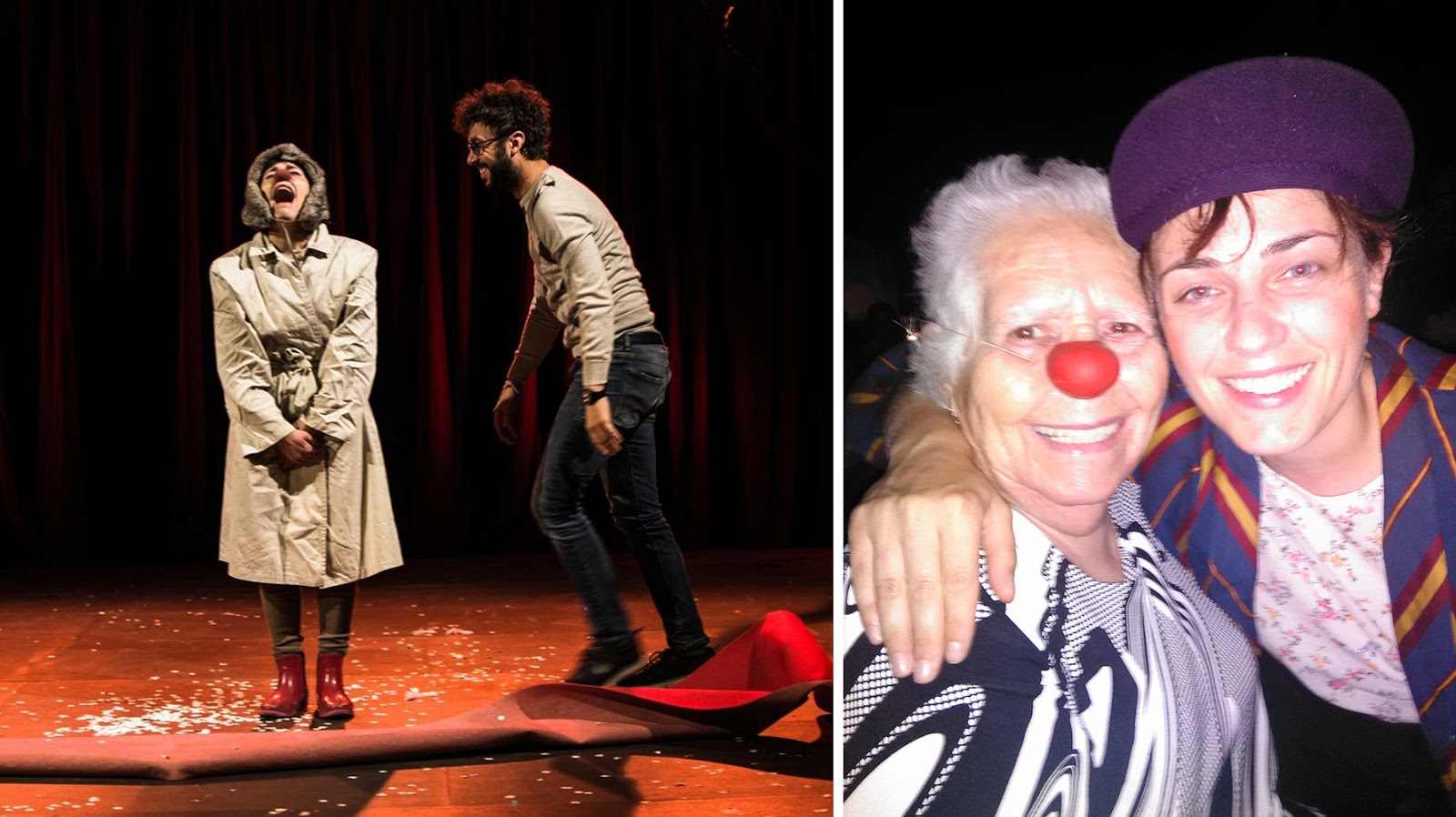


I think Clown is the power of creation. Love. Everything is about love. Clown is to pursue the power of creativity you feel very clearly when you are young. When it is broken, you grow up fighting, searching, studying, doubting, chasing, solving. In and out. From the social point of view that I have, clown has a big heart, big empathy and —I like to say— a big mouth. At the same time, clown has no lines to define. A denominator? Fun, for better or worse. Some people ask me if I think what I do is clown…. If creativity comes to me that way and it sounds to you as truth… I wanna dance, sing, talk,  jump, play, fall, especially in “everyday life” and then eventually in performing. Clown is one of the major magic channels for love. And I have big dreams. As my first master Michael Jackson says, Keep the Faith.

angeladelfini.blogspot.com


Anna de Lirium
Austria


When I was 18, a friend of mine said she was going to become a clown and I said: “Me too.” It was a sudden instinct; I didn’t really think about it beforehand. Today I know that I really made the decision in that very moment —which would become my life. Being the youngest in school for twelve years let me experience pure naivety, which has always been the biggest source for my clown character. Even though I was one of the first female clowns in Austria, I never questioned if it’s possible for a woman or if it’s different … I just did it! Out of an instinct … and out of naivety. Sometimes being naive is a huge blessing.
Anna de Lirium (Tanja Simma) was the first female Austrian artist to perform in Cirque du Soleil and was a cast member of “Palazzo” for several years. She’s the engine behind the Comicompany, co-founder of Theater Olé (the first clown theater in Vienna), and one of the “pillars” in the team of the Red Noses clown doctors. Currently, she’s working on a new show with her French partner, Colette Gomette (Hélène Gustin). Her solo show, “The Substitute” (directed by Jango Edwards), has been touring throughout the world.
www.anna-de-lirium.com

Lee Delong
Paris


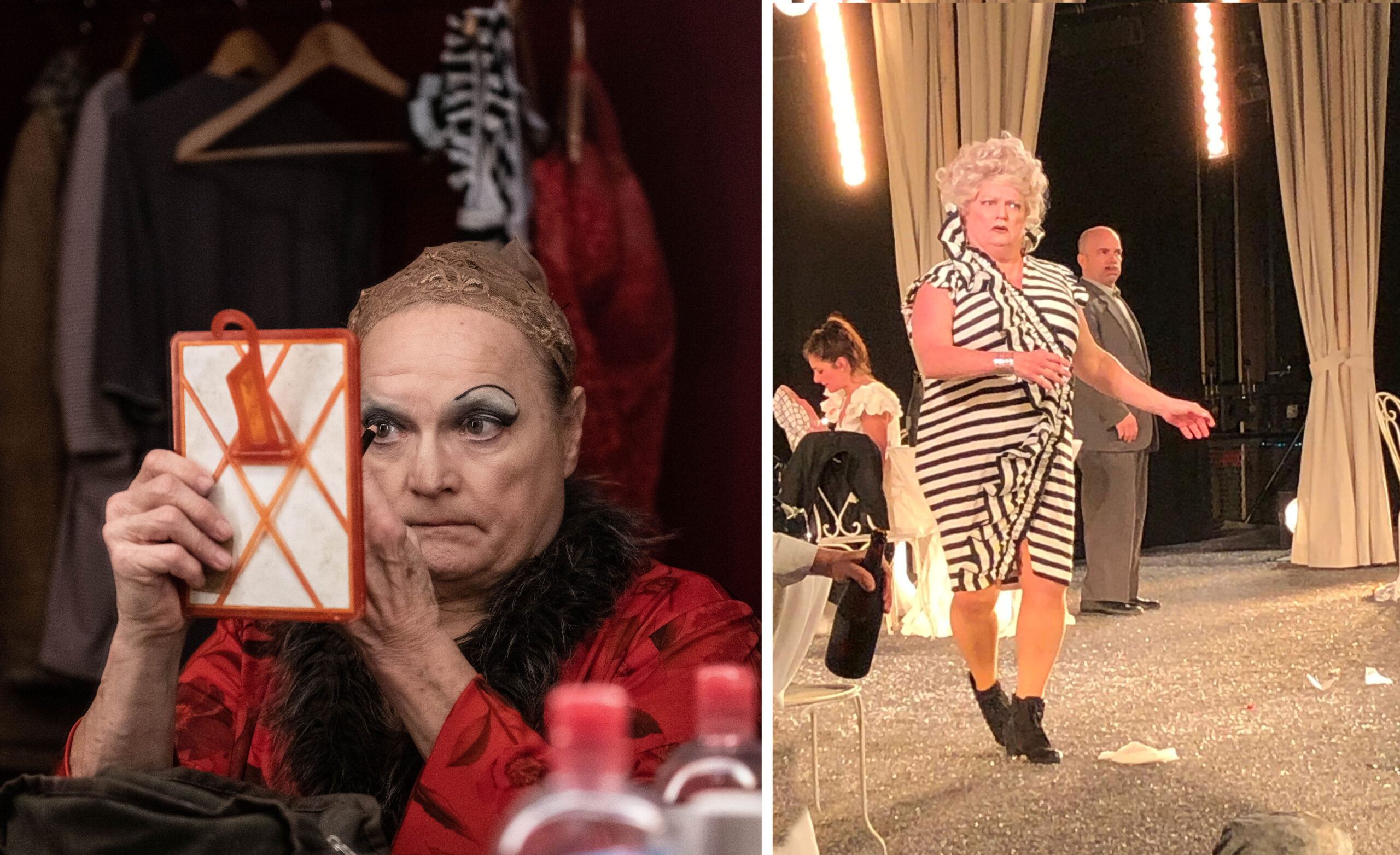
Lee Delong is an award-winning American/French actress, director, clown teacher, and writer. She has played on many of the mythic stages of France, notably in Le Banquet by Mathilda May, which garnered two Molières. Lee has worked extensively with the company Triko Cirkus Teatar, Zagreb, for almost two decades. With Triko, she has written and directed many clown performances and has given countless workshops. Lee just wrote and directed Ro & Juju, a deconstruction of Romeo and Juliet in clown for the National Theatre of Sarajevo. Lee has given clown workshops and master classes from Peru to Qatar to war-time Sarajevo since 1994. Some of the institutions for whom Lee has taught are: Doha Film Institute; the Croatian National Theatre (HNK); l’École de l’Image, les Gobelins, Paris; the University of Viborg Animation School, Denmark; the National Academy of Theatre, Rijeka, Croatia; the National Academy of Dramatic Arts, Sarajevo…

Karen DeSanto
Wisconsin, USA


I started thinking “funny” at an early age. My dad said so. Then the circus taught me that I could live out my crazy ideas. I believe comedy and humor change lives.  I know it has changed mine. Throughout my career, I don’t think I can imagine a time when comedy, or “thinking funny,” didn’t play a large role. From the circus ring, to the stage, to the boardroom – laughter brings people together. I think that is what I am so drawn to. The coming together of humans for the common goal of being happy.


Helen Donnelly
Toronto


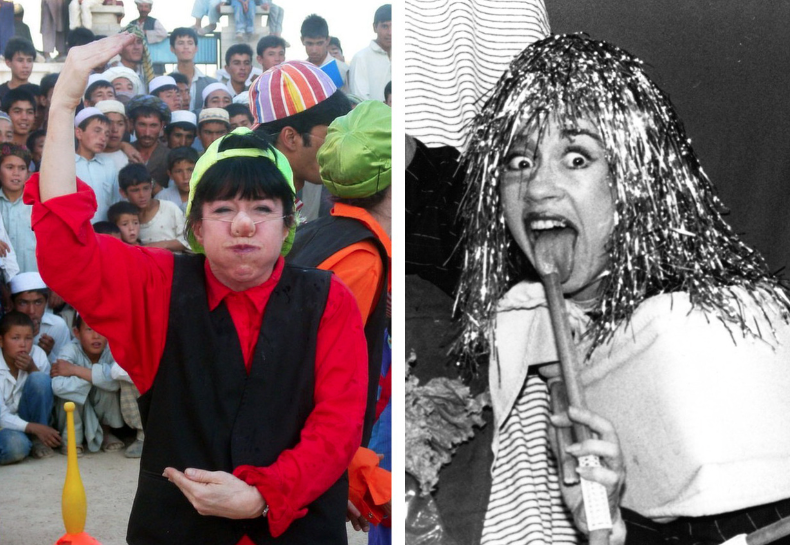
I’m a unique mix of circus, theatre and healthcare clown. When I started my clown training in Canada in 1994, I was fascinated with the idea that your clown can have many personas. To date, I have four different personas. I am particularly drawn to gender fluidity so Foo and Dr. Flap are gender-free.  Some of my clown personas speak in gibberish; a wonderful tool to connect emotionally and physically with an audience regardless of their language. In addition to performing in theatre and circus internationally, I also train healthcare and theatre clown artists around the world.

www.helendonnelly.com    
youtube: Foo at Play in the Circus


Caroline Dream

Barcelona
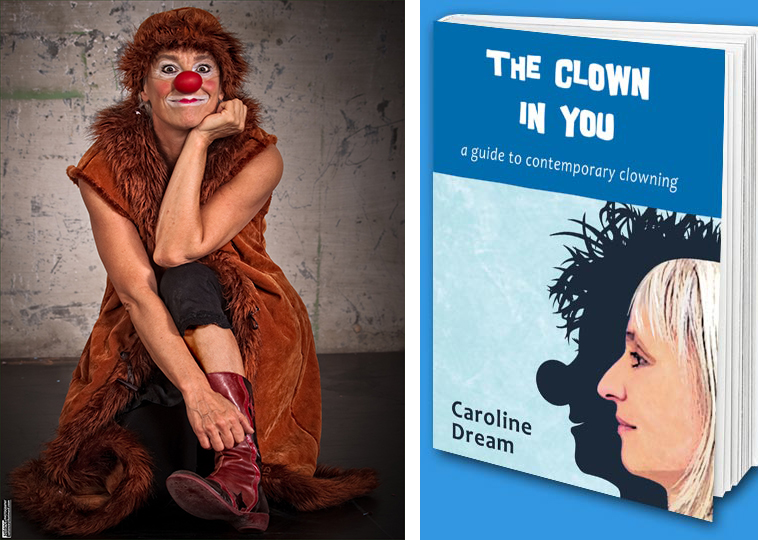

After spending three years studying serious theatre at university, I knew that what I really wanted to do was make people laugh. However, I wasn’t very good at it, so I trained for three years and then headed to Barcelona, where I found a thriving clan of professional clowns. I have never looked back! I performed for 30 years and have taught clown around the world. Wanting to share all I had learnt, I wrote The Clown In You. In it, I reveal little-known aspects of the clown universe and clown formation. I am still an absolute enthusiast!

 www.carolinedream.com
www.theclowninyou.com


Rachelle Elie

Ottawa


When I tell people I am a clown in Canada they say: “Do you do birthday parties?” I always say the same thing: ”Yes. For two thousanddollars I will come to your house and scare the s#!t out of your kids!” I do not do birthday parties. After seven years of post-secondary education, I realized I was not an actress, I was a clown. Early in my acting career, I saw that clowning was one area of my life where I could be an A+ student. I had always been “too much,” “too intense,” ”too dramatic,” and yet in clown these were assets. I failed grade 8, got kicked out of ballet school, but master insult-clown teacher Philippe Gaulier told me I was “f!#ing funny!” That was an A+. It has taken me years to accept my unique skill set and now I use it in every area of performance, from visual art to stand-up comedy to characters.

http://crowningmonkey.com


Deanna Fleysher

Bellingham, Washington


Thanks for asking. Audience connection and fierce vulnerability are my biggest turn-ons. Clown opened me up to what it meant to really see and be seen by audience members, creating myprofoundest highs as a performer. I tend to only identify as a clown among those in-the-know about clown work —a conflicting feeling, just because it means so many different things these days. I say that I blend clown, bouffon, improv, physical theater… really who the eff cares. 


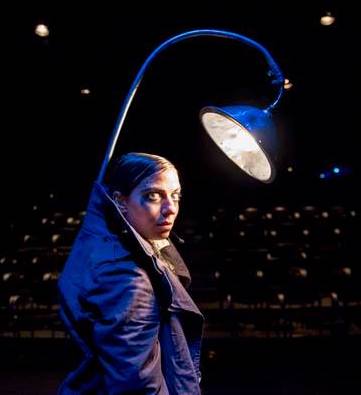
The last 10 years I’ve been doing Butt Kapinski, an immersive comedy featuring a speech-impediment-laden Raymond Chandler-wannabe wearing his/her own streetlight.  It is a beautiful ride, but now I’m feeling less interested in building a new show to tour and more interested in two things: teaching and escape rooms. Facilitating others’ finding their fierce vulnerability is my jam, also trying to get out of a room in an hour—SERIOUSLY, ESCAPE ROOMS ARE SO FUN.

Buttkapinski.com
nakedcomedy.blogspot.com


Cristi Garbo

Barcelona
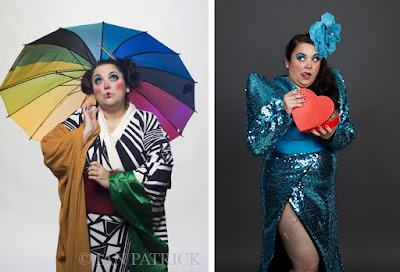

Barcelona, 1980s:  I was a drama student and took a clown course. I remember the moment perfectly. With that little red nose on my face, I made people laugh just saying: “I want to sing!” I was in love with clowning and singing, and decided to keep exploring. I combined acting jobs with clowning experiences until I met Jango Edwards, a partner in life and on stage, who convinced me that clowning was my place in life. Never stop till then. I am a woman clown. I love to be on stage, it’s my happy place, where I release my freedom, craziness, feminine absurdity, and share it with the audience. Working solo, in duos, in trios or big ensembles is not a problem for me. With clowning, I connect my humanity with the audience’s humanity, and we laugh, and it’s great. 

https://cristigarbo.wixsite.com/cristigarbo


Christina Gelsone

New York City

“A clown doesn’t have to be funny, but a good clown is.” —Uri Weiss 

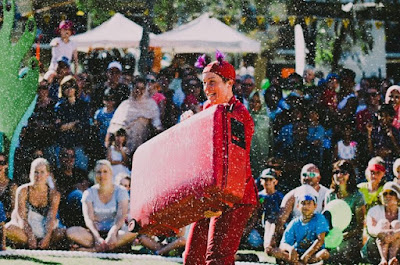
I studied clown, I read clown, I analyzed clown, I performed clown, but I wasn’t really funny until I went to the street. Nothing is harder, and nothing will make you stronger, than an audience that can walk away. Every woman has to figure out how to break cultural limitations. For me, one answer was to go prepubescent, back to the days when girls were faster than the boys. I grew some horns/ponytails, wore exactly what my male partner wore, and broke all the rules. 
www.acrobuffos.com


Karen Gersch

Montgomery, New York
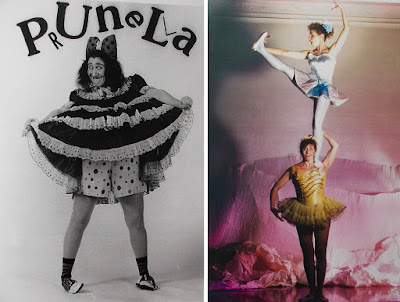

A founding member of three circuses: Big Apple; Circus Smirkus; and the traveling Quaker show, Friendly Bros. Circus. I’ve performed as a comedy acrobat and clown in one-ring tented shows and circus festivals abroad as well as in three-ring circuses across the U.S.A. and Canada. For one of the 3-ring tours, John Towsen and Fred Yockers were my partners and personal Uber drivers! Ultimately, all my long-practiced juggling and acrobatic skills became secondary to the pursuit of honest expression. The aging process makes paring down a bit of a necessity. The ability to be painfully vulnerable and prescient (of self, environment, and audience) is a virtue worth learning. It’s still about finding those vital “Ahhhh” moments —simplifying interactions until they are clear and connective: the discovery that finding one’s personal heartbreak as a clown is more elevating than convulsing an audience in laughter.

www.acrobrats.org  
Facebook artwork page: Art by Karen E. Gersch


Colettte Gomette
France

My childhood dream: to create laughter.
After high school, I trained as an actress and explored mask play, and having done dance was a real plus. I worked with burlesque companies and then, in 1995, the clown came to me. A jubilant shock! Rubber body, broom hair under the arms, primitive and unpredictable, a rolling stone. A clown in perpetual discovery, wanting to be adopted by humans, imitating them like a sponge. I want to present an organic character to the audience, one who lets herself be looked at without being aware of it, primitive and unpredictable, naively delivering up all of herself. I want to bring the audience into a comic poetry, a very personal universe. Let them laugh and be moved and find meaning, all at the same time.
Colette Gomette has wowed audiences in France, Belgium, Austria, Germany, Portugal, Spain, Quebec, Chile, Brazil, Colombia, Peru, El Salvador, Nicaragua, Honduras … in theaters, festivals, streets, and everywhere else … adaptable to all situations. Her latest creation, “Colette Gomette Prézidente,” is currently touring.


Amy Gordon

New York City
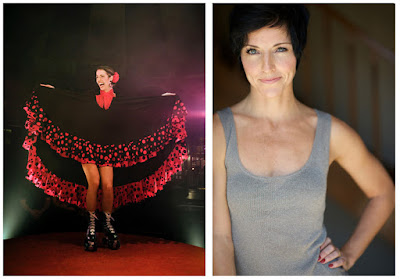
Photos: Carl Saytor, Luke Stambouliah

It’s my job to bring up what we share, for laughs: imperfection and the evidence that life goes on anyway. I like to begin with a fall, either physical or a fall from grace, to upend expectations.  People make assumptions, especially of female performers. There’s comedy and satisfaction in blowing them up. Then I work to make them trust me again —with sensitivity (awareness, improv) and wonder (skills, imagination.) With that connection, I provocate. I’m pitted against authority, propriety, ego, politics, and physics.  But as a clown, it doesn’t matter if I fail, only that I press on, with love.
www.amy-g.com/

Reminder: just click on the images to enlarge!


Shereen Hickman

New York & Los Angeles


Performance for me is all about the love. That rush and excitement I get when I connect with the audience or an individual. When I was in Zumanity or solo in Amaluna by Cirque du Soleil, my greatest joy came in the realization that this suspended world they were in was a moment to forget their outside woes. Just laugh and play and let go. My “job” is to escort and encourage people to enjoy the lunacy. A good belly laugh, a chortle or a twinkle in someone’s eye indicates to me that I was successful.

http://www.shereenhickman.com/


Jessi “Wonderfool” Hoffschildt
California and Japan
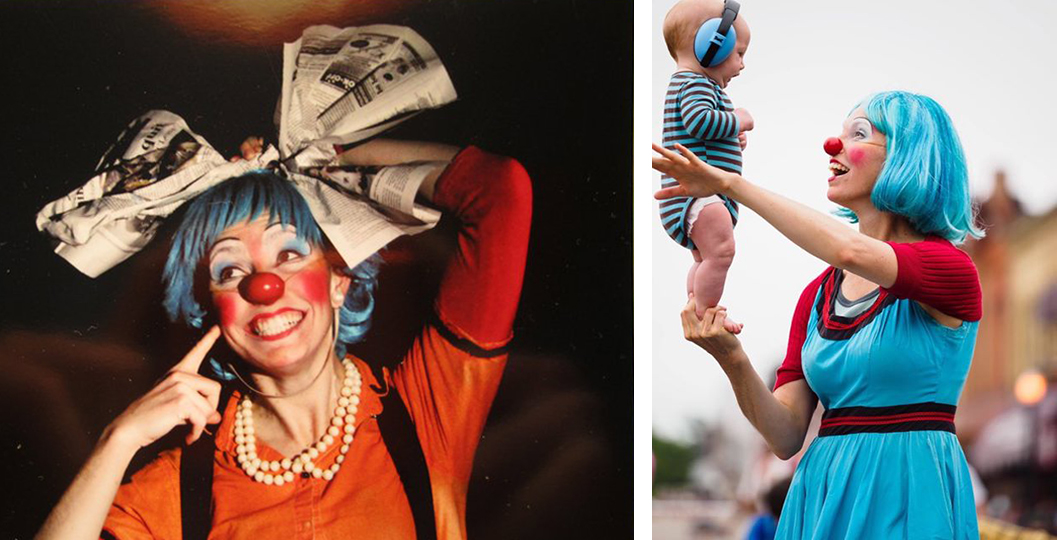


Laughter is really one of the greatest forces in humanity. This idea that a clown can cut out all the crap and get the essence of what it means to be human, sharing that with an audience of one or one thousand is truly awesome. Clowning to me has always been a place I felt a sense of belonging. It gives me the greatest joy when I can pass that onto the audience. To create something that gives everyone a feeling of togetherness, being special, and making the world suck less. 
As a woman is this harder? I haven’t found it to be so. Laughter is from the heart, not the groin. And after all, women can wear the pants too.
Jessi has spent the past seven years touring with Kinoshita Circus in Japan, where she misses sarcasm but loves the bad puns.
www.jessiwonderfool.com/


Karen Hoyer

Chicago


It took me a while to move past the androgynous mime of my early training. My clown work seemed stuck in the ubiquitous man’s hat-and-coat clown silhouette. Why was I casting myself in a stereotypical male role (sports fanatic or Capone style gangster for example) and where were the female equivalents? And what was the female version of the automatic laugh for a man in a dress? When the BAC Clown Care Unit opened in Chicago I was determined to go for the slapstick AND wear a fluffy skirt since I was “the girl” in a team of boys. And now, over the past ten years, I’ve created dozens of female characters – most of them inspired by a crazy outfit – and my show has sound clips of my favorite female comedians and features five decidedly female clown characters. About time, Karen!

www.karenhoyer.com


Gardi Hutter

Switzerland
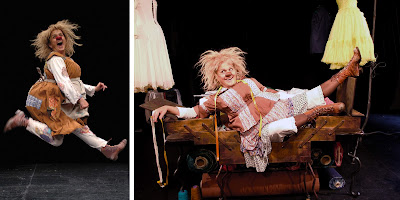

Since 1981, Gardi Hutter has taken her clown theatre halfway round the world, putting over 3,600 shows in 33 countries so far. She has created 8 theatre and 1 circus productions and been awarded 17 prizes for her art. 
She performs in theatres and barns, concert halls and culture factories, festivals and favelas —greeted with enthusiasm by public and press wherever she goes. 
Whether she appears as washerwoman, mouse, prompter or tailor, her almost wordless solos uncover tiny, absurd universes in which the characters put up a brave but forlorn fight for happiness. The tragicomedy is remorselessly carried to the limit, to the delight of the audience. Gardi Hutter’s stories are tragicomic parables of the today world, with moll and without moralizing.  Her characters show all facets of female non-virtues: tousled, fury, nasty, crazy, touching and poetic.  
The press calls her a “comic phenomena.”

www.gardihutter.com


Ishah Janssen-Faith

New York City


I am a performer and writer of comedy mainly, with some songs, poetry, and dance thrown in. All the characters I create come from one detail or phrase I’ve overheard from a real person —then morphed into something resembling a parody with strong clown overtones. Most recently I performed in a duo with Emily James called James & JF —creating the clown/character show Channel One. We also made countless video shorts and a TV pilot about two women living in the closet of one boy who they entertain with their show, We’re Not Here. Prior to that, I ran a theatre company, Coffee Cup, and created many actor-driven, real-life inspired shows. Reaching further back, I lived and worked in London and created a clown show about the live organ trade called A Pig Behind Their Eyes with my company Bouillabaise. Find me on www.ishahjf.com.


Kaitlin Kaufman

New York City
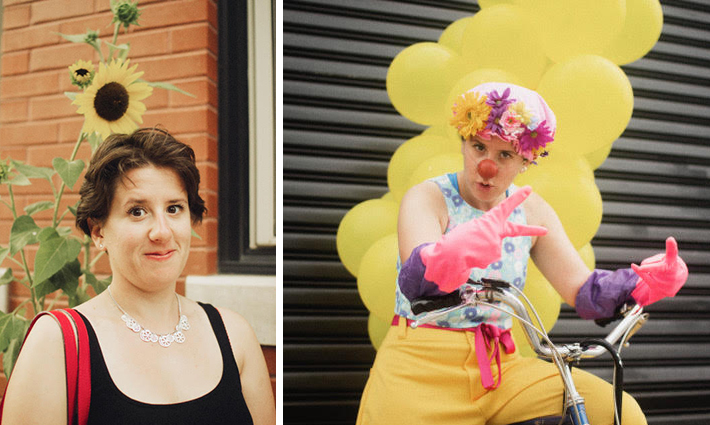


Penelope is my first clown. She is the fountain of my childhood passion and joie de vivre. She embodies the quick, fun, playful instincts that had lain dormant in my body’s memory. I had bottled them up! The first time I played her, I laughed and cried —and then, laughed again— so hard I thought my diaphragm was going to fold up into my throat. With Penelope, I can be a big, goofy, messy, completely stream-of-consciousness silly, emotional wreck. I can flow openly through some intense emotions and make people laugh at the same time. I grew up feeling that my emotions were, at best, invalid nonsense and, at worst, total hysteria. Penelope has taught me to listen to them, trust their wisdom, play them out, and give them a big, unapologetic voice. I love how my clown is ever-evolving. Penelope is the seed of a greater journey as a clown, performer, change-maker, and woman. I’m excited to see where it all goes. 

www.kaitlinkaufman.com


Deborah Kaufmann

New York City
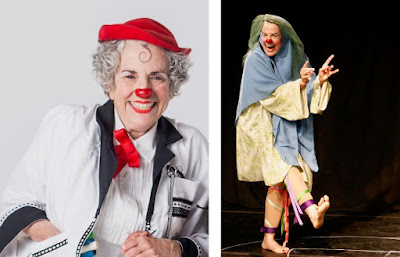
Photo credits: Paolo Salud (left); Julie Lemberger (right)

The aspect of Clown, as a form, that I find most inspiring is the direct connection to the audience, and how their energy influences how each moment will unfold. This complicity translates beautifully from the stage to working in healthcare settings. In thirty years as a Healthcare Clown, a trainer and leader in the profession, I am invited into the lives of families, at their most vulnerable moments, in the vital role of the fool: facing truth with humor, parody, joy, and beauty; providing relief from fear and stress; transforming the environment with play; empowering audiences (children, elders, families, healthcare providers). By being awkward or incompetent I offer them control and provoke laughter. An interesting challenge is to allow my character to change as I age. The girl clown has to mature into a woman and must change in both broad and subtle ways, without becoming false or falling into stereotypes.
Co-Founder and Director of Training and Education for Healthy Humor Inc.
Creator/performer:  Veni Vidi ViciBuried Alive!Leave Nothing But Footprints
tooshorttofallover.com


Silvia Leblon

Brazil
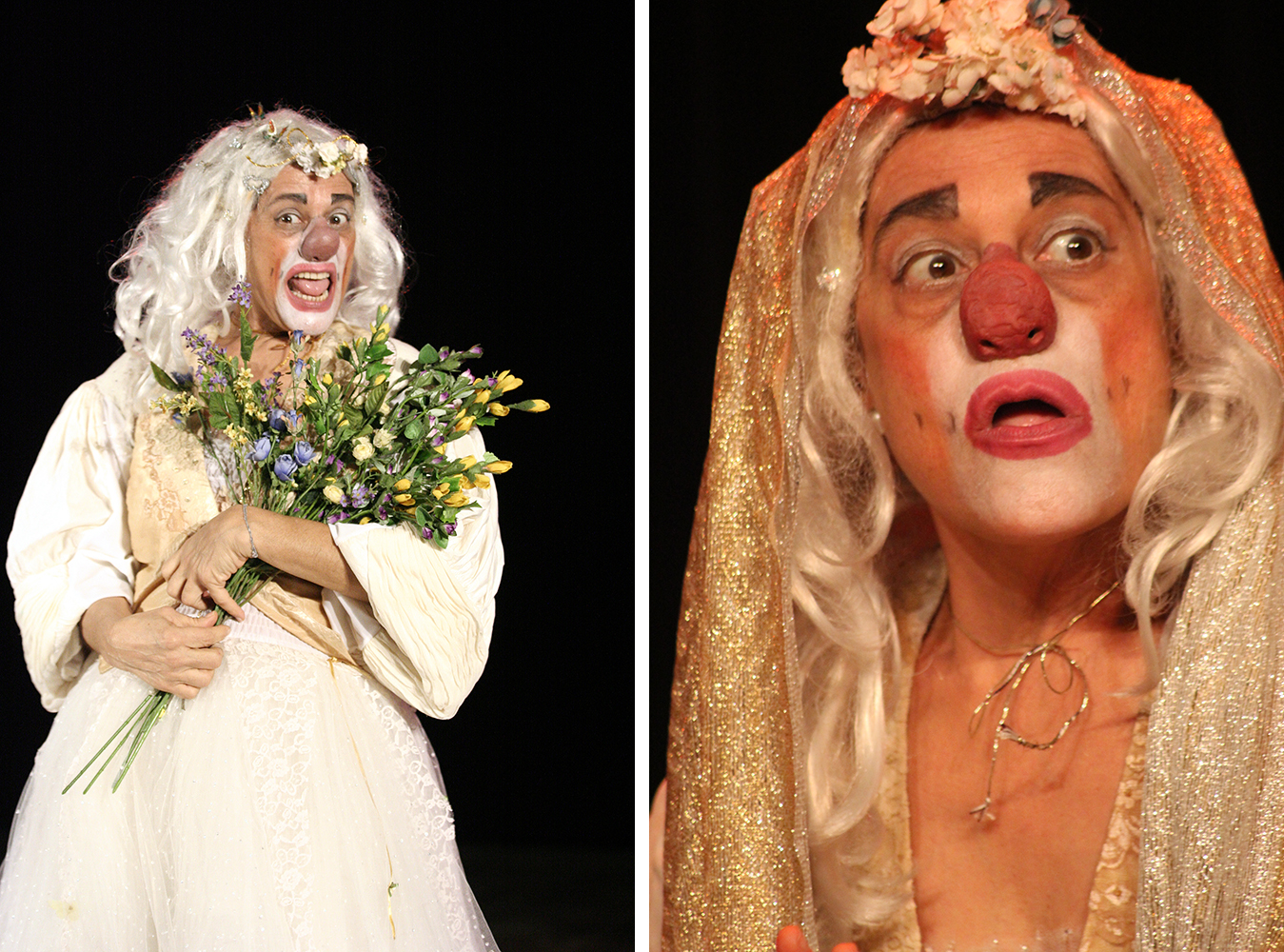


My clown character Spirulina was born in 1995, in Lume’s renowned Núcleo de Pesquisas Teatrais of the University of Campinas, São Paulo. I worked as an actress for a long time. I did theater, tv, and movies. The clown brought me a new look at the world, a lot of freedom, and the joy of playing. In 1999, I had another transformative encounter, working with the Canadian Sue Morrison, and the sacred clown of the Indians. Gradually I realized the importance of this work, its balancing role in society, and how it works well for those who do and for those who watch. To choose the clown is to delve into precariousness, to seek the flower in the mud, the perfume in the grass, the light in the darkness. They said women could not be clowns. I think we’re inventing new ways to do it. I continue to present my solo Spirulina in SPATHÓDEA, giving workshops and training, directing, creating and participating in shows in the language of the clown.

https://youtu.be/Q5xT9Tcrf2w

Lory Leshin

Paris


Born in New York in 1952, Lory started her career as a dancer, actrice, clown, director, and teacher over forty years ago. After discovering clowning at the École Jacques Lecoq (1989-91), Lory has never looked back. She has been a clown, teacher, and coach for Le Rire Médecin (professional clowns in hospitals) since 1991, in France, where she makes her home with Bernie Collins (BP Zoom). Since 2002, Lory has been one of the principal teachers at Le Samovar, a school for clowning and burlesque, next to Paris. She teaches mask work as well as clown play and writing for clowns. Lory gives workshops all over Europe, in Japan, Taiwan, and Guadaloupe. As a director, she has created pièces with musicians, singers, actors, circus performers, as well as clowns. She is also a member of La Bec, un groupe of wonderful crazy creative clowns, headed by Hélène Gustin (Colette Gomette).

email: lory.leshin@wanadoo.fr


Peta Lily

London


I am not a traditional clown, but my performance work is definitely clown-informed. As Three Women Mime (1980-83), we mixed clown with mime, design elements, and object play. As a solo theatremaker (1983 onwards): in Hiroshima Mon Amour (no relation to Marguerite Duras), I played a Piaf impersonator –a clown with a clumsy manner and a big heart. Invocation includes a clown take on the hero’s journey and in Chastity Belt, clown is mixed in with spoken word, song and gently wry satire. I teach clown and over 30 years I developed a genre I call Dark Clown. I delivered a paper: The Comedy of Terrors –Dark Clown & Enforced Performance at Bath Spa University and my Dark Clown work is cited in Jon Davison’s Clown: Readings in Theatre Practice (Palgrave MacMillan 2013). There is also a documentary Dark Clown: Taking Laughter to the Limits.

www.petalily.com


Iman Lizarazu

Santa Cruz, California
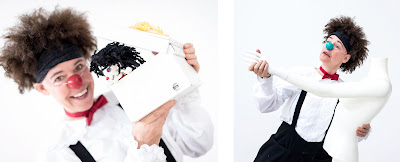

I never decided to become a clown. I studied math and physics first, got my PhD in Astrophysics just to become a clown much later. Over the years it came to me. First of all, I was a juggler and focused all my time and energy on learning tricks, to impress people I guess. But the more I performed as a juggler, I realized I needed more, there is so much more to it. I wanted to get deeper into the performing. And that was clowning for me! I was able to use all different skills like mime, juggling, music, all circus skills, storytelling without saying one word and take the audience with me on a wonderful journey. To be able to touch them deeply with joy, tenderness, and wonder. This made me decide to become a clown.

http://imanlizarazu.com

Deborah Lohse

New York City
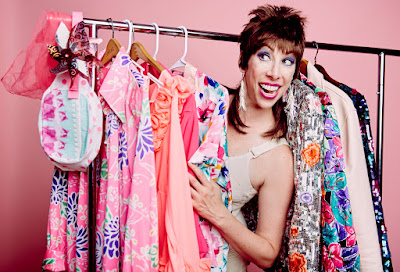
Photo: Whitney Browne

TruDee, my alter ego, is a manifestation of optimism, fearlessness, unconditional love and play. She was born in 2014 out of a dare to try on a hot pink onesie with a mullet wig in a San Diego thrift shop. She danced her way out of the dressing room, Long Island accent intact, and hasn’t stopped since. She creates short physical dance comedy vignettes, which she uses to transform any space into a stage. Trudee, a straddler of genres, has performed in dance programs, drag bars, circus cabarets, and house parties.  Every day she teaches me how to live bigger and love harder.
http://www.deborahlohse.com/work#/trudee/

Sabrina Mandell

Rockville, Maryland
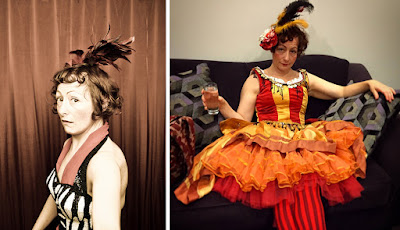

I’ve always been a performer. My parents are both visual artists. I was brought up surrounded by art and also hard work and doing a lot of things to earn a living that have nothing to do with art. I worked for many years on traditionally rigged schooners, wandered around inventing and re-inventing myself. Early on I decided to dedicate my life to the cultivation of whimsy. I’ve done a lot of theatre; I’ve dressed up in 18th-century costumes and recited poetry at farmers markets; I write and paint. I studied the Lecoq pedagogy with Dody DiSanto in DC and when we arrived at clown, I fell in love. I also met my future husband/creative partner in that clown workshop. For ten years I worked for the Big Apple Circus Clown Care Program as a hospital clown and I am the Founding Artistic co-Director of Happenstance Theater, a professional company that uses clown as one of our fundamental guiding principles. I tend toward low status, but can be bossy if the need arises. 

www.SabrinaSelmaMandell.com   
www.HappenstanceTheater.com


Michelle Matlock

Spokane, Washington
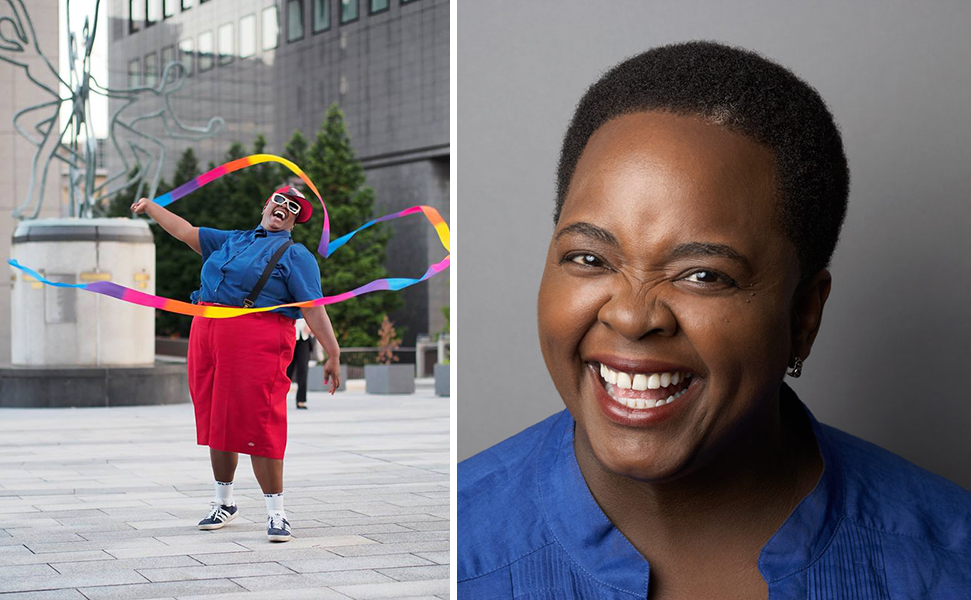

I was voted class clown in high school but I never imagined that I would make a living doing it. I never saw anyone like me doing it, so I didn’t think it was possible. Amy Gordon dragged me kicking and screaming into the business of clowning. I told her that “I was a classically trained actress” and she told me “you are a clown, silly”. As soon as I stopped fighting it, my world totally flipped. The skill of clowning is challenging and still makes me uncomfortable, but the journey it has taken me on has been humbling and rewarding. I think I’m uncomfortable because there are so many mistakes and so much failure. But with each mistake and each failure comes opportunity. So, I guess I just keep tripping over opportunity and if I remember to look back, all is good? 
http://themammyproject.com/gallery

Reminder: just click on the images to enlarge!

Karen McCarty
New Jersey


Following a BFA in theatre and a degree from l’École Jacques Lecoq, Karen McCarty began her career in Serious Foolishness, an international performing arts company producing original material.  She later performed in the first national tour of the musical, Barnum.  Her true destiny began as “Dr. Ginger Snaps” as a member of the Big Apple Circus Clown Care.  After a 30-year career with the circus as Creative Director of Community Programs, she co-founded Healthy Humor, dedicated to creating joy, wonder, laughter and comfort for hospitalized children and all others who are most in need. Her book, Serious Foolishness, is currently in production.

www.healthyhumorinc.org


Ana Adán Modrego
Barcelona
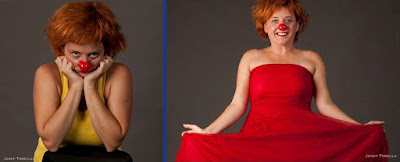

My experience with the clown has been intense and direct to my heart. It has been and it is an experience of LOVE. Loving myself, loving my dark side outside all the protocols and rules the human system has, and respecting who I am. Clown has given to me the opportunity to grow as a person, to make people laugh, to understand the world in different ways, and to reaffirm my own way of doing in life. Clown has given to me the chance to explain to the world on stage my intense and deep reality, my freedom.   I think I can understand and better respect others through the experience of clowning. Now I am happy because, as a teacher of languages and drama, I can apply lots of clown strategies (and within the scholastic system, believe me….IT IS REALLY NECESSARY AND USEFUL) and I can offer different opportunities to children to develop and discover themselves…I only hope they can discover and love who they really are. Clown has given me the bravery to create a better world and to feel free.  


Lila Monti

Argentina


One day, over 20 years ago, I put on a red nose and I understood that everything could be imperfectly wonderful. That I could become something like a mirror through which the audience could celebrate, laugh at and fall in love with their own absurdity, their clumsiness, their ineffectiveness and their weaknesses. I also understood that laughter could be an infinite bridge to try to do something about some of those things in the world that I find intolerable. And to get closer to other human beings in order to provoke them, move them, invite them to think differently. Some time later I understood that I could also accompany others in this task: to open the door to a horde of clowns. To repair this world a little bit and make it a better place to live. That’s what I’m up to, every day, even if it’s in tiny steps.

www.lilamonti.com.ar


Sara Moore

San Francisco


Clowning was, at first, a way for me to become a human cartoon, having fallen hopelessly in love with Bugs & Daffy as a child. I discovered there is a wondrous emotional freedom in being a clown, a kind of pathway to bliss like no other I’ve known, maybe because it’s the fearless exposure and performance of being really human in all its paradoxes. We are all beautiful-ugly. We are all clumsy-graceful. Clowning brings precision to the idiocy! The practice of this ancient art form also reminds me that, no matter what, my love is never misplaced, even when betrayed. I can find humor, and even bliss, in the darkest of places, and this is a beautifully potent thing to share with the world. What is laughter anyway but the most buoyant form of love?

www.circuscenter.org/clown


Deborah Remus Muñiz
aka 
Coco DeMokoloko

Mexico City
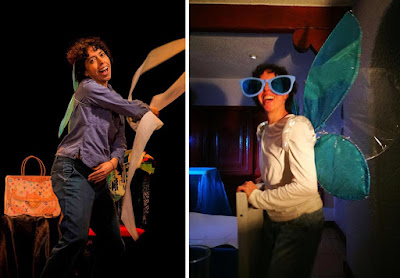

I was lucky to have started my clown training with Jef Johnson, exploring the possibility of playing without concern for gender, age, race, or specific social attitudes. Bringing this exploration to the stage, in sharing small moments of interaction I have discovered the joy that comes when we collectively play and find ourselves liberated from social, economic, and political impositions. There is a space of innocence and freedom that comes in these magical moments. I currently play two characters: Cocodini, the Magician “La Maga Más Gaga,”  and Hada Helada, the Ice Cream Fairy. I enjoy existing in the space between fantasy and the mundane. Bringing others to share and play in this space is a reminder of what is possible. For this opportunity I am always very grateful.

Facebook page : Coco DeMokoloko
Email: pezdelfin23@gmail.com


Gaby Munoz

Mexico City
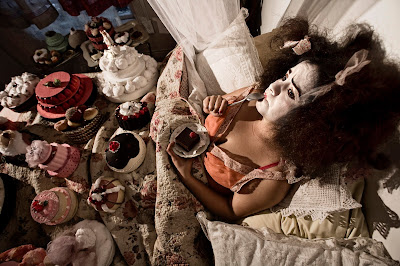

I became a clown when I lived in London and I felt instantly a sense of belonging and a great comfort of being myself and existing 100% visible to the world. I started exploring social clowning before the creation of a more theatrical character.  That came later on and was the result of an exploration through photography and life and emotions in stillness. I not only understood entirely who this woman was but I also felt a great empathy in narrating my stories through her. To me, clowns are poets, inventors, philosophers. They will throw themselves into the abyss without wings, hoping to build them on the way down! Clowns tell epic stories as heroes who can lose everything but might also win the whole world embracing their own stupidity, vulnerability, and heart. I started communicating with sounds more than words when I was a kid, and I still do.  I very often feel the truth and honesty of clowns and their universe is evoked in silent moments, when we get to see what lies beneath.


Sarah Petersiel

New York City


I’m part of a physical comedy trio. Our latest show is about an art heist gone stupid: three thieves strive to become senior-level members of the “Thief Society,” an exclusive club for accomplished thieves. I’m the sole female member of the trio. When developing work, we look for all of our characters to be funny. Each character has their own vision –and lack of it. As a spectator, I’ve, um, been known to cry when I see women onstage or onscreen not as sensible foils or sex objects or peripheral characters, but as comedy powerhouses central to the work. I feel relief. I feel victory. When I step onstage with my ensemble mates, I aim to be a part of that reality. 

http://underthetabletheatre.com


Pepa Plana

Catalonia
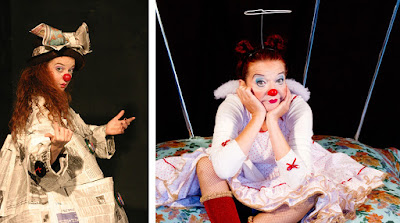
Photos by Joan Sánchez (left) and Roser Arques (right)

I believe in the duty that artists have to comment on the social issues that concern us. The magic of men clowns and women clowns is that with subtlety, poetry, and laughter, we can reach the public so that they become aware and act accordingly. The world is turning to fascism again and we have to fight it with our weapons, which are thought, poetry, and freedom.
Pepa Plana, Catalan actress and clown, recipient of the 2014 National Culture Award, is known for the quality of her performances and for her contribution to the status of female clowns. She established her company in 1998 with the clear intention of creating clown-theatre for adult audiences. After nine productions, five of them on tour, each new work generates wide expectations. 
http://pepaplana.com/en/


Nola Rae
London
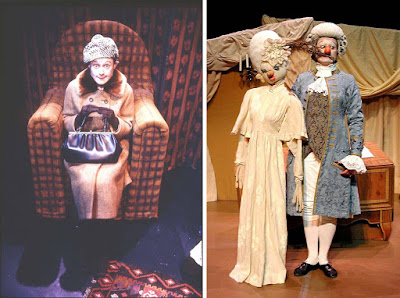

I was playing my sketch show “Upper Cuts” in Calcutta (now Kolkata). This conversation was overheard between two small boys.

Boy who had not seen the show: “What is he like, this Nola Rae?”
Boy who had seen the show: “First of all, he is a she!”
“But what is she like?” 
“Well…sometimes she is a clown and sometimes she is a…Nola Rae!”
I can explain myself more fully, but never better!
www.nolarae.com     
youtube: “Nola Rae Selections”


Eva Ribeiro

Portugal
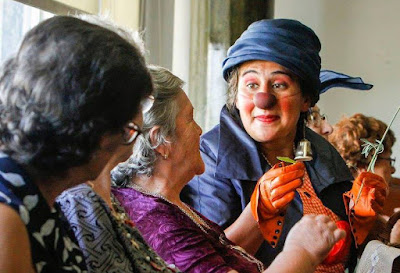

I was born in 1985 in Carnaxide, Portugal. My adventure in the performing arts began in 2003 in the form of street theater. I graduated in 2007 in Theater, Staging and Acting at Oporto’s Superior School of Art and then in Physical Theater at the École Internationale de Théâtre Jacques Lecoq (Paris). From 2006 I studied clown and physical comedy with several international masters. I have now performed in more than ten countries in Europe and South America with my shows. I teach regular clown classes in Porto and I organize different events and workshops concerning contemporary clown research. I started the Madame Nez Rouge project in Porto in 2011 with Catarina Mota, with whom I participated in different festivals and collaborated with companies in Portugal, France, Spain, Belgium, Brazil, Argentina, Romania, and Slovenia. In 2016 I gave wings to my work as a social clown with the artistic project of social solidarity, A Visita, where clowns visit old people in Lisbon and Porto homes. I live, breathe, and work at the moment in the Porto area, but I am taking my art everywhere because for the art of the clown, there are no borders.

http://evaribeiro.pt

Tiffany Riley
Dallas, Texas


After graduating with a BFA in acting from NYU’s Tisch School of the Arts, I almost immediately shifted my passion to clowning. Along with my partner, Dick Monday, we have been featured clowns with the Big Apple Circus, Circus Sarasota, Circo Atayde, Ringling Bros. and Barnum & Bailey, the Hanneford Circus, and Lone Star Circus. I co-founded the New York Goofs in 1998, and we have been producing clown theatre around the globe for the past twenty years.  My great passion has been to advocate for the impactful work of Healthcare Clowning, first as a clown with the Big Apple Circus Clown Care Unit, and for the past twelve years by creating Funnyatrics and the Laughter League. Last May I completed my Master’s Degree in Liberal Studies at Southern Methodist University and am working on publishing my first book about the work clowns are doing in healthcare settings.


Joey Robinson-Holden

London


When I was five, I earned a pearl necklace from an Xmas cracker by entertaining the old aunties with knock-knock jokes, a puppet emu, and  trick chewing gum. I think from there the dye was cast. I went on to university to study theatre and for a time really wanted to be a serious actress, but even in my serious moments the audience giggled and deep down I realised I loved playing the idiot, I loved the feeling of making people laugh, the honesty, the immediacy, the connection. I sought out clown teachers and still do! I performed in the street, for Cirque du Soleil, with Clowns without Borders, and in the theatre. I’m happiest devising with other performers and teaching! 


Suzanne Santos

Seattle
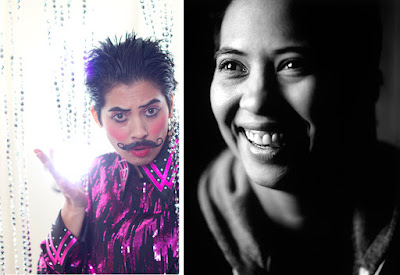

I feel like clowning chose me. It’s not an easy path, but it is a fun, creative, and fulfilling one. It’s challenging because I am a person who it’s hard for an audience and my colleagues to put into a box.  So I decided to not be in any boxes. I have the most fun exploring gender, stereotypes, and racism in my work. I am most encouraged by the discovery in creating and partnering with others, especially the audience.  I allow the space for people to engage deeply, but also to laugh and get caught in the play. 

www.suzsantos.com


Joanna Sherman
New York City

I fell into theatre by accident. I was a dancer/acrobat with a degree in architecture and fine art and little interest in “drama.” Before I learned that this crazy, physical-farcical, commedia, agitprop theatre existed, I found myself in it! And I discovered I was funny! Our street theatre plays (Bond Street Theatre) were colorful farces with a live band and lots of action. The glue to each story was the clown duo who kept the shifting crowd up-to-date on characters and plot twists. My favorites, the Hosanna Brothers, were clown gods (me and Michael McGuigan) sent to “save the world” from doom, and inevitably making things a bit worse. Now we’ve taken our physical antics into the wider world, working in areas of conflict and nudging others to tell their stories, and teaching that comedy and tragedy are forever siblings, and you shouldn’t have one without the other.
www.bondst.org


Caroline Simonds

Paris
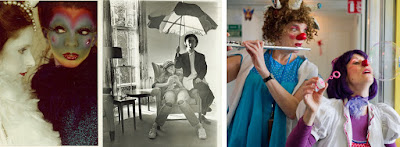
Left: Ratapuce with Palais des Merveilles and Marie Nimier. Cente:
Bennington College with Beth Skinner. Right: with 
Margot McLaughlin
Left: My senior year at Bennington. I had dropped out of pre-med to plunge into theatre. Every time I opened my mouth, everyone laughed. My theatre professor suggested that I become a clown. I was offended and had NO idea why anyone would laugh at me. After a junior year abroad in Paris and having fallen in love with Remy’s book,  Les Clowns, and seen Mnouchkine in Les Clowns (Théâtre du Soleil, 1969), I declared that I was a clownesse, « Zeep ». Center: I returned to Paris in 1971 and performed in the street with « Le Palais des Merveilles » for 10 years as Lili Ratapuce, a fairy-like, musical, acrobatic, botanical and zoological clowne. I did not utter a word for those 10 years. I returned to NYC and joined the Big Apple Circus Clown Care Unit as Dr. Giraffe. (Marie Nimier, the now famous author, as my white clowne). Right: I have been in Paris since 1991 running Le Rire Médecin, Europe’s first Hospital Clown program. We have 28 programs in 48 pediatric units and 97 amazing professional clowns, always in a duo. Why the duo? for the conflict and the love! 


Reminder: just click on the images to enlarge!

Evelyn Tuths
New York City


How fortunate I am to have found CLOWN in my life. To embrace its art, perspective, and live in its wonder is extraordinary. Being a founding member of the New York Goofs and the all-female troupe Those in the Nose gave way to years of performing, teaching, and experiencing a life of presence, play, and possibilities. With the addition of my clinical license in social work, I now also promote the positive therapeutic benefits of clowning through workshops that I design and facilitate. All exploring the empowering and healing aspects of LAUGHTER, PLAY, and CLOWN. Through research, inspiration, teaching, and performance, my goal is to continue to open up the Art of Clowning to all. To Clown or Not to Clown … is not a question.

evelyntuths@gmail.com


Diane Wasnak

San Francisco
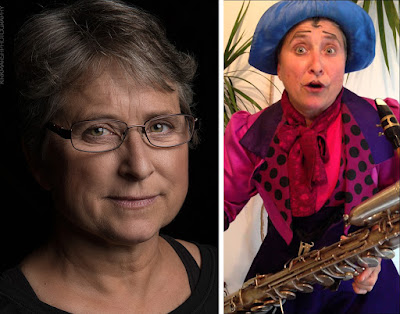


Pop-pop (my paternal grandfather) taught himself accordion at age four and was playing in between vaudeville acts at the age of nine. Grandma worked as a domestic from age 13-70 but was a performer at heart, a beautiful singer and versatile dancer. She would have me perform for whoever happened by the house: “Play Charlie Chaplin!” “Sing a song!” “Stand on your head!”  She always told me, “You’re doing what I always dreamed of doing.” My maternal grandmother Oma was a writer of children’s stories, a teacher, knew many languages, could grow anything, and always called the plants by their scientific names. These were my first teachers. Age ten, I began to take mime and acting classes. Dropping out of college, I attended Garbo & Berky’s Antic Arts Academy and was inspired to create my own material using mime and clowning. I came to know Tony Montanaro and studied with him in the mid-80s. 1989 took me to the Pickle Family Circus by way of Judy Finelli, where I partnered with an extraordinary actress and clown, Joan Mankin, as Queenie Moon and Pino. The first female clown duo to be featured in an American circus! Joan left the Pickles the following year to pursue her acting and Jeff Raz was hired as my partner. His bigness and my smallness complemented each other perfectly for acrobatic stunts taught us by LuYi, who had been Artistic Director of the Nanjing Acrobatic Troupe. I have been gifted with amazing teachers in this life who continue to inspire me even if they are not of this earth anymore. I am so very grateful to them. In regards to being a female and clown, my goal has always been to connect with the audience. Whether funny or sentimental, portraying a female, male, animal, or object, I personally have never set limits on a who, or what. Any limits have come from the rules set from the outside.

www.dianewasnak.com


In Memoriam


Susan Avino (1954–2000)

by Deborah Kaufmann
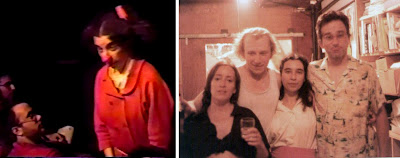
Right: Cheryl Cashman, John Towsen, Susan, and Joe Killian
Susan was a dancer by training who got into clowning through several summer “Clownshops” with Bob Berky and Fred Garbo, where she studied alongside such budding clowns as Diane Wasnak, Hilary Chaplain, Judy Gailen, Ellen Heck, Joe Killian, Michael Zerphy, and myself. In New York, she studied with Richard Pochinko and many others who taught at the If Every Fool studios. She co-directed and performed in the New York International Festival of Clown-Theatre in 1983 and 1985.  Her character, Kukukana, in “Lost and Found” received this rave Village Voice review: “The highlight for me was when Susan Avino finally coaxed the audience into singing a lullaby, then lay down on the stage to snooze. What a nice change for the audience to put the performer to sleep.” She was also featured in “The Right Stuff, ” an all-female clown version of the film of the same name, and  “Bocci Brides,” a commedia-inspired romp. All three pieces were directed by her husband, John Towsen. Her performance career was cut short by breast cancer at the age of 38, which took her life at the age of 45.


Nancy Buell (1954?–2000)

by Dikki Ellis
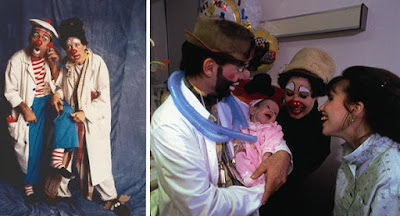
With Dikki Ellis (left) and with Michael Christensen (right)

Nancy Buell, was an actress, clown, and singer who was trained in Paris at the famous Jaques Lecoq school. I met her at the Big Apple Circus in New York City while co-creating an original program called the Clown Care Unit, the first continuous hospital program in the world that used clowns to reduce stress. For many years, Nancy played Dr. Ravioli to my Dr. Trikki at Mount Sinai Hospital. We had three things in common: we loved the work, we had NO money and we weren’t good —yet! I guess you could say it was a “clown marriage.” We enjoyed the company and depended on each other to make the clown circle complete.
Though she was flexible, her strength was as the lower status clown, and to partner with her meant I had to play the voice of reason most of the time. When improvising, her favorite place to be was in trouble; drawing the watcher in slowly till all inhibitions were gone. Once we established trust, all things were possible. Her face was warm and trusting, and she made people feel good. Her costume and props were earthy; you knew she was a clown but not where from. She carried a small box which took forever to open, then finally out popped little raviolis on springs bouncing all over. It took her just as long to get them back in. We had a pizza box which, when opened, you could stick your face into to become a talking pizza telling bad jokes. She had a duck puppet that ran up and down the hallways that looked great on the security cameras, and a “third-arm” puppet in a bucket named Otto the Otter. We sang songs and the Otter could do a few circus tricks.
Nancy had other opportunities elsewhere and decided to move back to Paris. On the day she left Mount Sinai, she was quite weepy. I assured her we would still be friends and she said, “I know, but I will really miss our routines and props.” What can I say? The thing that made Nancy the best at this work was her accessibility, vulnerability, compassion, and commitment to being the best. She used all her training to create a lovely character who spread love and cheer to all those who saw her…. including me.
We lost Nancy in 2000. She was 46 years old. I think of her often, and certainly every time I make hospital rounds. Missed, not forgotten.

Dikki Ellis is co-founder of the Hanlon-Lees Action Theater, now celebrating its 40th year; founding member of the Big Apple Circus Clown Care Unit, now Healthy Humor Inc, 30 years; Director of Clowning for Macy’s Thanksgiving Day Parade, 20 years; and founder of ARCH, Artist’s Reaching Children in Hospitals, an ongoing program that trains young artists to make bedside visits in Children’s Hospitals, 25 years.  He lives in West Orange, NJ with his wife Robin and dog B-B.


Valerie Dean (1951-2011) 

by Don Rieder


Valerie Dean was a director, choreographer, performer, circus artist, and clown. Her passion was movement, whether it was human or animal behavior, the secret life of water, the movement caught in a photograph, or the traces of emotion and memory that water, pigment, and brush leave on paper. For more than 40 years this passion for expressive movement inspired her performing, teaching and directing.
Valerie was born in Dartmouth, Nova Scotia and raised by the sea. Her insatiable curiosity, her sense of adventure and the desire to pursue her own expressive potential led her to train, perform, and teach throughout Canada, Europe, Mexico and the United States. Valerie’s performances have been described as Felliniesque angelic perversity, and her choreography as kinetic, articulate and athletic. 
Valerie was a gifted teacher who guided circus artists, actors, dancers, and musicians to achieve technical mastery and self-expression. These artists have included medal-winning circus artists, Juno award-winning singer/songwriters, high-performance competition athletes, and classical musicians. As a master teacher, she was guest faculty and artist-in-residence at colleges and universities across Canada and the United States. She was also an instructor at the National Theatre School.
She was an important figure in Montreal’s vibrant and internationally recognized circus community. Her eclectic theatre and dance background and her innovative teaching approach created bridges between traditional and contemporary circus training and performance. She was a faculty member of the École Nationale de Cirque from 1994-2002 and artistic coach for movement and expression for the Cirque du Soleil from 1999 – 2007. 
Don Rieder is a performer, author and gag writer. In 1978 he and Valerie Dean, his partner both onstage and off, founded KLAUNIADA, their clown-theatre company, which toured across Canada, the United States, and Mexico. 


Annie Fratellini (1932–1997)
by Dominique Jando


Heiress to the legendary clown dynasty, Annie Fratellini was born in the circus, left the circus, and returned to the circus to become one of France’s most celebrated clowns with her husband, Pierre Étaix and, later, with her daughter, Valérie—before creating a circus school in 1975, which has become one of her country’s major state-sponsored circus schools, L’Académie Fratellini.


She was born in Algiers, where her parents were touring, on November 14, 1932. Her father was the clown and acrobat Victor Fratellini, son of Paul (Paolo) Fratellini and nephew of François and Albert, of the illustrious trio, and her mother, née Suzanne Rousseau, was the daughter of Gaston Rousseau, the director of the defunct Cirque de Paris, the gigantic circus building that stood Avenue de la Motte-Piquet in the French capital from 1906 to 1930.

Like all true circus children, Annie was trained in acrobatics —by her uncle Albert— and since her father was a good musician (as all European classic clowns were meant to be), she was also given a solid musical education. As for her clowning skills, she just had to watch her large family’s comedy and clown acts to learn all the basics. She made her performing debut at Paris’ Cirque Medrano at age thirteen, entering the ring within a big rolling globe, from which she emerged to balance on it while playing the saxophone. It was deemed “charming,” but it was not, by any means, an act destined to stardom. (A gifted musician, she also played the violin, the vibraphone, the piano, the accordion and the concertina.)

At eighteen, she ran away from the circus and formed a small Dixieland jazz band with which she toured the variety circuit, before starting a new career as a variety singer and recording artist, and eventually becoming a movie actress. In 1954 she married the film director Pierre Granier-Deferre, with whom she had a daughter, Valérie. In 1965, she had a major role in Granier-Deferre’s hit film, La Métamorphose des Cloportes. Then she met Pierre Étaix, a former comedian who had been Jacques Tati’s assistant before becoming a very successful filmmaker in his own right, specializing, like Tati, in very visual and relatively silent comedies. 


Étaix had a passion for the circus, especially for clowns, whom he often used in his films instead of actors. In 1965, he had produced his masterpiece, Yoyo, the story of a clown who becomes rich and leaves the circus —before realizing that life out of the ring is just emptiness: He eventually returns where he belongs. Annie Fratellini was touched by the movie and met Pierre Étaix. They fell in love and Pierre asked Annie to star in his 1969 film, Le Grand Amour —in effect, a paean to the woman he loved.


Étaix was quick to notice Annie’s innate sense of comedy, and he convinced her to return to her roots and try the family craft: Clowning. So, together, they formed a clown duet in which Pierre was the clown, all whiteface and sequins, and Annie the auguste. In 1970, they went on tour with Cirque Pinder, one of France’s premier circuses. Both were already well-known, and Annie had a magic name: Fratellini! On top of it all, Étaix had been right about Annie’s talent. There were immediately successful.


While they continued performing, they made plans for the creation of a professional circus school, something that didn’t exist in the West and was, they believed, sorely needed in France. They opened the École Nationale du Cirque in 1975, and with it, the Nouveau Cirque de Paris, its traveling performing arm —a high-end, intimate circus modeled after Paris’s defunct Cirque Medrano, albeit in an itinerant form. They were, for several years, the stars of their own circus. 


Annie Fratellini and Pierre Étaix divorced in 1987, and Valérie Fratellini (Granier-Deferre) replaced him as Annie’s clown—a “clownesse” this time. She continued expanding her school and touring with her circus, where many of her students made their debut. Sadly, she died of cancer on July 1, 1997; she was only sixty-five years old. 


As a clown, Annie had a wonderfully childish and rebellious character —with a poetic aura. Dressed in a large overcoat and oversized shoes reminiscent of her uncle Albert’s, and wearing a very simple and identifiable makeup (with a red nose, a blackened mouth and sequins on her eyelids), a red wig and a bowler hat, her appearance was not feminine, but she didn’t look like a man either. When asked if her character was male or female, she always answered, “clowns have no gender!”  

Dominique Jando collaborated with Alexis Gruss in the creation of France’s first professional circus school, and of Le Cirque à l’Ancienne. For nineteen years he served as Associate Artistic Director of the Big Apple Circus. His numerous highly-regarded books include “Histoire Mondiale du Cirque” and “Clowns et Farceurs.”


Julie Goell (1951–2016)

by Hilary Chaplain & Iman Lizarazu
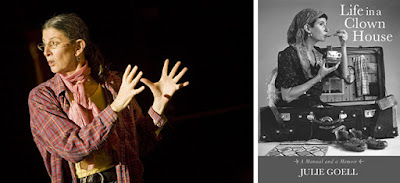

Julie Goell brought joy and passion to her work as a movement theatre artist, mime, clown, upright bassist, singer, puppet maker, teacher, and director. Having trained and performed extensively as a mime and in commedia dell’arte, her work with the audience was immediate, vibrant and totally connected. She coined the term “flash theatre,” magically creating entire worlds in a flash by physically embodying every aspect of the atmosphere —full of imagination and playfulness, she created a whole universe with a handful of props. She effortlessly switched from being a European traveler to a ditsy flight attendant to creating a hilarious in-flight film of preposterous beauty secrets, smearing paste and slices of vegetables all over her face. She was always ready with a supportive word, and her enthusiasm for the work was infectious. —Hilary Chaplain


Julie and I had a special relationship.  She was my teacher from the very beginning. I met her in 2004 at Celebration Barn. We had an immediate connection with each other. Very quickly, I realized I had a very amazing friend who, as the years went on, became more than a friend.  Julie and Avner became family. After a few years, I asked her if she was interested in directing my solo show. To my amazement, she said yes. I was so honored. What I loved and appreciated about Julie as a director and teacher was that she was so kind and brilliant.  Her versatility from her varied aspects of training made her so accomplished and confident.  It was amazing. Julie was so funny. She and I shared the same frequency of humor, finding comedy and goofiness in the same types of actions and events. Now that she is gone, I still hear her saying “Iman, keep the story going in your head, keep the story going!” Julie continues to be with me always and it is an incredible feeling to know that she is will always be an inspiration to me. I miss her so much! —Iman Lizarazu


In her last year Julie wrote a book, Life in a Clown House: A Manual and a Memoir.  At www.clown-house.com one can order the book, see videos of Julie’s work on stage, read her fiercely funny poems about her condition, read articles about Julie, and listen to her music. Also see Julie’s article on female commedia servant characters, “Le Servette in Commedia dell’Arte,” in the Routledge Companion to the Commedia Dell Arte


Nina Krasavina (1939?–1996)by Karen E. Gersch
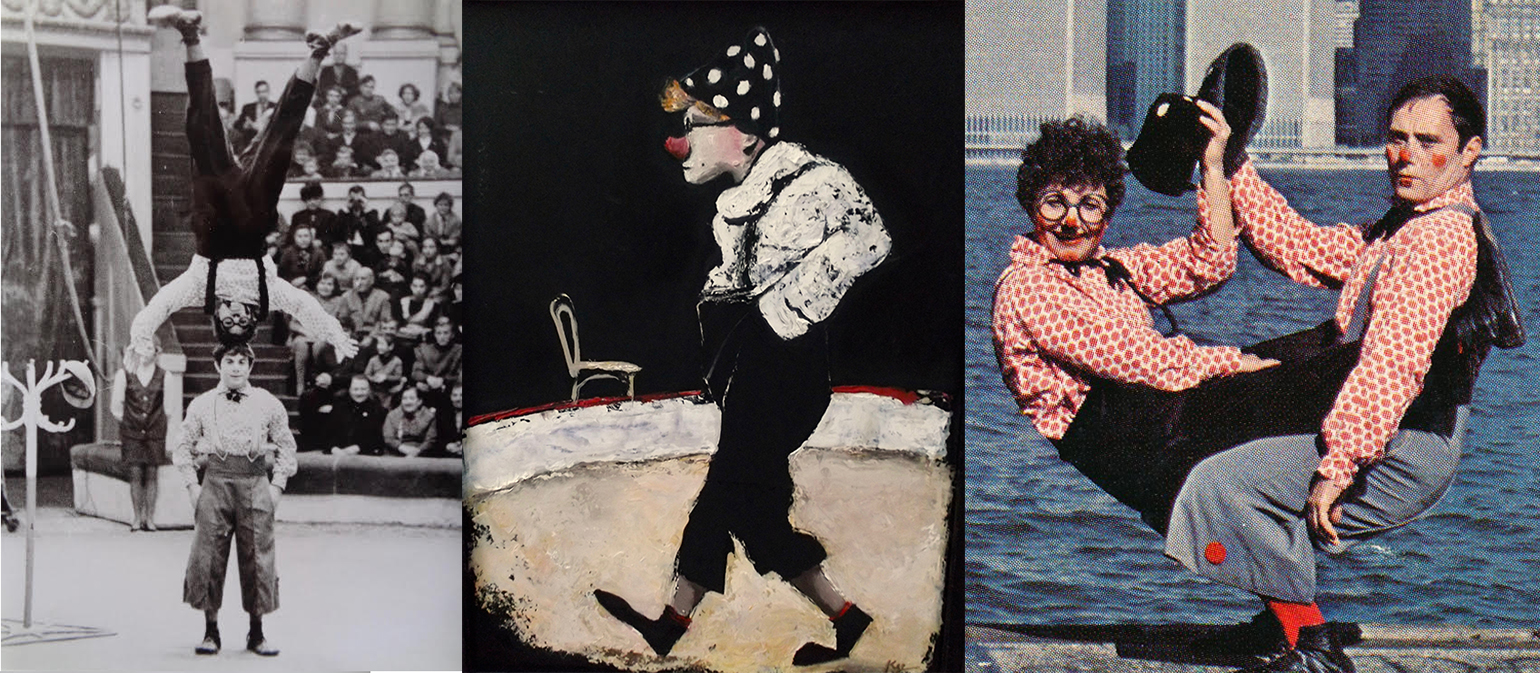
Center: painting by Karen E. Gersch; Right: photo by Peter Angelo Simon


The most powerful woman I’ve ever known was all of four feet, eleven inches tall. Even in her 50s, there was a childlike demeanor to her elfin face and unruly curls. Nina Krasavina, born in Leningrad in the late 1930s and trained from an early age at the Moscow Circus School, arrived in NYC with her husband, Gregory Fedin, in the mid-70s. I met them both their second day in Manhattan. Nina spoke no English, and I knew no Russian. Yet we sat on a stoop in the East Village. conversing and laughing at our mutual responses and affection for the dogs that passed by. On a small mat in the basement of the Puck Building, Gregory made Nina demonstrate for me one hundred styles of handstands. She flowed from one subtle adjustment of limbs and spine and shift of legs into another. When she finally stood right side up, I was the dizzy one, confounded by her grace, strength
and ability. Her clown shyly giggled, then curtsied to me.

It was this mark of her charm and simple humanity that was engaging, not just to myself, but to every audience she faced. Without a prop, with the lift of a single eyebrow, she could bring down the house at the Big Apple Circus, as I watched her do night after night. Her remarkable physicality and acrobatic skills were one virtue, but her poignant character could play and improvise with ease. Audiences heard her with their hearts. As an acrobatics teacher, she was steely, serious and used simple metaphors to make us understand our roles; calling me an “oak tree”, admonishing my partner to “be like frozen fish —don’t move.” Most of all, she taught me the art of caring, connecting, and conjuring comedy out of thin air.


Joan Mankin (1948–2015)

by Judy Finelli


Joan Mankin was born on May 16 in 1948 and died at her home in the Little Hollywood neighborhood of San Francisco on in 2015. She was primarily an actor and a clown. She was a human cyclone and force of nature. I met her for the first time during the years Hovey and I taught at ACT during the 70s. After we arrived for the first time in the early 70s, we sought out the latest production of the San Francisco Mime Troupe, featuring Joan Mankin in the title role in the “Independent Female.” Joan was highly effective in the role and was adept at delivering a believable, broadly comic yet somehow intimate performance in the Mime Troupe’s signature presentational style.

I knew that Joan and Don Forrest had been clown partners in a much earlier version of the Pickle Family Circus, so when I knew that I would be artistic director of Pickle, I didn’t hesitate casting them as the only clowns in the 1988 show. My view then was that Joan was an accomplished actor. I had seen her in many productions and she always found her own interesting way into those parts. The second thing I knew Joan possessed was a physical basis for the acting work she did. She had been studying Bhagwan, a Chinese martial arts weapons form using one and 2 swords for several years. I knew she had everything she needed to become a complete clown. 

But sometimes clowns don’t develop in a partnership at the same rate. Don had done very broad parts with the Dell ‘Arte Players, of which he was a founding member. He was used to being outrageous and over-the-top and yet still retaining believability. I saw a real clowning potential in Joan, although she didn’t know quite how to use it. I thought that perhaps there might be something about the way they approached working with one another that might be constraining Joan’s creative instincts. 


We had an interesting apprentice that summer of 1988 by the name of Steve Labounty, so I decided to have Steve and Joan work on a clown magic act together. Joan did the clown magic act with Steve during the end-of-the-year holiday season show. It involved a famous illusion, called Houdini’s Metamorphosis, and used a trunk. At first, Joan is locked in the trunk and the magician stands on the trunk. He holds up a circular curtain and they switch places quickly. Steve played the egotistical “Rialto the Magician” and Joan played his ostensibly beleaguered, thankless assistant. 


That’s all Joan needed. Soon she was relishing Steve locked in the trunk with demonic glee, lamenting about losing one of her “Lee Press-On Nails,” and looking as though she would leave Steve in the trunk, walk away and free herself from her restrictive, controlling magician forever. All it takes is the lightest touch to bring out the clown in someone who has the talent to become one. I marveled at how easy it was and enjoyed every moment watching Joan’s development.

After Don left the circus to go back to Dell ‘Arte Players, my dream of having a female clown partnership was realized when I found Joan the perfect partner in Diane Wasnak —after looking at more audition tapes than I ever wanted to. In the next season she became the owner of the “Café Chaotique,” which was a continuation of our turn-of-the-century restaurant scene. She used the other performers as foils for her clowning. However, it wasn’t until the following year that Joan emerged as a major clown through her work with Diane Wasnak, an East Coast clown who had trained with Tony Montanaro at the Celebration Barn Theater. They were a great clown partnership. Joan had met her match. They had it all: contrast in size, temperament, and cartoon stylistic movement. They could both play saxophones which led to a wonderfully inspired musical clown piece entitled “‘Round Midday.” They went on to do our clown dream play, “La La Luna Sea,” the following year. I’ll never forget that was the show when the dominant Joan as Queenie grabbed her crotch in an outrageous sendup of the male gesture we were used to seeing. Joan was fearless and crazy and a brilliant clown! Joan as Queenie Moon became a welcome presence in productions and events throughout the Bay Area up to her death. At the end of her life, she had serious health challenges and the more profound her illness became, the closer to her clown she came. This is the mark of a total clown.

Even when she was being a pain in the… I loved working with her. She was one of my dearest friends and I miss her daily.

Judy was an early contributor to the New Circus Movement. A former Artistic Director of the Pickle Family Circus, she currently coaches circus skills at Circus Bella, the SF Clown Conservatory, and Prescott Circus Theater, and is the founder of Notoriety Variety.


************** 

That’s it —gratitude and bravissimo to all!!  Be sure to check out…


Women in Clowning, Part One
In the Circus

Women in Clowning, Part Two

A Research Guide to (pre-1975) Clown(esque) Women (outside of the circus)

SHARE
EXPLORE FURTHER

Women in Clowning, Part Two: A Research Guide to (pre-1975) Clown(esque) Women (outside of the circus)

POST 440
Friday, March 30, 2018


In my last post we saw that pre-1975 circus clowning was pretty much a boys club, with a big No Girlz Allowed sign posted on the clown alley door. When we look outside the circus, we see more gender fluidity when it comes to women clowning, though still nothing like what started to develop after 1975.


Of course a lot of it depends on how you choose to define what makes a “clown.” Is it the bumbling and the naiveté? The stylized makeup and costume? The physicality? The openness and vulnerability? The number of laughs he or she gets? Who’s more of a clown, someone who looks like one and performs standard clown gags or someone who does neither but has a stronger clownesque persona?


Yep, defining “clown” is a tricky and often contentious matter, no doubt worthy of another blog post, but here I am just going flat out with a broader definition. It’s simply more useful. The great strength of clowns is that they can be anywhere, and usually are. It’s a natural human phenomenon, observable in all eras and on all continents, Antarctica not included (with the possible exception of a few penguins and, believe me, they know who they are). And as we travel outside the circus ring, I’ll be looking at these six areas — but again only before 1975.


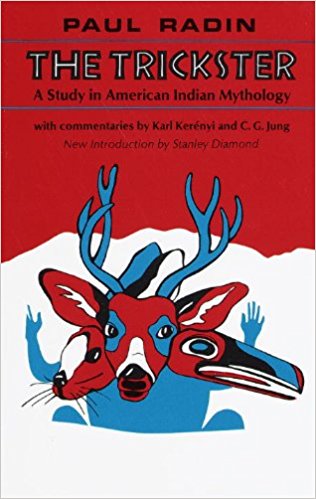
1. Tricksters, Contraries, and Sacred Clowns

2. Fools & Jesters
3. “Low” Comedy: the farce, commedia, and pantomime tradition
4. The Variety Stage

5. Silent Film

6. Sound-era Movies and Television

Whoa! That’s way too much for a definitive search, at least for me. It would be like writing another book that I don’t have time for. To get this done, I had to hypnotize myself, and now it’s time to hypnotize you too. So repeat after me: 

This is a blog post, not a book
This is a blog post, not a book. 
Good. Now… for this post, I’m going to do three things in each category:

• Provide an overview for the category, outlining the general scope of what we’re looking at

• Give a few examples
• Provide resources for further exploration

And that’s why I’m calling this a Research Guide!


1. Tricksters, Contraries, and Sacred Clowns


Roxanne Swentzell: Emergence of the Clowns (1989)


OVERVIEW


Clowns were here from the beginning. The creation stories told and acted out for centuries if not millennia by indigenous peoples throughout the world are full of mudhead clowns and trickster coyotes. For the Hopi, an indigenous tribe of the American Southwest, when humans first emerged from the underworld, it was the clowns who led the way. Likewise, trickster characters are a part of most mythologies and take many forms —not just male, and not just human.


Although in a patriarchal society these stories will be dominated by men, there is still more gender diversity than we westerners are accustomed to in our relatively recent monotheistic Judeo-Christian-Islamic tradition, where the creator is an all-powerful father figure. But going back to pagan times, the Greeks had their Zeus (Jupiter to the Romans), clearly the chief honcho, but they also had their goddesses, not just Aphrodite and Athena, but also Hecate, goddess of sorcery, crossroads, and magic, and Eris, goddess of chaos. And this blog’s patron saint, Dionysus, god of my two weaknesses, wine and theatre, was raised exclusively by women and took on many feminine attributes. There was likewise more gender fluidity in Norse, Egyptian, African, and Hindu mythologies, and perhaps even more so in the thousands of indigenous cultures that dot the earth. The Fon of West Africa, for example, attribute the creation of the world to the goddess Mawu.

Mimbres pottery (c.1100–1250 A.D) and modern 
koshare clown (Barton Wright drawing) 


When these stories are incarnated in tribal ceremonies, they offer an example of clown performance that testifies to clowning’s universality. The Hopi emergence of the clowns is not just a creation myth, it’s part of a ceremony that has been reenacted by the Hopi for centuries. And I’m not just assuming it goes way, way back. Just look at this image (above) of a Mimbres pottery bowl from the U.S. Southwest, dating from almost a thousand years ago, and compare it to a modern koshari clown!


Beyond creation stories, beyond the sacred, anthropologists have found clown figures in many other indigenous performances where their function is decidedly secular, satirizing anti-social behavior and often openly exploring “forbidden” topics, such as sexual behavior. This clowns-as-critic function is sometimes referred to as conservative, but I think that’s a term too easily equated with modern political connotations. Satire is satire and can cut in multiple directions.


EXAMPLES


Androgynous Tricksters

This is definitely a thing. Christen’s Clowns & Tricksters (see citation below) is full of them. 

The Norse Trickster Loki was a shape-shifter who could change gender or species. In the tales, Loki is portrayed as a scheming coward who cares only for shallow pleasures and self-preservation, and is by turns playful, malicious, and helpful, but always irreverent and nihilistic. Loki is also the mother –yep, the mother– of Sleipnir, Odin’s shamanic horse, whom Loki gave birth to after shapeshifting into a mare and courting the stallion Svadilfari, as is recounted in the tale of The Fortification of Asgard


Brhannada
 is an androgynous clown, the female half of the warrior Arjuna, who appears in book four of the often-staged Indian epic The Mahabharata, and in many derivative Indian puppet shows. “Playing his role as Brhannada,” writes Christen, “Arjuna accepted the role of charioteer, but in a comedic light. First, he had trouble finding the chariot. Then he put on his armor upside-down. Finally, as he climbed into the chariot, he pretended not to know he was heading into battle, telling the king’s wives that he would bring them back fine fabric.”

Gabruurian 
and Kamdaak Waneeng are Papua, New Guinea tricksters, a male-female duo both of whom can and do gender-shift at will, and whose bad behavior is intended to educate the young as to right and wrong. 


The komali clowns seen in Tamil (India) village rituals and plays are outrageous, ribald satirists who dress as members of the opposite gender or of both genders, deliberately jumbling everything, focusing attention on life as an illusion.


The Amazon-like Nafigi is, not surprisingly, from Brazil. She’s more evil trickster than clown, and can change shape and gender to get what she wants (including sex), leaving mayhem in her wake.


The Heyoka (North America)

The Heyoka are the sacred fools of the Lakota Nation, and are called to joining this society of contraries by having a vision of the Great Winged One, also known as Thunderbirds. Though the Heyoka are predominantly male, women too are called.

Ch’angbu (Korea)

Again according to Christen, “the ch’angbu is a humorous female clown character and is one of the most popular of the ancestors who appear in the kut, a common Korean women’s ritual. Traditional Korean religious practices include women’s rituals that range from daily practices to annual celebrations. In the kut, ancestors are summoned, reveal themselves, and are spoken to through a mansin (female shaman). The ch’angbu is not only a humorous character, but also carries with her the spirits of dead actors, singers, and acrobats.As such, she brings with her a whole range of skills to enhance the kut.”

South Pacific Clown Women

I’m not sure if the South Pacific is an especially female-clowny part of the world or if it just seems that way because recent anthropological research has been more open to discovering it. I’m basing this on William Mitchell’s compilation of essays, Clowning as Critical Practice: Performance Humor in the South Pacific.  From Fiji to Samoa to Papua New Guinea, and islands in-between, clowns exercise an important societal role, and many of them are women. Mitchell writes in his intro that “one of the challenging findings… is the extent to which women are involved in clowning… The stereotype of clowning as predominantly male is supported by the ethnographic record but… this may be more an artifact of the discounting of women’s activities by researchers than a faithful record of women and comedy.”


RESOURCES

 Kimberly Christen’s Clowns & Tricksters: An Encyclopedia of Tradition and Culture is a valuable compilation of cultural variations on the trickster and clown archetypes.
 Paul Radin’s The Trickster: A Study in American Indian Mythology is the classic work on the subject.

• Barton Wright’s well-illustrated Clowns of the Hopi: Tradition Keepers and Delight Makers offers a short and lively introduction to the subject. 

 Barbara Sproul’s Primal Myths is the standard work on creation stories.
• Mike Rugnetta’s Crash Course Mythology series on YouTube offers lively introductions to Earth Mothers and Rebellious Sons and to Coyote and Raven, Americn Tricksters.

 Clowning as Critical Practice: Performance Humor in the South Pacific, a collection of essays edited by William Mitchell, looks at the satirical role played by clown figures in these cultures and shows that women do indeed have a significant role.

 Modern-day explorations of sacred clown have been carried out most significantly by Richard Pochinko and his disciples, including Ian Wallace; Cheryl Cashman; John Turner and Mike Kennard (aka Mump & Smoot); Sue Morrison; Deborah Kauffman; and others. Mike Funt, artistic director of Four Clowns (Los Angeles) has also done considerable research on the subject and teaches a workshop using this approach.


2. Fools and Jesters


OVERVIEW

The keeping of fools, both natural and artificial, by royalty and nobility is a matter of historical record, but much of our knowledge of the phenomenon is anecdotal, and has been the inspiration for dramatization by everyone from Shakespeare on down. One suspects that our image of kings trusting in the wisdom of their court jester is often a romanticized version of reality. Likewise, the medieval Feast of Fools, which originated in France, was not usually as subversive and naughty as we might like to think. In both cases, however, there is some truth to the legend and there’s ample material to mine, with similar examples to be found in societies far removed from medieval Europe.


EXAMPLES


From Seneca to Mathurine

The wife of Seneca, the great Roman philosopher, retained a woman fool. Seneca did not approve, however, declaring that if he wanted to waste his time looking at a fool, all he had to do was stare into the mirror. John Doran, in his History of Court Fools (1858), tells of Artaude du Puy, fool to Jeanne, wife of Charles I of France. This was in 1373, and nothing specific is known about her. 

The most famous female fool was no doubt the flamboyant Mathurine, who presided at the French court from the reign of Henry Ill to that of Louis XIII. She walked the streets dressed like an Amazon warrior and was noted for the fervor with which she attempted to convert Huguenots to Catholicism. The name of this pugnacious and outspoken jester was adopted as a pseudonym by contemporary satirists, and a specific style of burlesque writing was given the name mathurinade.


Family of Hanry VIII, with Will Sommers (far right) 
and (perhaps) Jane the Fool (far left)
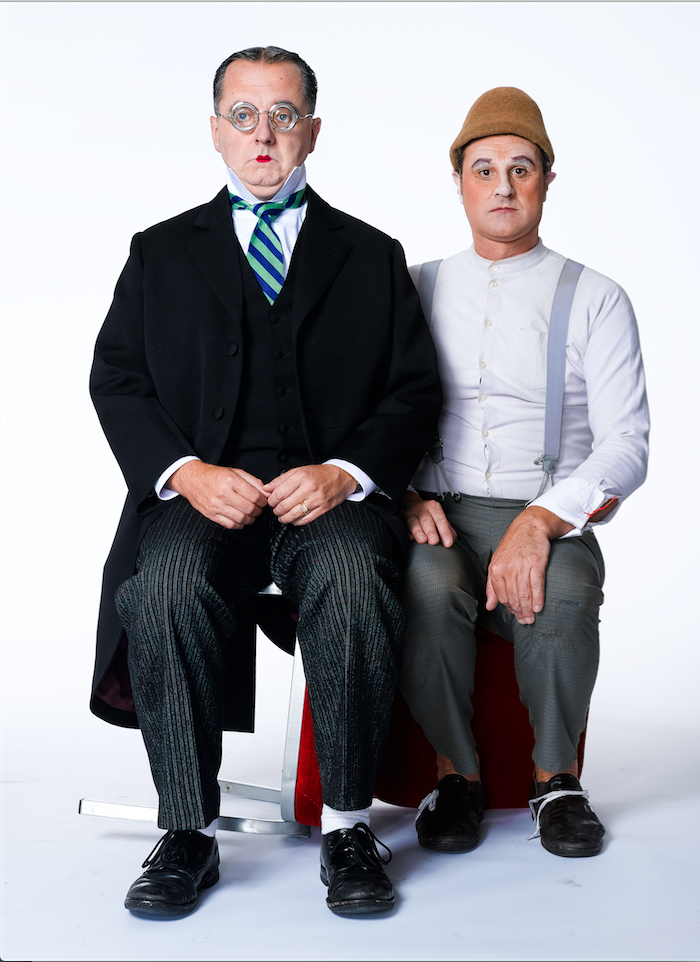
Jane the Fool
Will Sommers was the well-known jester to three monarchs, notably Henry VIII. In his later years under Mary I, he was paired in the royal household with the queen’s longtime fool, Jane, about whom little is known other than that she apparently shaved her head, as was the custom for court fools. John Southworth devotes an entire chapter to her in Fools and Jesters of the Royal Court, but finds little more than records of the queen’s wardrobe purchases for her.

Lear’s Fool & Cordelia

This is just a side note, but a lot’s been written about King Lear’s fool and his outcast daughter Cordelia being two sides of the same coin: They are the only characters who tell Lear the hard truth, they never appear in the same scene, and to this day are often played by the same actor. Indeed, there seems to be a general consensus that Shakespeare wrote it for a single actor and, of course, a man would have played Cordelia in the original 1606 production. Provocative but less convincing is the theory that the fool is really Cordelia in disguise…

Carnival, Saturnalia, and the medieval Feast of Fools

These rowdy celebrations all temporarily turned the social order topsy-turvy, providing an opportunity for role reversal galore. A “Lord of Misrule” assumed power and lay people dressed up as priests and nuns,  behaving as sacrilegiously as possible. Cross-dressing was common and the policy was pretty much “anything goes.” While the most frequent targets were church and state, I suspect that the power dynamics of the “battle of the sexes” got their fair share of laughs.

Symbolically, the Feast of Fools was guided by the spirit of Mère Folle (Mother Folly). In the image on the right, she is feeding wine to her children. (Click to enlarge!) She also appeared on festival coins, along with the motto “the number of fools is infinite.” One of the largest fool societies (sociétés joyeuses) was the Dijon (France)-based Infanterie Dijonnaise, whose nickname was Mère Folle and had over 500 members. 


RESOURCES

Beatrice Otto’s Fools are Everywhere: Court Jesters Around the World offers a 19-page (!!) table of jesters throughout the world, organized by these categories: Name, Dates, Place, Patron, and Comments. 
 Theologian Harvey Cox’s The Feast of Fools: A Theological Essay on Festivity and Fantasy was the first major study finding meaning and inspiration in these —excuse the technical jargon—medieval shenanigans.
 Sacred Folly: A New History of the Feast of Fools by Max Harris is the most recent scholarly study of the Feast of Fools. Very well researched (tho not a page-turner), it goes a long way towards separating fact from myth.

 Dancing in the Streets: A History of Collective Joy by Barbara Ehrenreich (author of Nickeled and Dimed) is a lively account of how the established order has often been threatened by expressions of ecstasy and anarchy. The Feast of Fools is just one of her examples of this timeless cultural conflict. A fun read!
 Enid Welsford’s The Fool: His Social & Literary History (1935) was the first major study of the subject.
 William Willeford’s The Fool and His Scepter: A Study in Clowns and Jesters and Their Audience (1969) offers a more modern, intellectually analytical take, drawing heavily on psychoanalysis. It has a chapter on “The Fool and the Woman,” but it is not so much about female performers as it is about the androgynous or hermaphrodite nature of the fool.
 The contemporary theatre troupe, Dzieci, based in NYC and trained both in clown and the work of  Grotowski, has created material inspired by the medieval fool’s mass, infused with their own spirituality. 


3. The “Low Comedy” Tradition: 

farce, commedia, and pantomime


Antoine Watteau sketches Arlecchino and Columbina


OVERVIEW

There’s a lot of academic writing out there that traces the origins of stage comedy to 487 B.C. in ancient Greece, with special credit to Aristophanes, whose first plays were produced 20 years later. To me, at least, this is a wrongheaded literary view of theatre, conveniently ignoring the fact that there were strolling players (Dorian mimes) doing comedy throughout Greece at least two centuries before then. From the very beginning, they were associated with jugglers, tumblers, and ropedancers, from whom they no doubt derived the concept of the professional entertainer. The loose plots of these mimic farces were woven around scenes from everyday life and burlesques of Greek mythology. Domestic quarrels proved especially popular, as did thievery, fighting, sexual exploits, and all sorts of trickery. The characters were familiar stock types: braggart soldiers, pompous doctors, larcenous slaves and servants, and bald-headed fools (the moros).

NOTE: Nowadays, w
hen we talk of “mime” or “pantomime,” we may think of Marcel Marceau or Children of Paradise, but originally the word meant “to imitate” and referred to the performer’s talent for mimicry. Nineteenth-century pantomime, the era of Grimaldi, was likewise far from silent. Ditto for today’s still-popular Christmas pantos in England.

Three points:


This same style of comedy and these same stereotypes were not invented in Greece. They show up in India, in China, in Bali, and even among the Mandé peoples of West Africa, who perform farces involving cowardly braggarts, infirm old men, lepers, thieves, adulterers and cuckolds, and even a fool. Descriptions of the Dorian mimes and the Mandé comedians both refer to an old woman described as “witch-like.” Such comic butts are universal, and show up in Africa not because some Greek comic got lost and just happened to wander through a remote Mandé village and ended up teaching the locals the fine art of buffoonery. So it really doesn’t matter how clear a line of descent there is from ancient Greece through the Middle Ages to the development of commedia dell’arte in 16th-century Italy. It’s already in our DNA.


Women acted in these! True, where the Christian church was in full control, women were banned from the stage, in their eyes an actress being not a whole lot better than a prostitute. While this prohibition carried all the way through the time of Shakespeare, it was not true of the commedia dell’arte, a less official and less sanctioned form of entertainment. Sure, the men in commedia had the best roles, but that was also partly because they were more often the targets of the satire. It was men whose behavior needed the most correcting. (Some things never change.) But, as we shall see, funny female lovers and servants were not a rarity.


Commedia dell’arte flourished in Europe from the 16th to the 18th century, but the characters also evolved a lot during that period. And because performances were improvised from a scenario, characterization and comic business were in the hands of the individual actor. We can’t accurately speak of the character of Arlecchino or Columbina without specifying the time and place and even the performer. There was, for example, the tendency of a zanni character to evolve from a dim-witted bumpkin into a sly and resourceful type. And in the post-commedia 19th-century, the zanni characters in their French and British pantomime incarnations were merely a starting point for whatever interpretation one might venture to apply. By the 20th century, the anglicized Harlequin and Columbine had become almost unrecognizable romantic figures, mostly seen in ballets.


EXAMPLES


Glee-Maidens

In medieval England, itinerant male entertainers were called gleemen. They were usually musicians but were also often comedic performers. Many of them worked in partnership with a “glee-maiden,” a female who was a skilled musician, dancer, and acrobat. Glee-maidens also worked on their own or as an assistant to male troubadours burlesquing his skill.


Servettes in Commedia dell’Arte

Though not as prominent as the male zanni, their archetypes not preserved in standardized half-masks, the female comic servants of the commedia dell’arte were still a force to be reckoned with.  This is from Harlequin by Thelma Niklaus: “Within the framework of the commedia itself.. was the vivacious and wholly enchanting race of serving wenches, born maybe from the corrupt and wanton slave girls of Roman tradition. With her renaissance as the Servetta or Fantesca of the comedy, she was given a series of delightful names —Gitta, Nina, Betta— as staccato as her pert wit, as fresh and charming as her person, as light as her morals.” 

Like the men, their names and character changed over time, but Columbina, Franceschina, and even Arlecchina were the most enduring ones.

From left to right: Arlecchina, Franceschina, Columbina


The commedia woman could be an ingenue —the sweet, innocent young lover— though that could still be a comic role, what with young lovers (innamorati) usually being crazy and all. (CF: A Midsummer Night’s Dream.) Or she could be a soubrette —the more worldly and mischievous servant, often conniving and clever, and not innocent when it came to sex. Columbine began as an ingenue, as the second innamorata (the first usually being Isabelle), but evolved into a bolder and more comic character, tho by the time we reach 19-century English pantomime she is again just the ingenue, and a silent one at that. Franceschina is the commedia name most associated with the more robust soubrette characters. Here’s a comic monolog from The Melon Peel translated by Julie Goell for her article cited below.


I know all too well where my mistress is headed: the precipice I toppled over when I lost my virginity. It was all on account of a melon peel! Oh, when I think of it, I could die of shame. I can’t recall it without streaking my cheeks with tears. Let me bring you up to speed ladies and gentlemen: As a young girl, beautiful, round, and soft as a turtle dove, a certain young Spaniard from my town fell in love with me. With much passion he says to me, “Ahi, querida, que me matais, mi corazon esta perdido. Yo me muero por ella.” One day I find myself in a garden, in a white mantle, graceful as a swan, yearning to be tamed. He tries to kiss me, but not as the French do. Putting my hands up to stop him as he comes toward me I slip on a melon peel and fall supine. The fresh breeze lifts my skirts. My poor lover runs to cover me, but tripping on the same peel, he falls on top of me in such a manner that the thrust makes my belly swell.


I had to leave my village in shame. Imagine my father’s disgrace! Fathers everywhere make this same mistake: they marry their daughters off when they want, but daughters marry when they have to. Testimius, the jailed scholar, speaking in his book, On Base lncarnality, finishes with this verse, “Young maiden, winsome, and lithe, who would tempt each passerby, first be a bride, and then a wife.”


Molière

The Imaginary Invalid


Duchartre, in The Italian Comedy, describes a subset of the soubrette, the servetta birichina, or artful servant-maid. It may be an indication of a growing appreciation of female intellect that this character came to the forefront in subsequent comic drama. The great French comic playwright Molière grew up in commedia and many of his plays are clearly based on commedia plots, characters ,and gags. His servant women are often wise and resourceful, able to wrap their master around their little finger. Dorine in Tartuffe is a famous example, as is Toinette in The Imaginary Invalid, who disguises herself as a doctor to fool her master back to his senses.

Opera Buffa

La Serva Padrona

This cunning maid who bamboozles her old master likewise became a staple of Italian comic opera, whose origins go back to the 16th century but whose heyday was the 18th. The most famous of these was Pergolesi’s intermezzo, La Serva Padrona (1733), still performed today. Maurice Sand quotes one contemporary commentator as saying, “There are a male and a female buffoon who play a farce in the entr’actes in a manner so natural, and with an expression s0 comical, that it is impossible to conceive the like. It is not true that it is possible to die of laughter, for if s0 I should now be dead, notwithstanding that the pain I experienced in the expansion of my spleen hindered me from hearing as well as I desired the celestial music of this farce.”


A Female British Panto Clown

In 19th-century British pantomime, “Clown” was a specific character, just as one might speak of Harlequin or Pierrot.  Made famous by Joseph Grimaldi, in whose hands it evolved from a country bumpkin to a mischievous trickster, it soon supplanted Harlequin as the prime deliverer of laughs. George Speaight, in his The Book of Clowns, writes that in 1869 social historian Arthur Mumby noted in his diary seeing a female Clown at the Metropolitan on London’s Edgware Road “drest exactly like any male Clown in a pantomime, her face daubed with chalk and red ochre, grinning and jabbering, making ugly faces and thrusting her tongue in her cheek, her legs knock-kneed, her elbows thrust out, her shoulders up to her ears.” The Metropolitan was a theatre, not a circus, so it is safe to say that she was not just dressed like the pantomime Clown character, but was indeed playing this star role.


RESOURCES

 Julie Goell’s article, “Le Servette in Commedia dell’Arte,” from the Routledge Companion to the Commedia Dell Arte is a good starting point.
 Maurice Sand’s The History of the Harlequinade (1915) traces the evolution of the classic commedia characters.
 Pierre Duchartre’s The Italian Comedy (1929) is likewise strong on commedia character types.

 Masks, Mimes and Miracles: Studies in the Popular Theatre by Allardyce Nicoll (1969) is one of the standard works on this whole tradition.
 Here are some comic monologues for women from the plays of Molière.
 On youtube you can see a classical production of the opera buffa La Serva Padrona here or a modern-dress production with English subtitles here.


4. The Variety Stage: 

Burlesque, Vaudeville, Music Hall, Variété, Night Clubs, Revues, etc.

OVERVIEW

Comedy has always been a key part of the variety format and there have been many star turns by performers we might call clowns. Think of Bert Lahr, Pigmeat Markham, Abbot & Costello (or at least Costello), Dan Leno, Little Tich, and George Carl, to name just a few. They may have lacked the makeup and more exaggerated costume of the circus clown, but they often honed their own homegrown eccentric, naive, and/or bumbling character over a lifetime, with humor that was decidedly self-deprecating. They may be highly skilled at this or that, but they hide their technique, channeling it into the character’s moment-to-moment struggles. Of course I’d call them clowns.


In the United States, at least, women did not make their mark on the variety stage until the 20th century. In the pre-vaudeville 19th, the precursor concert saloons were truly dens of iniquity, where the equation of actress = prostitute was more than just a slur by the Catholic church.


Lotta Crabtree

But this was not true of the legitimate stage. By 1870, Lotta Crabtree had become famous nationwide as an actress, and a comical one at that. By the 1880s she was making as much as $5,000 a week, rock-star dollars in those days. Around this time, Tony Pastor was turning vaudeville into respectable family entertainment, and by the 20th century, women were increasingly show-stoppers. Most were singers who rose to fame in good part due to their comedic chops. Others worked with men, often their husbands. In the book Women in Comedy, authors Martin & Segrave do a good job of tracing the slow evolution of mixed-gender comedy teams, the most successful of which was Burns & Allen. It did not hurt that Burns was smart enough to admit that his wife was funnier than him and that she should get all the laughs while he honed his takes of bafflement and wonder.

In burlesque, vaudeville’s naughtier cousin (and not to be confused with today’s “neo-burlesque”), the customers were there to see women strip, so it’s hardly surprising that many of the comedy routines centered around what literary historians refer to as The Quest to Get Laid. (You could look it up.) In the book Baggy Pants Comedy, Andrew Davis discusses these burlesque “talking ladies,” as they were known, as versions of the ingenue, the soubrette, and the prima donna. The burlesque ingenue was a sweet, naive, virginal young thing, often unaware of the utter lust she was bringing out in the men around her. This was often just a walk-on role taken on by a chorus girl, a visual focus for the comic’s wisecracks and thinly-veiled sexual innuendos. Think of the most vulgar dumb-blonde joke you ever heard and you probably have the picture. To be fair to burlesque, however, the ingenue’s innocence and naiveté were so obviously exaggerated that it was almost a commentary on the warped fantasies of her panting admirers. The soubrette, as in commedia, was an older, smarter, sassier, and more sexually experienced dame who could use her sexuality and quick thinking to manipulate men. And similar to the many routines that had the straightman teaching the less knowing comic the ways of the world, this status relationship also carried over into scenes between the sophisticated soubrette and the innocent ingenue. Finally, there was the prima donna. She was the lead female singer —often a tall woman who could really belt it out— but she was also seen in sketches, usually as a figure of authority, sometimes as the comic’s wife. Davis cites Margaret Dumont in all the Marx Brothers films as an embodiment of this type.


EXAMPLES


Fanny Brice (1891–1951)

Most famous as the inspiration for Barbara Streisand’s Funny Girl, Fanny Brice was a talented and original singer and comedian, and can certainly be considered to have been a clown and not merely (heh heh) a comic actor. Like me, born in Manhattan; unlike me, she started her career in a burlesque revue and made her first big splash in Ziegfield’s Follies in 1910. One of her most clownesque characters was Baby Snooks, which she did on radio for some 30 years, but also on stage and once on television, though she disliked the tv version. 

Here’s Baby Snooks in a duet with Judy Garland:


And here’s Brice showing us all how to be graceful:


Brice also did a famous parody of Martha Graham’s Revolt with, amongst others, Bob Hope and Eve Arden, but I haven’t found video of it.


Josephine Baker (1906–1975)

Josephine Baker was clearly a remarkable person, and will be the subject of a lengthy blog post when I can devote the amount of time to her that she deserves. But still, here’s a real short bio, because it’s amazing: 

She grew up in St. Louis in a time when it was not safe for African-Americans to walk down the street. She had great talent as a dancer and comic, and made her escape into vaudeville (and two early marriages) as a teenager. She was soon discovered and brought to Paris, where she became a sensation, a true superstar. She loved the fame but, like many other African-American performers of that era, also loved the relative lack of racial prejudice and the appreciation for her art. She learned French, made France her home, toured widely and successfully throughout Europe, had affairs with many men and women, and actually worked as a spy for the French government during World War II. She was a champion of human rights and multi-culturalism, and adopted and raised a “rainbow tribe” of a dozen children of different races, religions, and ethnicities. Her activism and refusal to perform for segregated audiences made her few return trips to the U.S. controversial and unpleasant for her. She died at home in Paris a few hours after a triumphant comeback performance. See?


But she’s in this particular blog post because she was also in many ways a clown. She came out of black vaudeville and the whole eccentric dance tradition. She was famous for her charleston, even more crazy legs than usual, and for her elastic face. She cracked people up. I think as her career progressed, she became more celebrated as a chanteuse and a sex goddess than as a comedian, but clowning was certainly a key ingredient to her early success.


Here’s her version of the charleston from 1925:


Moms Mabley (1894–1975)

One live performance I still remember vividly, though it was decades ago, was Whoopi Goldberg’s one-woman show about Moms Mabley, which I saw her do in San Francisco years before she made it big with a different one-woman show. I’d seen a sanitized version of Mabley on television —she was a regular on the Merv Griffin Show— but Goldberg captured her feistier vaudeville persona. I read five years back that she was considering remounting the Moms Mabley show, but so far it hasn’t happened. But Goldberg has produced an HBO documentary about Mabley.

Mabley’s persona was that of a sweet but feisty tell-it-like-it-is grandmother. Her rubbery face sported a toothless grin and her body was bedecked in a gaudy-colored housedress and knit cap. She talked about men, she talked about getting old, and she talked about sex (though less on television). She was in many ways a jester, someone whose comic character allowed her to say whatever she damn pleased.


Here’s the opening to Whoopi Goldberg’s documentary:


In addition to the three examples above, consider as well the careers of May Irwin, Trixie Friganza, Sophie Tucker, Eva Tanguay, Marie Lloyd, Gracie Allen, and Minnie Pearl.


RESOURCES

 Women in Comedy by Kerry Martin and Kerry Segrave is a good 1986 survey of the subject, though very condescending toward anything that smacks of “low comedy.”
 For all things vaudeville, check out the encyclopedic Travalanche blog by TravSD.
 Baggy Pants Comedy: Burlesque and the Oral Tradition by Andrew Davis is a good analysis of the characters and comedy routines of traditional burlesque.
 Anthony Balducci has a nice blog post about Brice’s Baby Snooks character.
 The HBO movie The Josephine Baker Story (2001) is not perfect, but it’s not bad.
 Moms Mabley: I Got Somethin’ to Tell You (HBO, 2013), directed by Whoopi Goldberg, is available on HBO GO under the title Whoopi Goldberg Presents Moms Mabley.


5. Silent Film


OVERVIEW

With silent film, the clown moved in next door, shedding his festive garb and taking his rightful place in a naturalistic environment. I say “his” because our silent clown heroes were mostly men, cast as underdogs who overcame a hostile world and often received as their reward the hand in marriage of the young ingenue. The object of their affection was more often than not a cute but rather passive young lady. But there were some major exceptions, and some of the women were stars and even superstars in their own right. In fact, Steve Massa, one of our very top silent film historians, has just published an encyclopedic book on the subject, Slapstick Divas: The Women of Silent Comedy. It’s an exciting resource, though it’s frustrating that so many of the films Steve discusses are only available in archives, and not for purchase or rent, much less for free online. Hopefully, that will change…


EXAMPLES


Marie Dressler (1868–1934)

What an amazing career! Born shortly after the Civil War, she was told she was ugly —by her mother. This stuck with her, and she even titled her autobiography The Life Story of an Ugly Duckling. She was certainly large and awkward. At 14 she left home to tour with various theatre and light opera companies, compensating for her looks by honing her comedic chops. When she hit Broadway in 1892, she was an immediate hit. By the time Mack Sennett hit Hollywood, she was a veteran star. Sennett, who had a real eye for talent, was smart enough to hire her in 1914. That year, Sennet directed her in the first-ever full-length slapstick film comedy, Tillie’s Punctured Romance, based on a stage hit of Dressler’s. It co-starred none other than Charlie Chaplin and Mabel Normand, but it was Dressler’s show. Her career took a dive in the 20s, partly because of failed efforts to produce her own movies. She no doubt seemed washed-up at the time, but she made quite a comeback starting in 1927 at age 59, and was again a big star in the beginning of the sound era, winning an Academy Award in 1931.

Here’s a funny bit with Polly Moran (see below) from Dangerous Females (1929).


Mabel Normand (1892–1930)
 

In terms of box office, Mabel Normand was the top female star of the early silent era and was a woman who did it all: writer, director, producer, actor. Discovered by Sennett, she became his on-again, off-again lover, artistic partner, and business partner, a relationship that inspired the musical, Mack & Mabel, with Bernadette Peters and my old buddy Robert Preston in the original roles on Broadway. Normand co-starred in 17 films with Fatty Arbuckle and a dozen with Chaplin, and is credited with persuading Sennett to retain Chaplin after his inauspicious Hollywood debut. She personally mentored Chaplin and the debut of Chaplin’s tramp character was in a Mabel Normand film. Here’s Mabel at the Wheel (1914), co-starring Normand and Chaplin.


Mabel Normand’s meteoric career came crashing down in the 1920s, beset by scandals, not necessarily of her own making, and some serious health issues. She died in 1930, only 37 years old. 


Polly Moran (1883–1952)

Polly Moran (r.) with Marie Dressler


Moran cut her teeth in early vaudeville before signing on with Mack Sennett’s Keystone studio in 1914. In her early days, at least, she was a true knockabout comic, often pairing with  Charles Murray as an uncouth Irish couple —you know those immigrants!— whose m.o. was mayhem. Steve Massa writes: “The hallmark of her character was a complete lack of class that made her capable of doing things that mannered and cultured people would never do, and made her stick out like a sore thumb in any kind of nice society or fancy event.” This is exactly what happens in Their Social Splash (1915). The mayhem really gets going after the 6-minute mark.


In the late 20s and early 30s, Moran teamed up with Marie Dressler in a series of somewhat tamer comedies.


Wilna Hervey (1894–1979)

This is more of a curiosity, but a fascinating one. Hervey was never a star and I would not have heard of her were it not for the recent (and excellent) book, Living Large: Wilna Hervey & Nan Mason. Hervey was an accomplished painter, but at 6′ 3″ and 300 pounds, was perfect for silent film comedy. Her first roles were at the Vitagraph Studios in Brooklyn, and she was subsequently cast as “The Powerful Katrinka” in the Toonerville Trolley comedies of the early 1920s. When they ceased production, Hervey was featured in a knock-off, the Plum Center Comedies, in which she played Tillie Overton, the “Amazonian baggage smasher.” (Hah!) Her co-star in all these was Dan Mason. As fate would have it, Wilna fell in love with Dan’s daughter, Nan, and they became a groundbreaking out-and-proud lesbian couple. They eventually moved to Woodstock, NY, thrived as painters and real-estate agents, and spent the rest of their lives together, becoming local legends and the subject of a book and museum exhibition!


With the Three Stooges in 1936:


Their Woodstock days:


RESOURCES
 You can buy Slapstick Divas here.
 You can buy Living Large here.
 Here is a documentary on the life of Mabel Normand.


6. Sound Film & TV


OVERVIEW

With the switchover to movies with sound beginning in 1928 and the birth of television in the 1950s, the physical style of silent film clowning gave way to  yakkety-yak. This new media had an insatiable appetite for new material. This was especially true of television, where a vaudevillian could get a nice paycheck for doing the act he or she had honed and toured for three decades, and then wonder what to do next, now that everyone had seen that one. Performers from the legit stage, Broadway light comedies, silent film, and vaudeville were all grist for the mill. Still, there was a wider audience and new opportunities, and the slow but sure progress of women in society gradually opened up more possibilities. 

There are so many women that could fit into this category, and you probably know most of them, but here are three whose work especially paved the way.


EXAMPLES


Mae West (1893–1980)

In this brief survey of female comedy roles, we’ve seen a bunch of women tricking their masters, but no female character as bold as that of Mae West, who on screen and in life said what she wanted to (often through double entendres) and did what she wanted to —always coming out on top. She used men for sex without sacrificing her own independence, again onscreen and off.

She began her career by competing in amateur theatrical competitions as a child growing up in Brooklyn, and by 14 was in vaudeville as part of a song & dance act. She made a successful Broadway debut in 1911 and a couple of years later was already a vaudeville headliner. During the silent film era she remained a stage star, and in 1926 wrote and produced the play Sex, creating a scandal in New York that she milked for all the publicity it was worth, including eight days in jail. The original sentence was for ten days, but it was cut back by two after she had dinner with the warden. Or so the story goes.


When sound movies took over, she made a big splash there as well, both as a performer and a screenwriter, and was famously teamed with W.C. Fields in My Little Chickadee (1940). She was always a controversial figure, always fighting the censors. For more, the chapter on her in Women in Comedy is quite good.


You can easily find a lot of Mae West video clips on YouTube, so instead here’s a Dick Cavett interview.


Lucille Ball (1911–1989)

“I’m not funny,” Lucille Ball famously said. “What I am is brave.” Indeed. Many of our other comic heroines discovered their clown souls as teenagers, but Ball went through decades as a model and an actor in B-movies, only slowly gravitating toward screwball comedy. By 1943 she was co-starring with Red Skelton in DuBarry Was a Lady. But it wasn’t until she and her husband Desi Arnaz developed the idea for I Love Lucy that her career took off. That was 1951 and she was already 40. The rest is history. The show ran forever under different names, and can still be seen in reruns —and everyone really did love Lucy. Of all the women in this 20th-century section, she was the purest clown, a master of slapstick that grew out of her very relatable character. More than that, she was a pioneer as a woman in Hollywood, the first to run her own television production company.

ALSO: Here’s an interesting connection I saw in a YouTube comment: One of the writers on the Baby Snooks Radio Show [Fanny Brice] was Jess Oppenheimer, later the head writer on I Love Lucy.  He said he based the character of Lucy Ricardo on Baby Snooks.  This might explain, among other things, why Lucy would cry like a baby!


Here’s Lucy and Harpo Marx doing their reboot of the classic mirror gag from Duck Soup. Some people who don’t know the Marx Brothers thought this was an original piece by Lucy and Harpo. Some people who don’t know vaudeville think this was created by the Marx Brothers. (It wasn’t.)


Speaking of androgynous tricksters (we were, remember?), Harpo is not far from that classification, despite his skirt-chasing schtick.


Phyllis Diller (1917-2012)

Stand-up comedy made its home in the nightclub, but worked its way onto television, often in sanitized form. Until quite recently it was strictly a male domain. It is not surprising that the first woman to break that barrier in a big way was a master of self-deprecating humor. We were safe: Phyllis Diller didn’t make fun of us, she made fun of herself. She was very funny and also very clowny. Like Marie Dressler, she made fun of her looks. Like Moms Mabley, her style of dress was what is known in the business as  frumpy extrème. Like Lucille Ball, she was a late bloomer, making her professional debut at the age of 37 at the Purple Onion in San Francisco. Multiple appearances on Jack Parr’s late-night tv show catapulted her to fame. 

Here’s a documentary about her:


There are a lot more clips on YouTube, but here’s her last appearance. It’s not her most outrageous material by far, but I love it because she was 89!


PART THREE COMING VERY SOON!
IN THEIR OWN WORDS: A GALLERY OF CONTEMPORARY WOMEN IN CLOWNING

SHARE
EXPLORE FURTHER

Women in Clowning, Pre-1975: Part One —in the Circus

POST 439
Saturday, March 10, 2018


THE SHORT VERSION:

It all depends on how you define “clown.” The traditional incarnation of the clown, which we tend to associate with circuses, was a male thing. For the most part, circus families and circus owners never even dreamed that women could be laughmakers, and with very few exceptions excluded them. If you’re reading this article hoping to find tales of unsung heroes, great women clowns who have slipped through the historical cracks, you will probably be disappointed. There are a few exceptions, but it’s slim pickings indeed.

THE LONG VERSION:
OR, WHY I COULDN’T FIND ANY WOMEN CIRCUS CLOWNS BACK IN 1975

But first, a little history about writing HIS-tory.

When I was 25 years old, I was approached by Beth Backman, an acquisitions editor at Hawthorn Books, to write a history of clowns.

Who me?

I had some credentials, but not what you’d need for that. Yes, I had grown up as a child actor on television in NYC, and then in my early 20s had become obsessed with clowns and circus, inspired in no small part by NYU mentors Brooks McNamara, Judy Finelli, and Hovey Burgess. And yes, I had drifted back into performance —clown performance mixed with modest circus skills. And yes, I had been in graduate school studying the history of theatre, with no clear plan. And yes,  I also had a few meager publications (writing, editing, translating) to my credit. But I was 25, and my skill level and experience in all these areas was moderate at best.

So really, me?

I sensibly ignored the offer, but my friends said that I was being stupid (“you effin’ idiot!!), and eventually convinced me to write the requested three-page proposal, which the Hawthorn sales force (probably salesmen) would hawk to the bookstores. And when the bookstores said, yes, we think we would stock this book, I was offered a $10,000 advance (about half up front). It’s amazing how a big chunk of change can convince you that, sure, I’m no expert, but I can give it the old college try. After all, I had a whole year.

The book got written, with the strong encouragement and help of these three mentors, and I mention it here because it is still considered by many to be the most thorough history of clowns in English. Yet there are basically no women clowns in it. (A fact Beth Backman never commented on.) Indeed, the book’s assumption seems to be that clowns are men, period.

Doth mea culpa runneth over? Yes and no.

Imagine if I were writing the book today, with 100% sensitivity to this issue, not to mention avoidance of the male pronoun as a default. If this book were still just about live performance (no film or tv) and just about performers who self-identified as clowns and who we would traditionally consider to be clowns (not broad comic actors), the differences would be minor. In the traditional homes of the clown —the circus and the “pantomime” theatres that derived from commedia— there just aren’t that many examples.

What follows is a brief re-examination of clown history, but be warned: it is not going to be as rewarding as gay folks discovering that, OMG OMG OMG, Caligula and Alexander the Great and Michelangelo and Da Vinci and Tchaikovsky and Cole Porter and Rock Hudson and Florence Nightingale and Emily Dickinson and Eleanor Roosevelt and Margaret Mead were just a few of history’s superstars who were more inclined toward their own gender for matters romantic and/or erotic. No, the Fratellini really were brothers, Grock was not a woman in drag, and it was Joseph Grimaldi, not Josephine. And whether at the highest levels of clown celebrity or in the less heralded arenas, it was a closed club. Not a good thing, but generally it was the case.

And a disclaimer: this is a blog post, folks, not a book. It’s not definitive because frankly I don’t have the time. I leave that to others. (I don’t want to mention names, but you know who you are, so get to work!) But this and the posts that follow are a start…

EUROPEAN CIRCUS

Clownesse —Toulouse Lautrec


Circus —you know, the variety show that takes place in a ring and usually includes acrobats, jugglers, equestrians, clowns, animal acts and more— has a specific 300-year history, Western European in origin, and quite well-documented. That documentation mentions very few female clowns, and some of those that did get noticed look to have been thrust into the job more as a publicity stunt than as a serious effort to encourage female representation.

There are short chapters on women circus clowns in  Les Clowns, Tristan Rémy’s authoritative history and for the most part eyewitness account of European clowning up until its publication in 1945, and in Jon Davison’s more recent Clown, an analytical and historical study of the concept of clown published in 2013.  Neither study offers a lot of examples, but here are a few names well worth remembering.

Cha-U-Kao (La Clownesse)

The fin-de-siècle ushered in a heyday for the circus in Paris. The Nouveau Cirque building (1886–1926), owned by a co-founder of the Moulin Rouge, became the circus center of the world. It was there that Footit & Chocolat rocketed to fame, it was there that Parisian artists and intelligentsia made clowns positively trendy. Many variety artists (including Footit & Chocolat) performed in both venues, in the circus ring and on the Moulin Rouge stage, and there seems to have been some crossover between the acrobatic skills of the circus and the dance moves of the cabaret.

Clownesses (female clowns) were apparently not rare in the 1890s, but Rémy implies that many were not much more than Moulin Rouge dancers costumed as clowns but performing more as dancers. The most talented of these was Cha-U-Kao, an edgy performer whose naughty persona foreshadowed the frisson Josephine Baker would give Parisians three decades later. Still, she might have been long forgotten had not Henri de Toulouse-Lautrec immortalized her in a series of paintings. (Click to enlarge.)

Cha-U-Kao was a dancer but also an acrobat and contortionist who was featured at the Moulin Rouge and at the Nouveau Cirque. “Cha-U-Kao” is not Japanese, but rather a stage name she took from a wild French dance similar to the can-can, and which came from the French word chahut (= bedlam, rumpus). Toulouse-Lautrec was said to have admired her courage for taking on a traditional male role and for being very public about being a lesbian.

All very cool, but the question remains: what did she do on stage and in the ring? Was it comedy? Was it clownesque? Was it solo or did she work with partners? I am assuming there must be some first-hand accounts, but I haven’t come across any. Maybe the next time I’m in Paris I’ll use my Bibliothèque Nationale membership to plow through some old clippings. (Or maybe I’ll be too busy eating baguettes and chèvre and drinking Médoc, so feel free to beat me to it.)

Miss Loulou (born 1882)
Less obscure is the clown known as Miss Loulou. Born Héloïse Palmyre Berlin Permané, she began her circus career as a wirewalker and contortionist. She later became the wife and clown partner of the veteran Italian clown, Atoff (Charles Deconsoli), who had worked with such well-known figures as Piérantoni,  Jean-Marie Cairoli, and Chocolat fils. Atoff was apparently considerably older and further along in his career at the time. They worked first as a duo, but later as a trio with various partners, including successfully with Chocolat fils at the Cirque d’Hiver in 1927. We can assume, therefore, that Miss Loulou was well versed in classical clown entrées and deserves to be considered a full-fledged clown. Again, I’m not sure what they did in the ring, but Rémy does write about their look: “Everything about her was reminiscent of moderation and harmony. Next to her, Atoff contrasted by his skeletal figure, his disjointed thinness.”

Yvette Spessardi (died 1964)

Trio Léonard with Yvette Spessardi in the middle


The sister of a wild animal trainer, Yvette married Marcel Léonard in 1922 and performed as an auguste in the Léonard trio with Marcel and her brother-in-law, Eugène Léonard. Marcel was also co-owner and artistic director of the well-known Cirque Pinder, so we can assume their clown trio was given every opportunity to shine. Rémy describes the auguste of Eugène as phlegmatic, while Yvette’s spirit was malicious and vindictive —but she did not receive slaps. “Her eyes hidden under enormous spectacles,” writes Rémy, “her smile disappearing under her makeup, the thick eyebrow and the false nose, the hair tucked up in her top hat, depersonalized by an elegant frock, Yvette Spessardi invited her partners to comic adventures with a tact and distinction that never bordered on mannerism.” Rémy goes on to mention the trio performing classical entrées, but with their own personal style.

Lulu Adams (born 1900)
Born Louise Craston, she was the daughter of the well-known British clown, Joe Craston. Her mother, Martha Cashmore (born 1870), had been an acrobatic equestrian and wirewalker and later did a dog act. Her grandmother was the first tightrope artist to perform at the Brighton Hippodrome. Lulu began performing at the age of 12 in a musical act with her sister, but soon was being incorporated into her father’s clown routines. An article in the University of Sheffield’s National Fairground & Circus Archive shows just how highly skilled and talented she was:

When she was 17 Lulu appeared with her family in Glasgow in Hengler’s Circus. This is when she took a liking to bagpipes and convinced her father to buy her a set. Although best known for her bagpipes, she often also appeared with a trumpet or sleigh bells. She toured continental music halls as a singer and her favourite number was ‘Laugh Clown Laugh’…

Taking advice from her father in avoiding the grotesque in her make-up, she performed her musical burlesque routine wearing a curled white wig, white face grease and spangles. Lulu was artistically talented as a designer and craft woman and musically talented on the clarinet, saxophone, cornet, drums, piano, violin and bagpipes, as well as an excellent singer, actress and dancer. She also spoke French, German and had a fair knowledge of 5 other languages.


Lulu became one of the earliest female clowns to appear in some of the most renowned British circuses of her time and the first woman clown to appear at Olympia. Lulu’s circus career took her all over the world: she worked with Barnum and Bailey’s in the U.S.A., Tom Arnold’s Christmas Circus at Harringay, Bertram Mills Circus and The Ringling Circus, to name but a few, before retiring in 1962.

Lulu’s parents, Joe Craston (drawing by Dame Laura Knight) and Martha Cashmore

Lulu made the transition from variety to full-time clowning in 1927, when she met Albert Victor Adams. They married and formed a clown duo, Albertino & Lulu, touring mostly in the UK and the USA until his sudden death from a heart attack in 1948. “I was born into the circus, mother was a rider and high wire performer. Dad was an acrobat and all sorts of things…I shall go on clowning till I die,” she said to a reporter in 1950, “That’s the power of the circus, you can never leave it.”

Lulu & Albert
Daily News photo of her NYC debut with Ringling Brothers. April 4, 1939


CIRCUS IN THE UNITED STATES

I’ve seen more evidence of American women circus clowns than European, but that must be taken with a grain of salt. When a circus parades a dozen or more clowns around a long hippodrome track in a large tent or arena, there is less pressure on that individual clown to hold her own than if she were part of a European duo performing a ten-minute entrée in a single ring. And more the temptation to have a female clown just for the publicity.

That being said, there were quite a few that made their mark. We’ve already seen the remarkable example of Lulu Adams, whose long career included a few years with Ringling Brothers, but almost a century earlier there was Amelia Butler, who in 1858 appeared in the James M. Nixon’s Great American Circus. That citation is from Women of the American Circus, 1880–1940 by Katherine Adams, who has done the most research in this area, at least that I know of. I will quote her at length here because she offers the best catalog of names for further research.

Other women clowns included Irene Jewell Newton with Conroy’s Great American Circus in 1893; Maude Burtoli with Burtsch’s New All Featured 25c Shows in 1896; Miss del Fuego, a singing and dancing clown, with the Robinson & Franklin Circus in 1896 and then with Barnum & Bailey in 1898 and the Great Van Ambrugh Circus of 1908. In 1895, the New York Times labeled a Miss Williams, actually Evetta Mathews, twenty-five years old, as “the only lady clown on earth” (“Why Miss Williams”). Several women clowns appeared in 1896 along with Mathews, doing tumbling and silly singing while wearing a combination of the sexy and ridiculous—a “décolletée bodice, mammoth knickerbockers, and infinitesimal hat” (“Peep behind the Scenes”). Again in 1897, Barnum & Bailey featured three women clowns, entering with the parade, tumbling together and doing tricks (“Great Fun”). Emma Barlow worked with Barlow Bros. Circus in 1899 and went from there to vaudeville, doing song and dance. In 1901, Agnes Adams sang and jested with the ringmaster in Frank Adams’ Southern Railroad Show. Eva Williams clowned in Murphy and Nickey’s Wagon Show in 1908. Fanny Rice, a vaudeville comedian, signed a contract with Ringling Bros. as a clown in 1908. “Dinky” Darrow clowned with Sells-Floto in 1909. Laura Silver, with the Silver Family Show, sang and clowned from 1900 to 1907. In 1917, the Barnum & Bailey show had two women clowns and one young girl, the funniest of all the clowns according to the Times (“15,000 New Yorkers”). The Two Rosells appeared with the Al G. Barnes Circus in 1917. In an article in Popular Mechanics in 1927, continuing the publicity focus on the “first” and the “only,” Earl Chapin May referred to Loretta LaPearl, “a fair young woman with luminous eyes” as “the only woman circus clown” (“With the ‘Merry Joeys’” 596). She worked along with her husband Harry La Pearl. With humorous gestures and movements, Loretta played the clarinet both in the circus street-parade band and under the big top, interacting humorously with the regular musicians as she satirized a high-society orchestra in a mock dramatic costume featuring a “green coat with golden epaulets and broad hat with a high cockade” (596). Grace Fairburn worked for the Clyde Beatty Circus in the 1930s and 1940s; Mary Koster sang clown songs with Robbins Bros. in 1938. Irene Eastman, singing clown, traveled with the Cole Brothers World-Tour Shows.


Evetta Mathews

Evetta Mathews, new woman

The biggest name in American female clowning was the aforementioned Evetta Mathews, a British-born acrobat who hailed from a circus family and whose birth name was Josephine. In 1895, around the same time Cha-U-Kao was dazzling Paris, she made her debut in the United States with Barnum & Bailey Circus. It was in general a heady time for women, in Europe and the United States. Indeed, Mathews thought of herself in political terms and rode a wave of women’s rights directly into clowning, a wave that the Barnum & Bailey Circus was marketing with its New Woman segment. Again, the best source on all this is Adams, who quotes one article explaining “There were plenty of women trapeze performers, bar performers and tightrope performers, and even strong women who could hold half a dozen people on their shoulders. These fields seemed to be pretty well occupied, so Miss Mathews got advanced notions of emancipation and determined to invade a new field and become a clown. There never had been women clowns.”

Note that in one poster she is billed as the only female clown; in the other she and her “sister” are, performing alongside a female ringmaster. Be that as it may, she was by all indications the real deal, both funny and skilled and at home in the circus. And unlike the other clowns I mentioned, we do have some actual performance description: what she did and what she wasn’t allowed to do. Again the source is Adams:

Within the circus program, Mathews’ acts reflected her presentation as the surprisingly aggressive New Woman. One involved the surprise of a clown in the audience, wearing a cloak and bonnet, sitting by a young man there to see the show. She called out to the ringmaster through a megaphone, pretending that she wanted a job with the circus and that the young man had offered her money not to go, not to make that foolish choice, causing confusion of course in the chosen stranger. Finally she tossed the coverings aside and entered the ring as a clown: as a woman who had already made the shocking choice, beyond the appeals of any one young man, a routine that certainly would not work with a male clown. Later she re-entered the ring, dressed in white face and outlandish clothes, and, after making sure that the audience recognized her, began a comic tumbling act as though fully engaged in the inappropriate job of clowning.


Although James Bailey sought the shock of Mathews as New Woman and although she continued as a clown in his circus, he placed severe gendered restrictions on what she could do. Even as women appeared on trapeze wires and in cages with lions and tigers, they did not get access to full physical clowning: “Evetta says that she is handicapped in that she is not allowed to tumble and somersault like ordinary men clowns. She can tumble and twist like a rubber doll, and she is an expert contortionist. But Mr. Bailey doesn’t approve of this.” Though she could not tumble and somersault because of Bailey, even though women were doing similar moves in the air and on horseback, she delighted “the children with her grimaces, her dances, her frolics, her mimicry and her merry laughter.”

Ph.D. dissertation, anybody?

Amelia Adler (1919–1999)


Hailed as the “King of Clowns,” Felix Adler (1895–1960) was one of the better-known and visually distinctive clowns of the mid-century Ringling Brothers Circus, touring with them for a couple of decades. In 1948 he met Amelia Irwin, a credit manager at a department store, and they were soon married. In 1954 she took up clowning with him and they were billed as the “King & Queen of Clowning.” She gave up clowning after Felix’s death in 1960 and eventually remarried. Amelia may or may not have been a good clown, but she was good publicity for the circus, even appearing on the tv show What’s My Line? Maybe being a “lady clown” wasn’t so odd, since the panel had no problem guessing her profession…


Clown College

Peggy Williams

With the establishment of Ringling Brothers Clown College in 1968, female clowns became less rare in the big show. Its first female graduate was Peggy Williams in 1970, who went on to tour with the show for nine years. When I was there in 1973, I believe there were four female clown students, at least one of whom went on to tour with the show.

TRANSITIONAL FIGURES: 
ANNIE FRATELLINI & NINA KRASAVINA

Annie Fratellini (1932–1997)

The grand-daughter of Paul Fratellini of the legendary Fratellini Brothers clown trio, she was an acclainmed film actress before venturing into clowning. It was Pierre Etaix, director of Yoyo and other modern-day, almost-silent films, who encouraged her in that direction. They became man and wife and in 1971 clown partners. As the auguste, she was fully his equal and soon achieved fame as a wonderful clown, inspiring many women to follow in her footsteps. Equally significant, she started her own circus and in 1974 a circus school, then a novelty in France. It grew into l’École Nationale du Cirque and spawned much of the cultural movement that created “nouveau cirque” and the network of subsidized circus schools throughout France.

But it wasn’t easy in the beginning. ”Circus people didn’t believe that a woman could take pratfalls, get slapped and kicked and be ridiculous,” she said in 1977. ”But women have more sensitivity, the essential quality. It’s not a question of gaiety or humor. A clown isn’t a comedian. To be a good clown you must have lived… To be a clown means more than just putting on a costume and making funny faces at the audience… The clown must take the audience on a unique adventure in a strange dimension.”

Here’s a nice piece by Etaix and Fratellini from 1970.

Nina Krasavina & Gregory Fedin


Nina Krasavina (c.1939-1996)
Nina Krasavina was an acrobatic star of the Moscow Circus who was drawn into clowning by her first husband, Mark Gorodinsky.  From everyone I’ve talked to and everything I’ve read it seems accurate to say that she was the first woman clown to be featured in the Moscow Circus ring. We will never know all the history, because when she and her second husband, Gregory Fedin, chose to emigrate to the United States in 1975, they were ostracized and all records of their career were stricken from the books. In the U.S., they settled in NYC, establishing their own circus school across the river in Hoboken, where I was a student in the late 70s. Nina died of leukemia at the age of 57.

I doubt Annie & Nina ever met, but as the world got smaller, their influence crossed with the founding of the Big Apple Circus. BAC co-founders Paul Binder and Michael Christiansen had worked with Annie in Paris and used her work as a model for Big Apple’s circus style and its training program. And when Paul & Michael were in New York actually putting it all together, they called upon the expertise of Nina and Gregory for hands-on training and performing. Nina and Gregory were the show’s first clowns, and in a subsequent season Nina partnered with Paul in a clown duo, again with Nina as the #2. Small world indeed…

WHY? WHY? WHY?

So why this lack of women circus clowns? The three most obvious answers are:

• In a pre-feminist, strongly patriarchal society, women were secondary citizens, not afforded the same opportunities as men.

• Men think women aren’t funny, or are afraid of them being funny. In a comment attributed to Margaret Atwood, we are told that women are afraid that men will kill them but men are afraid that women will laugh at them.

• The clown’s “grotesque” appearance is seen by many (men and women) to be incompatible with a woman’s “natural femininity.” Slapstick antics are not ladylike. Women are too nice to play the bossy clown but too dainty to receive slaps and other blows.

Clearly these were factors, but on the other hand…

• Clowning is usually self-deprecating humor, with the clown —male or female— making more fun of themselves than of others = less reason for men to feel threatened.

• The circus has traditionally been a family business in which everyone worked and women performing highly skilled acts were quite common —yet women clowns were rare.

• During the same decades that women were being pretty much excluded from circus clowning, there were many famous women comediennes on the stage and on screen… not to mention actors, singers, and dancers —especially in the 20th century. See Part Two, coming soon:  (Pre-1975) Clown(esque) Women (outside the circus).

So maybe it’s not so simple. Here’s some more conjecture and as always I’m generalizing…

I think the telling factor here is the nature of the training required and who receives it. Nowadays anyone at any age might wander into a clown class, often with positive results. Most people really do have an “inner clown.” But the circus clown traditionally had a specific function and had to know the workings of the circus inside-out, drawing upon a strong palette of skills, predominantly acrobatic technique and a rough sort of knockabout comedy. The apprenticeship was long and hard, not something one picked up in a few workshop sessions. And where does all that training and development come from? Usually from within the circus family. So why aren’t the daughters of circus families groomed to be clowns?

I think I got some of my answer watching the documentary Circo about a small Mexican family circus that is struggling to survive. Everybody is trained to perform; after all, the aging parents need the kids to take over the acts. But the more flexible girls are groomed to become aerialists and equestriennes and contortionists. The boys, with their broader shoulders and more powerful musculature, are steered toward power acrobatics and daredevil acts. Needless to say, the boys’ skills make for a more natural transition to slapstick comedy than do the girls’. Combine this with traditional cultural attitudes and you get this stark division of roles. It all starts very early; it’s not a job you audition for as an adult. At least before 1975…

In my next post, (Pre-1975) Clown(esque) Women (outside the circus), we’ll see that the situation has been less rigid away from the circus ring. And after that, there’ll be better news with the following post,  In their own words: A Gallery of Contemporary Women Clowns.

NOTES

• Sotheby auction video about a Clownesse painting for sale.
• Click here to buy a Kindle copy of Women of the American Circus, 1880–1940 by Katherine Adams for $10 (and read it on the device of your choice without having to buy a Kindle). Or you can buy the actual book for a lot more.
• There’s a lot more on Felix & Amelia Adler here.
• Ladies of the Ring by Dr. Janet Davis
• Annie Fratellini obituary in the NY Times.
• My blog post about Nina & Gregory.
• In the U.S., you can see Circo and a lot more, including the whole Criterion film collection,  using Kanopy, a wonderful free service. All you need is a library card. Check it out!

SHARE
EXPLORE FURTHER

Physical Comedy in the 2018 Super Bowl Commercials

POST 440
Monday, February 5, 2018

Any idea what a 30-second Super Bowl commercial cost this year? Wanna guess? Sure, go ahead… No, not a million dollars. Not two, three or four, but over five million. For 30 seconds. For real. And some of these are a full minute. No wonder the sponsors go out of their way to create memorable ads, succeeding enough that some people say they just watch the game for the commercials.

A lot of the ads try to be funny, with mixed results. What I have for you here are six ads that use elements of physical comedy. You can google for more “funny 2018 Super Bowl commercials,” but these were the most physical. Just my way of pointing out that physical comedy is everywhere, we just don’t think of it as such.

E-Trade
Making fun of us old people while reminding everyone to save for retirement.


Michelob Ultra
Chris Pratt as a deluded extra. Funny, but no pratfalls.


National Football League
In an attempt to burnish the NFL’s shaky image,  NY Giant teammates Odell Beckham & Eli Manning have the time of their life, dirty dancing to promote brotherhood. Or something like that.

And here is an interesting NY Times piece on the making of this video.


Groupon

Support local businesses or else!


Avocados from Mexico

Are they sending Trump a message?


Bud Lite
2-part epic with Monty Python touches. Funny enough, but I still won’t drink their beer.

SHARE
EXPLORE FURTHER

The Great Debate: Chaplin vs. Keaton

Saturday, February 3, 2018

[post 439]

Most practitioners and aficionados of physical comedy, myself included, have a strong preference for either Buster Keaton or Charlie Chaplin. So I asked dozens of people in the field to share their perspective in a paragraph or two. The results were fascinating and insightful. Enjoy!


Laura Fernandez

Being asked to choose between Chaplin and Keaton is like being asked if we love Mommy or Daddy more. I love Chaplin for his view of the world, his ability to make the political funny, of his stick-it-to-the-man schemes and for his enviable, heart-wrenching pantomime. The Gold Rush had everything from the roll dance, to eating his shoe, to the hungry-chicken routine. Genius.
Keaton is the master of taking the small incident to its absolute conclusion. I revere him for sacrificing his well-being for my entertainment. His use of neutral has taught me so much about how a clown can see the world and reflect it without commenting on it. Authentic.
No, please don’t make me choose.
Not possible.
Laura Fernandez is a mime, clown and actress who works in theater and on the street, as well in hospitals, senior homes and hospices, originally in NewYork and since 1993 in Germany. She founded Die Clown Doktoren, the first established group in Germany to visit children’s hospitals, and is currently Artistic Director for Humor Hilft Heilen.


Bernie Collins 

Bernie (left) with Philippe Martz


I have often been in the situation where I showed people Keaton and Chaplin films for their very first time. Starting with my son and all the neighborhood kids, through years of teaching the history of clown here in Paris at the Samovar school, and throughout the world while on tour and giving workshops at festivals. Everywhere, hands down, Keaton gets the biggest laughs. On that criteria alone, I’d say Keaton is the better clown. I could go on for hours arguing both sides, but it also comes down to the feeling that Chaplin is “self-contained” and difficult to identify with, whereas Buster, you’d take home with you. I admire Chaplin, I love Keaton. Buster lives on in the films of Jackie Chan. No one is doing Chaplin anymore, not since Mickey Mouse and Gene Kelly passed away.
Bernie Collins is the “B” (for better looking) half of the French-American clown duo BP ZOOM along with ”P” Philippe Martz.

Judy Finelli

Judy juggling at 2


I’ve always appreciated that Keaton wasn’t sentimental. I appreciated that when I was younger because I disliked Chaplin’s sentimentality. But as they say —that was then and this is now. I don’t mind Chaplin’s sentimentality as much now that I’m older. I saw The Kid recently and I loved Jackie Coogan and thought Charlie was generous as a performer and the end result is that the movie is very sweet in a good way except for the odd “heaven” dream. I like Chaplin’s nonsense song in Modern Times I think it was. I like that Keaton never cracked but I didn’t think he was as effective as the alcoholic doing talkies.
Judy was an early contributor to the New Circus Movement. A former Artistic Director of the Pickle Family Circus, she currently coaches circus skills at Circus Bella, the SF Clown Conservatory, and Prescott Circus Theater, and is the founder of Notoriety Variety.

Deanna Fleysher
Well, it’s always a treat to get to choose between a drunk and a womanizer (or in this case, really, a teenage-izer). But for all of Chaplin’s disturbing flaws, I like him WAY better. I recognize the technical genius of Keaton the same way I recognize the beauty of a trained physical performer, but I don’t personally laugh. Chaplin’s performances have so much vulnerability and heart, and I still find him funny. Despite the whole kinda-pedophile thing. But that is a thing.
Deanna Fleysher teaches and performs internationally with the Naked Comedy Lab and Butt Kapinski, respectively.

Kenny Raskin

I’ve always been more of a Keaton fan. I was actually lucky enough to wear one of his outfits a decade ago. That’s another story… I have a lot of respect for Chaplin’s talent and his versatility. I just always believed Keaton more. He was always about the dilemma, and I find that closer to my interests as a clown. To watch these two masters in their duet in Limelight really says it all. Chaplin’s approach seems to be more outwardly focused, Keaton’s more inward. Thank God they both existed!
Kenny Raskin has been toiling as a clown for over 40 years — Cirque du Soleil, Broadway, film, variété, and hospitals.  Not a bad life!

Karen Gersch
Visually, Chaplin’s character is an endearing soul; the draped and shabby outfit, the bowlegged stagger of a walk. Eyes darker and moodier than a Kardashian. When he laughs, those little pearl teeth make him the more childlike. But he has all the charm of a frenetic terrier. At times, watching him run circles around antagonists wears me out. I think I lean more towards Keaton’s stoicism. He was an early master minimalist —of movement and expression. His face was haunting; one felt the weight of the world in his gaze. And things seemed to naturally conspire against him, which made him more endearing, a victim of the disasters that befell him. (Whereas Chaplin often —intentionally or naively— caused the grief and arduous situations he found himself in).
Karen Gersch has performed and taught in circus and stage for 50 years.  Keaton & Chaplin appear in many of her paintings. 
http://acrobrats.org   http://www.artbykeg.info/


Allan Turner

Chaplin wants us to dream about who we can be. Keaton shows us how to cope with who we are.
Allan Turner is a Canadian writer, actor, and clown. For 18 years he’s performed as the zombie clown Jean-Paul Mullet. New YouTube channel launching this summer! www.AllanTurner.net
www.meMullet.com

Glen Heroy 

There was a small art house cinema in my upstate hometown. As a youngling, I spent countless hours there in the dark watching Chaplin films feeling amazed and inspired. While all my other comic influences (Lucille Ball, Art Carney, Carol Burnett) had the ability to make me laugh, Chaplin had the ability to make me both laugh and cry. That’s the dragon I’ve been chasing as a performer ever since. The only Keaton film I’ve ever seen was Film by Samuel Beckett. Again at the art house cinema. I was very young and it was very weird. Before that Keaton was that man on Candid Camera. Don’t get me wrong, because I’m a professional performer I’ve read 3 Biographies about Keaton, and have watched more than a few documentaries about him all in the name of research. Just never gravitated to actually sit through any of his films. When I told Will Shaw this fact he said, “Part of me wants to slap you, but I’m actually envious of the incredible joy you are about to experience when you finally do watch his films for the first time.”
Glen Heroy was featured in the PBS Documentary “Circus” and is a veteran of the Big Apple Circus.

Karen Hoyer

I loved Charlie Chaplin movies and thought he was amazing —until I saw Buster Keaton movies.  Chaplin seemed simpering and smarmy compared to Keaton’s deadpan aplomb. And after I read their biographies, I definitely landed in the Keaton camp.  But I have great admiration for both, especially after watching the PBS programs The Unknown Chaplin and Buster Keaton: A Hard Act to Follow.  Amazing to watch the gag development.
Karen Hoyer performs and teaches mime, clown, mask, and puppetry. She is based in Chicago, where she co-founded Partners in Mime, Inc. and currently works as Dr. Dot, Chief Bonehead for Healthy Humor at La Rabida Hospital.

Dominique Jando

Between Chaplin and Keaton, my preference goes to Buster Keaton for several reasons. First of all, he is an “honest” clown: he never uses pathos if it doesn’t lead to a gag. He doesn’t try to be poetic, or to create easy, superficial emotion (schmaltz); yet he manages to be poetic and to create true emotion through his talent as an actor, but without ever trying to force it upon us, and without ever trying to make a point of it. (For all his comedic talents, Chaplin is the king of schmaltz.) Then Keaton is a prodigious and meticulous gag builder, able to make them on a minute or a gigantic scale, as the situation demands it. Finally, his character is not a one-situation or one-definition character: he can be either the scion of a rich family or a washout, he can end up a winner or a loser, it doesn’t really matter —so long as there is room for a final gag. Yet whoever he appears to be, he is always himself, his own and single clown persona. He is the ultimate clown.
Dominique collaborated with Alexis Gruss in the creation of France’s first professional circus school, and of Le Cirque à l’Ancienne. For nineteen years he served as Associate Artistic Director of the Big Apple Circus. His numerous highly-regarded books include “Histoire Mondiale du Cirque” and “Clowns et Farceurs.”


Hilary Chaplain

I usually go to Chaplin first, and then Keaton surprises me again with his beautiful simplicity. Laugh out loud: The Gold Rush. If I had to pick a favorite, it would have to be Chaplin —it’s all in the name (only he spells it wrong).
Hilary tours with her solo show “A Life In Her Day” and her short comic numbers. She thinks she knows a thing or two about physical comedy and teaches in NYC and around the world.

Aitor Basauri

In my opinion, the two most influential comedians of the 20th century. Trying to identify what we owe to each of them is a huge task. I believe there are millions of things from each one of them that has an effect on my everyday work. Having said that, I identified more with Keaton. I find him funnier, more to the point, and with more interest for the laughter.
While I say that, there come to mind amazingly funny moments from Chaplin’s early films and I doubt my previous comment. His body of work is so vast that he covered everything that there is in comedy and clown. I read both of their biographies and the words of Chaplin I find very inspiring and the life of Keaton speaks to me in loud voice. I still lean towards Keaton, but I can’t stop admiring Chaplin.
Aitor is the Joint Artistic Director of Spymonkey, and teaches master classes in Brighton, London, NY, and beyond, and at the École Phillipe Gaulier. He has performed in numerous Spymonkey productions as well as with Circus Knie and Cirque du Soleil.

Dan Kamin

Having to choose between Buster and Charlie would be like choosing between my hands.  I love both of them.  That said, I have a particularly strong emotional attachment to Charlie. I was in college when I saw my first Chaplin film, The Gold Rush, and it absolutely bowled me over. I thought it was the funniest film I’d ever seen, and the most moving. I loved the way Charlie shyly courted the dance hall girl, and how he made the bread rolls dance on the tabletop for her. I was amazed by the way he could turn into a giant chicken, or a man frozen stiff in the snow. I admired how he maintained his dignity under the most humiliating circumstances, and his comical and wildly inventive problem-solving strategies. I liked the way he held himself, and the way he moved.  I wanted to be as cool as he was.
In all his films, The Tramp lives in a hostile world that threatens and excludes him. He demonstrates, again and again, that we can do more than just survive that world. If we’re imaginative and nimble enough, we can find delight, magical surprises, and even love there.
What do forks and bread rolls have to do with courtship?
Everything, it turns out.
But I love Keaton just as much. They’re two sides of a coin of incalculable value. Like Chaplin, Keaton successfully integrated his physical skill with a profound cinematic vision, in his case a vision of man buffeted by a world of immense, powerful and often indifferent forces. In the 1960s, when his great films became available for the first time in decades, my generation was blown away by how relevant they seemed, given the horror and absurdity of what was going on in the world. His verbal humor in the subtitles was not only funnier and droller than that of any other silent comedian, but also strangely contemporary. Keaton’s bleak vision of cosmic futility is disguised as the fever dream of a vaudeville pro who’s just trying to get a laugh, but we aren’t fooled. We respond to his stoical beauty as he pratfalls on the edge of oblivion.
Dan Kamin is the author of “The Comedy of Charlie Chaplin: Artistry in Motion.”  Dan created the physical comedy sequences for the films  “Chaplin” and “Benny and Joon” and trained Robert Downey, Jr. and Johnny Depp for their acclaimed starring performances.  He performs internationally, frequently as a guest artist with symphony orchestras.

Larry Pisoni

Larry with his son Lorenzo


I prefer Keaton, his history/experience. I respond to the manner in which he sets up the story and each gag. Keaton was clearly an acrobat and, to my eye, Chaplin was a dancer. It all comes down to personal preference in the end.
Larry was a co-founder of the Pickle Family Circus, where he clowned alongside Geoff Hoyle, Bill Irwin, and his own son, Lorenzo. His extensive performance credits include Robert Altman’s film, “Popeye” and, more recently, his son’s film “Circus Kid.”

Bill Irwin

Charlie Chaplin is everywhere. Not just clowns and pantomimists, but breakdancers, stand-up comics and music-video makers draw constantly —often unconsciously— on the work of the silent film comedians the way musicians look back to the blues. And at the center of that amazing work stands Charlie Chaplin, regally —in fact at times a little imperiously— a brilliant clown who learned to make movies when there was no one to learn it from… Chaplin was the early film comic who did most to vary the rhythms and give the wild and silly early silents a grammar and punctuation, making them less quaint. You may not be able to describe all the gags, but you can usually re-tell the stories of Chaplin’s comedies. It’s harder with, say, the earlier Keystone Cops; with them, there’s some wonderful stuff but it feels a little primordial… Even Buster Keaton, the other titan of silent comedy and many people’s favorite, while more athletic and acrobatic than Chaplin, occasionally let the stock nature of his falls show a bit in the knockabout —amazing though the falls were. It’s a little rarer to be able to recognize stock bits of vocabulary with Chaplin….
You always know what the Keaton character is up to, even if you may not be able to name it or de­scribe it. What’s the blend that makes Buster Keaton’s physical comedy so wild and so visceral but at the same time so finished, so sure? For one thing, he was one of his era’s finest actors and one of the best acrobats ever captured on film. As an acrobat, he had a particular —and very rare— actor’s knowl­edge of how to harness the story-telling potential of acrobatic movement. Hang out with gymnasts or circus tumblers, even stunt players, and you’ll see how the empha­sis their craft places on execution tends to make it difficult for them to think about narrative. Ask di­rectors how often they’ve been wowed by acrobats at live auditions and then had to leave it all on the cutting room floor later on. Keaton and a few other graduates of knockabout vaudeville made it work.
Never in his irony does there seem to be any contempt for his characters, or for his audience. It’s a fine and difficult line, mordant wit without contempt. What seems to guide Keaton is a true belief in innocence and the possibility of heroism….
Chaplin worked the cause and effect of human motive, too. In ”The Rink” Charlie and that accomplished foil Eric Campbell endlessly trip, shove and pummel each other on roller skates. If you only see the action sequences, the violence seems a little gratuitous, but viewed from the beginning it’s clear that it’s all driven by that supreme gag motivator, jealousy (Edna Purviance is on hand). The easiest thing to forget when you put together physical material is the ”why” of each move. The run, look, slap, fall of the choreography (especially with camera marks to hit) can take over, and the specifics of maintaining life, limb and semblance of dignity —the great human preoccupations— often get lost; then you’re left with that depressing shell: zaniness in general. Chaplin, when he became his own director, rarely let that happen.
Bill Irwin is an award-winning clown and actor. As a clown, he is best known for his work with Pickle Family Circus and such shows as “The Regard of Flight,” “Fool Moon,” and “Old Hats.” This text is extracted from two articles written by Bill for the NY Times on the 100th anniversary of each performer’s birth: “Chaplin, Inventing Modern Times; How a Classic Clown Keeps Inspiring Comedy” (April 9, 1989), and “Beauty in the Form, and Even in the Face” (July 2, 1995).


Amy Gordon

In the time-honored tradition of clowns kvetching over who did it better, I put forth my opinion that Keaton was the more masterful physical comedian. Like most opinions, it tells more about my predilections than any actual truth. I like funny. Keaton’s situations (usually more dire) and reactions (usually more economical) make me laugh every time, still. While both were genius filmmakers and fabulously creative dudes, Chaplin’s art seems more that of a sentimental actor’s, even if he was more wonderfully physically agile than any of the leading men or comedians of his day. Chaplin was also the bigger thinker on the conceptual scale, making statements with his work that spoke to big issues.  But Keaton’s timeless visual metaphors, understated acting, perfect timing, partner work, jaw-dropping stunts and simple, unvarnished character make him my choice. Plus, he kinda looks like my grandpa.
Forged from vaudeville stock, classical training, and an endless international tour circuit, Amy G is a deluxe weirdo extraordinaire. She’s been featured around the world since 2006 in the Olivier Award-Winning “La Soirée,”  currently playing in Club Swizzle (Perth). Amy has worked in theatres, films, tv, festivals, circuses, variety shows and events in over 40 countries, and performed her original material in 6 different languages. 

Moshe Cohen

Chaplin or/and Keaton!!!
Great Clowns, both have universal appeal.
Yet it’s Chaplin who touches me, opens up my imagination, and my laughter.
A recurring conversation over the years, with many people, with many an answer.
All subjective. As it should be.
Moshe Cohen, a.k.a. Mr. YooWho, is the founder of Clowns Without Borders-USA. Over the past 25 years, he has given over 2000 performances in over 30 countries. He teaches workshops exploring the expression of personal humor through physical theater and contemporary clown.

Joel Jeske

I would say Keaton.
Why? Well… I think both have unique and iconic film personas.
Chaplin is a great introduction to silent physical comedy.
However… when I saw Keaton from a modern perspective…I found the subtlety of his comic ability and timing a revelation.
I think Chaplin performed in front of the camera whereas Keaton worked with film as a medium. So… I would say Keaton.

Joel Jeske is a professional physical comedian, director, teacher, and creator of his own theater shows.  He is a creator and performer for the physical theatre company Parallel Exit and has toured with Ringling Brothers, Cirque du Soleil, and Big Apple Circus. An encyclopedia of comedy knowledge, Joel is committed to passing along this unique and distinctive art form to future generations of performers.

Fred Yockers

It’s Keaton all the way for me.  Stand-out reasons:
1. His style is much more in my wheelhouse —slapdash with the slow double-take, deadpan reaction.
2. His stunts were much more spectacular.
3. His plots more “epic.”
4. And if nothing else, the sympathy for his childhood as an abused vaudeville child, followed by the decline in his end days, making beer commercials.
The son of the legendary Coney Island Steeplechase clown, Freddy the Tramp, Fred Yockers clowned with Ringling Brothers and other circuses, with partner John Towsen for about a dozen years, and as a solo clown nationally and internationally.

David Lichtenstein

I’m a Chaplin man.  While Buster’s big stone face sometimes gets the bigger laugh, Chaplin displayed a far bigger repertoire of lazzi; he’s a brilliant comic dancer and prop manipulator. And a fuller clown character too. And inarguably Chaplin went far beyond Keaton in producing major films of great social importance.  For the ages, urban poverty and the Great Depression is represented in City Lights, industrialization in Modern Times, and WWII and the fight against fascism are forever captured in The Great Dictator.  Note that he made City Lights just before the Great Depression and The Great Dictator just before WWII, truly a great artist of his times!
David Lichtenstein has been a professional performer specializing in street, clown, and variety theater for over 25 years. He is a Clowns without Borders vice-president.


Sigfrido Aguilar

After graduating from drama school, I traveled to Europe for nine months to observe classical theater in France and England. When I returned to America, I began my self-taught studies of creative stage movement and mime by focusing on the investigation and analysis of the silent film comedians. Observing the films of Charlie Chaplin and Buster Keaton, I learned the essence of what comedic scenic language is for me, my own popular theatrical world of movement and gesture.
From the comic sense, Chaplin, over the years, developed his pathos as a performer and this fact made him transcend his acting with body and soul to become a unique artist.
Keaton, from the beginning with his stone-face signature, had an immediate artistic effect of drama and comedy in his acting, as well as the complete presence of a neutral performer. It is his total neutral value as a theatrical performer that makes me like him the most.
Sigfrido is an internationally renowned performer and teacher. He is the director of the Estudio Busqueda de Pantomima-Teatro in Guanajuato, Mexico and founder of the International Festival of Contemporary Mime in Mexico.

Barry Lubin

Photo: Maike Schulz


Keaton, internalized, was stoic. Chaplin, in childlike ways, explored the world actively. Chaplin represented the childlike self in adult body, not looking for trouble but finding it anyway. I related better to Chaplin for his emotional battles with authority. Keaton found himself in crazy situations made crazier by his stoicism. Then, in genius ways, often subtly, Keaton managed to survive those impossible situations.
My treadmill act was directly influenced by Chaplin, knowing that if he were alive today and walked into a health club, the props and characters would be his playground.
Barry “Grandma” Lubin is the author of Tall Tales of a Short Clown.

Jonathan Lyons

For me, it is first and always Buster Keaton. While in high school, I attended a screening of Seven Chances.  I had never laughed so hard in my life, and may not have since. The chase of a thousand brides was beyond anything I had seen before, and the sheer scale of the event nearly caused me to fall out of my seat.  It was Keaton’s ability to create sequences that were not only hilarious, but spectacular that makes him the easy choice for me. Chaplin was better on a personal level, up close, but Keaton was big enough to partner with storms and steam trains.
Jonathan Lyons is a lifelong fan of physical comedy. A professional animator by trade (Lucas Films, “Pirates of the Caribbean”), he also wrote the book “Comedy for Animators” and authors the blog, comedyforanimators.com.


Jeff Raz

I loved Chaplin first, because my mother loved him. As an adult, I got to know and love Keaton. Both great, both teachers to us now, both still vital.
Jeff is a clown , actor, teacher, and director. He has had leading roles with Vaudeville Nouveau, Make A Circus, Pickle Family Circus, and Cirque du Soleil. He founded and directed the Clown Conservatory (San Francisco) and is the author of the new book, “The Secret Life of Clowns.”

Joe Dieffenbacher

Chaplin was the first silent comedian I saw and, as a  visually oriented kid, I was fascinated by this wholly visual clown. As an adult, I appreciated his themes and his depiction of a tramp’s life and how he dealt with it, sometimes aggressively, sometimes dreamily. I discovered Keaton much later via Walter Kerr’s The Silent Clowns. Here was the supreme visual comedian! As a budding slapstick comic, he was a great inspiration: I loved how his physical comedy took in the big picture (houses falling on him, boats taking over his love life, trains taking out his home, even Mother Nature having a go), and he is the author of the clearest, most profound advice on creating comedy. “Think slow. Act fast. Create a situation and introduce a character that tries their best. No begging.” Keaton inspired me to attempt a show with a deadpan character, a pure slapstick routine with a ladder (I called it The Trap).  It was for the street, a place where exaggeration is often your greatest ally. But with Keaton as my guardian angel, I stuck it out and it remains one of my favorite shows to perform. Working with that kind of economy and clarity taught me so much about comic performance. Choosing a favorite is impossible, they both offer so much. Comparing them I’d say Chaplin makes you watch him —he is always the center of attention, like a demanding child (a very funny and skilled one). Keaton lets you watch him, invites you to consider and enjoy his worldview. No begging. Chaplin’s films took on social issues and I appreciate him for that. Keaton was less specific but still able to comment on how the little man deals with the big bad world. The loss of his independent status just as he was exploring feature films is to me one of the great tragedies; what he might have produced had he been allowed to continue as an independent filmmaker! To me, their greatest achievement is the fact that over a hundred years later, their films still elicit laughs from modern audiences. Might all comedians be so lucky…
Joe Dieffenbacher has been working as a physical comedian, teacher and director for over 30 years. His  style incorporates circus, commedia dell’arte, mask performance and puppetry, the large-scale visual comedy of stadium shows, the focused work of the theatre clown, as well as the confrontational approach of the stand-up comic. He is known internationally for his circus, stage and cabaret work with his company Nakupelle. 
www.joedieffenbacher.com

Michael McGuigan

Oh man, tough one.  Arrrrgh.  I like Keaton’s character more. There is a sweetness about him that earns points over Chaplin in that department. But truth be told I reference storylines and specific gags of Chaplin more than Keaton.  Chaplin’s The Circus has so many brilliant bits it’s not funny (oh wait, it’s VERY funny) and the social commentary of Modern Times and The Kid greatly appeals to my sense of agitprop theater.  If I think of it this way, approaching their work for what I can use to influence my work, it would be an exercise in futility for me to steal from Keaton’s character, which I love dearly and would imitate extremely poorly. But Chaplin is a gold mine of bits and storytelling that I can outright steal and make my own. So I think I gotta go with Chaplin, by a red nose.
Michael McGuigan is a longtime wide-world physical performing artist, teacher, and Managing Director of Bond Street Theatre, NYC. 

Johnny Melville

Chaplin and Keaton were geniuses in their own way. However, Chaplin was a very strong “unconscious” influence on me in the fifties when Scottish TV only really featured a limited kind of telly. We only had TV from 5-12 for a long time in my youth —I was really brought up on radio comedy. But when it did come it was mainly Chaplin: his speed, his riotous situations, all had an effect on me that was to bloom when I started to clown around London’s tough housing estates when I was 26-29 and learning my trade in the raw. Hit and miss, try this try that, but like Chaplin’s and Keaton’s’ own beginnings. As I started to study those clown historic heroes I was based at the Oval a few hundred meters away from Chaplin’s Camberwell home. It was Keaton who took my focus later,  however, as his clown I believe is more the intellectual clown, more adult, and therefore more appreciated by the adult, than the more cheeky and kid-childlike style of Charlie. So, in a nutshell, Chaplin influenced my child and was the instigator of my clown beginnings, and soon Keaton became the cream on the cake, at least as the role model. Chaplin, of course, developed his art into the movies much more. Poor Keaton had the comedown after the silents ended and drink took him off his potential, that very sad, all the more hurtful to see him in Limelight as a shadow of what he had been, whereas Chaplin is still going strong as the inventive performer.
Johnny Melville is a Scottish-born, Barcelona-based actor, director, clown, writer, energy-sculptor, and “lightwork healer.” He is celebrating his 45 years in the biz in 2018.

Steve Smith

Steve at 65


I feel like this is like trying to pick your favorite sibling, or which of your children you love the most.
Keaton has unmatchable technical skills both in front of and behind the camera. His ability to communicate so well and so deeply even with his great Stone Face is remarkable. And for physical stunts and falls… unequaled.
Chaplin is more lyrical & poetic and often criticized for being sentimental. To that I say pish, posh & pshaw. He was a brilliant storyteller who knew how to underscore each scene of each story with clarity of movement, focus and the music he composed to make his art as accessible to the largest number of people as possible.
And, oh by the way, both of these geniuses were INVENTING THE MEDIUM as they worked.
Steve Smith —teacher, director, performer, clown & comic spirit. From circus to cruise lines, cabarets to coliseums, theatre, theme parks, television & more…a very fortunate human being now in his 47th year in the business of show.

Mimi Calado 

How difficult for me to have to choose the best in a comparison of two geniuses like Keaton and Chaplin. Both make me laugh a lot and inspire me to this day. Buster Keaton had a better body for comedy, acrobat, and exemplary comedian, but I believe that the way Chaplin managed to talk about political and humanitarian matters without losing the comedian’s funny way of practicing poetic comedy makes him the best.
Mimi Calado is a Brazilian clown and mime currently living in New York City. He most recently performed with the Yankee Doodle Circus. https://www.youtube.com/watch?v=xewmBSIZ0Uo

Vladimir Olshansky

Buster Keaton is a wonderful comedian. But just a comedian. Chaplin is a brilliant comedian humanist. In my opinion, Keaton was a stronger actor than Chaplin. Chaplin was not only a great comedian artist but also a citizen, a citizen of the world. Hitler wanted to kill Chaplin, not Keaton. When there was a  “witch hunt,” Chaplin was forced to leave the States. He was not a communist, he was a humanist. If we compare the topics addressed by these two great comedians, then it becomes obvious. It is so important for an artist to experience all the pain and imperfection of our world and express it in his work. Then his art becomes clear to all mankind. All over the world, people imitated Chaplin, not Keaton. Chaplin was able to express what excited ordinary, small people around the world. Therefore, as a person and as an artist, he is more significant than Keaton.
Vladimir Olshansky originated the role of “Yellow” in Slava Polunin’s “Snow Show,” and has worked as a clown in the Cirque du Soleil. He moved to the U.S. in the late 80s, where he was one of the pioneers in the development of the “clown doctor.” In 1996, he co-founded “Soccorso Clown,”  a national organization of hospital clowns in Italy. Presently, he is performing his metaphysical comedy “Strange Games”

Nola Rae

I love and admire both Chaplin and Keaton, but I love Keaton more. His character was the more gentle, always falling into scrapes rather than necessarily causing them. Situations happened to him and he struggled to do his best but without malice. (The French film comics Jaques Tati and Pierre Etaix had similar gentle and naive characters). Keaton was always trying to be accepted. Chaplin was forever the rebel. Both clowns had wonderful faces. But Keaton, realizing he had a bad smile for film, made the fact he didn’t smile an advantage. The eyes said it all. There are deadpan comedians, but Keaton was not one of them. His emotions always shone out. A great clown without guile and without smile was always going to be extra special.
Trained at the Royal Ballet School and with Marceau Marceau, Nola Rae MBE is one of Britain’s most celebrated visual performers, playing 68 countries to date.

Don Rieder

I appreciate Walter Kerr’s understanding of Keaton in The Silent Clowns. Kerr understands Keaton’s silence, the pause, the architecture of the gag, the understanding of the camera and the frame. Keaton’s craft is nearly perfect. In terms of content, though, he and his gag writers show a marked insensitivity towards minorities and people of color. Paleface, while sympathetic to native Americans losing their land to corporate greed, uses Hollywood ‘Indians’ and offensive stereotypes. The text frames show that the ‘Indians’ cannot speak in fully formed sentences in 1922. The action in Cops is initiated by the stereotyped Balkan bomb tossers with ridiculous mustaches. In Seven Chances, jokes are made at the expense of Jews and black women. In The Navigator there are the “savages.” And in Steamboat Bill, Jr., if this is Mississippi, where are all the black people? There is one black man and Keaton frightens him into eye-popping panic. A choice typical of the period. Another case of Keaton’s apparent racism or adoption of the racism of the period is The General. Keaton supports The Lost Cause, secession, and the war to protect the right to own people. Finally, there’s The Cameraman. Keaton in top form as a gag writer and stunt performer, but the opening scenes in “Chinatown” pander to anti-Chinese sentiment. Keaton has always played comedy using stereotypes. Consider the fact that he began in The Three Keatons with its Irish domestic violence routine playing to anti-Irish sentiment. No Irish need apply.
No, I prefer Chaplin who did not resort to racial and ethnic stereotypes for his comedy, who portrayed cops as people who protected the status quo by abusing the poor, who poked fun at the upper classes, who sympathized with the poor, and who, as a performer, had the more complex phrasing and the grace and articulate elegance of a dancer. But a Time’s Up and #metoo of that period would have chased him to Switzerland well before HUAC.
Don Rieder is a clown, dancer, storyteller, director, and author. He has toured internationally and is a master teacher whose credits include the Cirque du Soleil, The National Circus School in Montreal, The National Theatre School of Canada, and numerous American and Canadian universities. 

Matt Mitler

Keaton, Keaton, Keaton. I became enamored of silent and early comics when I was quite young, and Keaton simply made me laugh more. He still does. Years later, I began to appreciate Chaplin’s technical skills, and his mathematical precision, but Keaton still had him beat. The thing with Keaton is that it’s never showy, there’s a simplicity even in his most outrageous stunts, a selflessness. Chaplin was the bigger crowd pleaser, but I never bought it, I couldn’t get past the ego. I give him kudos for his creative range —acting, producing, writing, and directing, and (ok he beats Keaton here) his musical compositions, but Keaton was more visionary as a director/writer and took film into landscapes that were thoroughly, divinely surreal. If you read up on Keaton, you see that he didn’t do what he did for acclaim, but because he truly loved it. Of course, you don’t need to read anything, it’s evident in his every moment. The other thing was that Chaplin played the fool, but at the expense of others, while Keaton himself is always the brunt of the joke.
Matt Mitler has brought his anarchic physical comedy to stages, plazas, and centers for disadvantaged populations. He is founding director of Dzieci Theatre, an experimental ensemble balancing work on performance with work of service.  dziecitheatre.org


Jeff Seal

First and foremost, I think Chaplin is funnier. I genuinely and consistently laugh at every film he made from Kid Auto Races at Venice to City Lights. On a side note, while I like his talkies I don’t think they’re very funny. I think it’s ironic that Chaplin resisted talking for 10 years after sound came to films and when he finally made the switch to Talkies he wouldn’t shut the fuck up. All of his sound films have these long drawn out monologues that drone on and on (except for the final speech in The Great Dictator which is moving and beautiful). Anyway, back to Keaton: while I think he’s funny and I love watching his films they don’t make me lol as much as Chaplin’s do.
Chaplin didn’t exploit the medium of film quite as well as Keaton and he never really outgrew the one-reelers, but I think Chaplin more than makes up for it with the Tramp’s pathos. Chaplin’s films are genuinely moving in a way that Keaton’s never were. When asked why his shots were never as “interesting” as Keaton’s, Chaplin said, “Because I’m interesting!” I agree! However, Chaplin did incorporate some sophisticated editing in the opening to The Kid, which predicts and predates Sergei Eisenstein’s Theory of Montage.
Chaplin wrote, directed and SCORED all his movies himself while Keaton hired gag writers and co-directed most of his films with Eddie Cline. Also, Chaplin made two of the greatest silent films ever, Modern Times and City Lights in the 1930s when literally everyone else was making Talkies and Keaton was getting drunk while living in a trailer on the MGM studio lot. Look, I still love Keaton but I think most people say they like Keaton more than Chaplin just because it sounds cool.
Jeff is a comedian and filmmaker and a graduate of the Clown Conservatory at the SF Circus Center. He makes comedy videos for Bankrukt Productions and is one of the artistic directors of Cloud City, an arts space in Brooklyn. 

Dave Carlyon

Buster is better. I respect, admire, and honor both Buster Keaton and Charlie Chaplin. Each had immense comic talent and great physical skill (which are different things). Little can match Chaplin’s roller skating in The Department Store. They also had equally impressive drives, its own separate talent, that created wonderful work. However, in my estimation, Keaton has three advantages.
First, Keaton is more inventive. (And I’m not saying that just because Chaplin gets credit for the fork-&-roll dance in Gold Rush that Roscoe Arbuckle had done before him.) Though Chaplin is inventive too, his inventiveness focuses on himself. His sets and scenes contribute to the story less than they serve as a backdrop to better display him and his comic business. For instance, in Modern Times, he built a factory without any function except to be a setting for the jokes he wanted to do. He costumed a woman with buttons like bolts on her front for the joke of using his wrenches on her. Keaton, by contrast, always plays with the reality of the world he’s in. As a performer, he uses the specific physical elements around him as his partner. When he engaged the mechanical world, in The General, he didn’t build a train to show off comic business he thought up, but thought up comic business to fit an actual train in the reality of the story he’s telling. As a filmmaker, he manipulates the physical space and the movie frame in similarly inventive, playful ways. Sherlock, Jr. is a master class in using the techniques of filmmaking to tell the story, to craft comedy, and to subtly display how films create the illusion of reality.
Second, Keaton’s work has a clarity that his counterpart lacks. With Chaplin, everything tends to a wink & a shrug & a slide & a kick. Though those moments are fun, sometimes funny, together they cloud the view, so we come away with more sense of him than what we’d seen around him. Consider Keaton sitting on the bar connecting the train wheels in The General when they start to move. It’s a gag. It’s clean. It works. Now imagine Chaplin doing that scene: he’d use his wonderfully expressive eyes to show us a thought, then a feeling, then another thought, next he’d wiggle his eyebrows and shrug, or stumble and make another face, or do all of it. In actor jargon, he’d make a meal of it. Excess can work great in comedy but Chaplin’s moves pile up on each other, creating a fog of “Chaplinesque,” which overwhelms our sense of the films themselves. Most clowns can, at the flip of a cane, do a reasonable facsimile of Chaplin-like moves. (Do we need another Chaplin-wannabe shrugging shoulders, tilting head up coyly, and pursing lips in an impish smile?) By contrast, imitations of Keaton barely work because they usually go for a pose of the immobility, which doesn’t capture him. Despite his reputation as the Great Stone Face, it’s the seemingly infinite variety of his moves that animate his movies. And whether those moves are frantic activity or stillness —its own kind of activity for a good physical performer— he uses what he does to create particular moments for a particular purpose.
The third point follows from that: Keaton has an emotional honesty I don’t see in Chaplin’s relentless sentimentality. Though Chaplin deserves credit (some credit) for making satirical points, sentimentality is his default mode, to orchestrate our responses, tug us to make sure we notice poignancy, all but wave his arms so we don’t miss him smiling bravely through sadness. He does it very well: I sometimes fall into whatever emotion he’s pitching. But it’s still sentimentality. Keaton works differently. Not calling attention to himself or his character’s plight in the insistent way Chaplin does, Keaton focuses on the move, the image, the shot, and then gets on with it. No begging for us to love him. Instead, he lets us meet him halfway, finding our own way into the moment he’s created, deciding how we feel about it.
Dave is an ex-Ringling clown, Equity actor, and director who wrote the award-winning books, “Dan Rice: The Most Famous Man …” and “Education of a Circus Clown: Mentors, Audiences, Mistakes­.”   www.davidcarlyon.net

Will Shaw

I have been greatly inspired and influenced by Mr. Keaton and certainly “resonate” with his work more.  However, it seems to me that Chaplin’s accomplishments are so great that we tend to take them for granted:  they’re just part of the cultural landscape like mountains are part of the natural landscape. In reality, of course, his work didn’t exist before he created it. To this day, his Little Tramp character is still the most common logo of the entire art of cinema. Keaton is a bit more of a niche taste —almost a startling revelation when discovered by people of our era because it is so great while Chaplin’s massive popular appeal has kept his work, to some extent, always a given.  So, while I personally am a Buster fanatic, if forced, I would say that Chaplin’s accomplishments were a bit greater.
Will Shaw is the winner of the Bistro Award from Backstage, the theatrical trade paper, as one of New York City’s top cabaret performers. He has been seen on Letterman, the Daily Show, Sesame Street, and pretty much everywhere else.

Aaron Watkins

Laurel & Hardy.
Aaron is perhaps best known as the editor of If Every Fool’s “Clown-Theatre Gazette.”
***

As for me? I wouldn’t argue that one is objectively better than the other, but ever since my first introduction to them in the early 1970s, I was always in Keaton’s camp, to the point of hero worship —I even had a cat named Buster Kitten. I found Keaton funnier and more relatable. I thought and spoke of Keaton as “Buster,” but Chaplin was always just “Chaplin” to me, never “Charlie.” All art is manipulative, but I went along more easily with Keaton moment to moment, whereas I found myself resisting Chaplin’s efforts to tell me what to think and feel. As Keaton once said, “What you have to do is create a character. Then the character just does his best, and there’s your comedy. No begging.” And Keaton, with his surrealistic touches and existential angst, seemed more modern, or perhaps more timeless.
The 70s were also my formative circus years, so I naturally gravitated toward the acrobat more than to the mime/dancer. Still, both were a marvel in their use of physicality in comedy. Absolute geniuses.
So yes, I admire both, and now it’s time to sit back and do some serious re-watching, enlightened by all of these great perspectives, thank you very much!

***

Here are Chaplin and Keaton sharing “centerstage” for the only time in Chaplin’s 1952 film, Limelight, a quarter-century after the silent-film era.

But as Ben Robinson points out, Keaton (as a waiter) and Chaplin (as himself) did share the screen in a 1922 promo film for the Independent Screen Artists Guild.

And finally, via Dan Vie, here’s a 52-minute Spanish documentary juxtaposing the work of Chaplin and Keaton.

SHARE
EXPLORE FURTHER

New Podcast: Ridiculous —The Life of a Clown

POST 438
Monday, January 29, 2018

A couple of weeks ago I was interviewed over Skype by Abraham Dover for his podcast, Ridiculous: Life of a Clown. I had fun, and you can see the results here.

Abraham describes the project as a “recurring exploration of clown, featuring theatrical and circus clowns from around the world discussing their careers, inspirations, and art.” I’ve since listened to several of the 20 podcasts, available for free via iTunes or the link below, and I recommend them as being well worth the time spent.

Click this link to access the podcasts, but meanwhile to whet your appetite here’s a list of what he’s done so far. If you’re reading this later than January, 2018, I’m sure there will be more….

1. Jeff Raz: The Secret Life of Clowns
May 12, 2017
In the first episode of Ridiculous:Life of a Clown, we speak with Jeff Raz, Star of Cirque du Soleil, The Pickle Family Circus, The New Pickle Circus, Founder of the Medical Clown Project in San Francisco, and the Clown Conservatory at San Francisco Circus Center, and Author of The Secret Life of Clowns. 

2. Natasha Kaluza: Heart Clowning
May 18, 2017
We speak with Natasha Kaluza, of Coventry and Kaluza, Sweet Can Circus, and Circus Bella, about her life, career, and clowning from the heart.

3. Dan Griffiths: German Expressionism
May 25, 2017
Dan Griffiths, of Clown Lab and Clown Zero medical clowning, talks about his career, West Coast clowning, and the Influence of German Expressionism on his work.

4. Ross Travis: Buffoon, Buffant, Bucko Whaleman
June 1, 2017
We talk to Auteur, Playwright, Mime, Clown, Buffoon, and Acrobat Ross Travis, about his career, his education, political satire, and his new show Bucko Whaleman.

5. Christina Lewis: Clown School SF
June 8, 2017
We talk with the amazing Christina Lewis, career clown and educator who directs San Francisco’s oldest clown school, and has done so for 15 years.

6. Steve Smith: Careers and Contract Work
June 12, 2017
We speak with the amazing Steve Smith, Clown, Producer, Director, past dean of the Ringling Clown College, and Director of Big Apple Circus, and many other shows.

7. Jamie Coventry: Music and Partnership
June 29, 2017
We speak with Jamie Coventry of the Duo Coventry and Kaluza, Sweet Can, Circus Bella, the New Pickle Circus, and the band Tin Sandwich, on music, clown life and partnering.

8. Snatch Adams: Clowns and Burlesque
June 29, 2017
We speak with Snatch Adams, Clown and Burlesque Dancer about her life, career and the places where clown and burlesque overlap.

9. Jill Vice: Improvisation
July 6, 2017
We speak with Jill Vice, about her life, career, Improvisation and touring a one-woman show.

10.  David Melendy: Circus Monti, Switzerland, and the Dimitri School
July 13, 2017
We speak with David Melendy, about his time with Circus Monti, the Dimitri School, and being an American clown working in Europe.

11. Slater Penny: The Submarine Show and playing the Edinburg Fringe
July 22, 2017
We speak with Slater Penny, about his career, winning an Emmy, the Submarine show and taking his show to the Edinburg Fringe.

12. Josh Routh: Running a Successful Clown Business
August 4, 2017
We speak with Josh Routh, about his career as a professional clown starting at the age of 12, up through today where he runs a remarkably successful entertainment business with his wife.

13. Helen Donnelly: On Cirque du Soleil and Hospital Clowning in Canada
August 11, 2017
We speak with Helen Donnelly, an award-winning professional theatrical, circus and therapeutic clown artist about Cirque Du Soleil and Hospital Clowning in Canada.

14. William Hall: Commedia, Transferable Skills, and Being a Better Actor
August 25, 2017
We speak with William Hall, co-founder of BATS Improv and Fratelli Bologna, about the importance of improv, commedia, mask work, and acting while clown.

15. Lorenzo Pisoni: Growing Up Pickle, Acting, and the Circus Kid Movie
October 4, 2017
We speak with Lorenzo Pisoni about growing up as a Pickle, Cirque Du Soleil, Acting in New York, and his upcoming documentary, Circus Kid.

16. John Gilkey: Pickle Family Circus, Cirque Du Soleil, Wet the Hippo, and The Idiot
October 20, 2017
We speak with John Gilkey about life in the Pickles, Cirque Du Soleil, Wet the Hippo, and The Ididot workshops.

17.  Roundtable LIVE!
December 07, 2017
In this episode, Gherkin is joined by Steve Smith, Natasha Kaluza, Jamie Coventry, Amelia Van Brunt, and Ross Travis for a roundtable discussion of what it means to be a clown, what a clown is, hecklers, and working with directors, amongst other topics.
Roundtable #1 w/ Bonus Content!
December 07, 2017

18. Derique McGee: Hambone
December 15, 2017
Gherkin is joined by Derique McGee and they discuss Make A Circus, Hambone, Body Percussion, and Minstrelsy.

19. Roundtable: Social Justice and Saving the World
Jan 04, 2018
Gherkin speaks with Steve Smith, Jeff Raz, Jamie Coventry, and Natasha Kaluza about how and if clowns can fix the world around them, and what debt they owe to their culture.

20. John Towsen – Careers, Physical Comedy, and the book Clowns
January 20, 2018
Gherkin talks with the author of the seminal historical work on clowns and physical comedians, Clowns.

As you can see, that’s almost one a week. Hats off to Abraham for undertaking such an ambitious project and executing it so well! A few more notes:

• Abrahams’s Picklewater.com, producer of SF circus festivals, acts, and cabarets, including this past weekend’s Clown Cabaret of Justice, a fundraiser for Planned Parenthood.
• Jim Moore’s fabuloso VaudeVisuals blog has a continuing series of interviews —VaudeVisual Interviews— many with variety performers. Past guests include Geoff Sobelle, Mark Lonergan, Joel Jeske, Jos Houben, Jean-Paul Mullet, Billy Schultz, Hilary Chaplain, Mark Gindick, and the Umbilical Brothers.
Brian A. Bernhard (“Embrace the Weird”) has done A Fool’s Idea, a similar series of podcasts (some video, some audio) well worth checking out. Guests include Avner Eisenberg, Aitor Basauri, David Lichtenstein, Summer Shapiro, Jango Edwards, Reggie Watts, Eric Davis, Gaby Munoz, yours truly, and many, many more.
• And a little-known fact: Abraham is indeed a direct descendant of the famous vaudeville act, The Dover Twins (Ben and Eileen).

SHARE
EXPLORE FURTHER

In Search Of: Flip’s Legendary Saloon Routine

POST 437
Sunday, January 21, 2018

In the 1980s I kept hearing a lot about a highly-regarded physical comedy act by the clown Flip, a member of the New England troupe, Loco-Motion Vaudeville. Loco-Motion had impressed everyone mightily at the annual convention of the International Jugglers Association (IJA), winning Bronze in 1979. They later moved their operation to Key West, and Flip ended up resettling in Australia, and I never saw the act.

In our YouTube era, I had hoped to find a video of it, but came up empty-handed. It didn’t help that I had gotten it into my head that the act had been done by company member, Bounce, not Flip! Then Scott Houghton posted this on Facebook, thank you very much. From the 1982 World’s Fair in Knoxville…

That 3rd-generation VHS quality is enough to make me nostalgic!

I always loved that back extension roll to a no-hands head balance. I’d first seen Tonz Azito do it in a crappy Joe Namath movie, so I tried it (also in the 80s). I sortakinda got it, but it was real crunchy on the neck vertebrae, even on a mat, so I backed off. Here are four versions of it in chronological order: Lupino Lane, Flip, Tony Azito, and Rob Lok:

I didn’t know anything else about the Loco-Motion guys, not even their full names, but I spotted a reference to “Rodger on the accordion” and wondered if this could be my old buddy, Rodger French, aka “Lenny DeLuxe,” so I wrote him. Sure enough!

That is indeed me on the accordion. Great routine; we had so much fun with it. Flip’s given name is Ron Ressigeu, or something like that, but his real moniker is Flip Ripley. He lives and works in Cairns, Australia now.

Rodger. who’s usually smiling


I spent a season in 1981 with Loco-Motion Vaudeville: two college tours and a three-week gig in Saudi Arabia playing shows for workers at ARAMCO camps. Saudis, Brits, Americans, Filipinos, and Koreans, as I recall. It was a bit surreal. [NOTE: My clown partner Fred Yockers and I did that gig in Sept. 1980. Surreal, indeed.—jt]

Since Loco disbanded, Bounce the Clown (Steven Margil) has been working with his wife Karen Grant-Margil (“Mademoiselle Ooo La La”, who is terrific) and sometimes their son Daniel. They’re based out of Key West. Cyrus P. Koski (John Sikoski, I believe) is… well, I have no fucking idea where.

I also remember severely pinching my left sciatic nerve in April and spending most of the time in some form of pain. Apart from that, it was a great experience.

And here’s an October, 1981 interview with Bounce, conducted by the IJA president, Geno (no last name used):

Geno: I’ve known you for five years, and seen the changes you’ve made. Would you review the history of your group and how you got started?

Bounce: We started in 1974 when Cyrus and I first got together at the University of Massachusetts in Amherst. We juggled three balls each, but really got into it after going to a local juggling fest. We went our own ways for the summer when I tried to get into Ringling Brothers Clown College, but I didn’t get accepted and went back to Amherst and Cyrus. We started passing clubs, and then getting jobs.  Our first job was in the school system, where we did seven shows in three days. It went well, and we decided to try to stay together. Dawn Trina helped us for a little while at the beginning. “Bounce and Cyrus” wasn’t a big enough name so we looked in the thesaurus to find one. We found “locomotion” under’ ‘movement” and decided to stick with it.

From top to bottom: Flip, Bounce, Cyrus


Geno: It seems that juggling was the center of everything at first. When did you get into acrobatics and balancing?

Bounce: We started mostly with juggling and unicycling. Then we saw the Chinese acrobats from Taiwan and that turned us on to doing other circus arts. My size and Cyrus’s were perfect for hand balancing together. So, we worked together for about three years and ended up teaching down at Ringling Brothers Clown College. Flip was a student there, we met him in 1976, and he joined us a year later. He’s been with us since.


Geno: I started the college circuit in 1975 and I believe you showed up at the end of that year. So, you’ve put a lot of time in it. There seems to be a lot of interest in performing at colleges now, with more and more jugglers popping up on the circuit all the time. What kind of comments do you have as far as your college work?

Bounce:  Yes, there are a lot of jugglers moving into the college circuit. I think, in large part, Cyrus and I opened the door and showed them this market was there. To get in, you join the NEC, then you showcase at conferences of college entertainment directors.  But life on the road is no picnic. You have a lot of tough times, including the occasional all-night drive. I guess a lot of it depends on how successful you are. The more successful you are, the more you’re traveling without stability or a home base. Your home is your vehicle or hotel room.


You meet a lot of new friends in different places, but the travel is taxing. We’re at that point now, really traveling around. We performed at close to 100 colleges this year, six to seven months of solid travel. A lot of people want to see our show.
http://dev.juggle.org/history/archives/jugmags/33-5/33-5,p14.htm

SHARE
EXPLORE FURTHER

Book Review: The Circus in Winter by Cathy Day

POST 436
Monday, January 8, 2018

Bottom Line: I wouldn’t review this book if I didn’t like it. I liked it a lot. I think you will too.

Format: Fiction. Connected short stories, but reads like a novel that jumps around in time, which most novels do these days anyway.

Author:  Cathy Day grew up in Peru, Indiana, winter home of several circuses, notably Hagenbeck-Wallace, fictionalized here as the Great Porter Circus. Peru bills itself as “the circus capital of the world” and since 1960 has hosted the Peru Amateur Circus. Day’s great-great-uncle was an elephant trainer whose death at the hands (or trunk) of his star pachyderm is a pivotal event in the book. Day was never a circus performer, but was always closely associated with them. She teaches creative writing at the university level.

Storyline: The lives of circus people and their extended families when away from the circus, thus the title. It spans a century but everything connects, which is sort of the point of the book.

Themes:  Being content to stay in one place vs. seeing life as an adventure. The struggle just to survive.The search for happiness. How the stories we tell about our own lives and where we came from may or may not be totally true, but shape us nonetheless.

Portrayal of the Circus:  Very sympathetic but not that much detail on the acts, and less so on the training that went into them.

Clown Stuff:  Not much, but there’s this:  “Their act was pretty standard. Big guy (Jo-Jo) terrorizes Little Guy (Mr. Ollie). Tables turn. Little guy gets revenge. Laughter. They’d done it hundreds of times, but that night they were drunker than usual, so drunk that Jo-Jo forgot to put on his wooden wig. When Mr. Ollie struck Jo-Jo’s head with the hatchet, he felt not the familiar stick into the wooden wig, but rather a sickening give. Jo-Jo fell into the sawdust. Laughter! Clowns emerged with a stretcher to carry Jo-Jo away, but they’d grabbed a prop stretcher by mistake —they lifted the poles, leaving him on the ground. Laughter! The spotlight followed Mr. Ollie as he ran across the center ring crying, tripping on his big, floppy shoes. Laughter! Applause!”

Not so sure I believe the stretcher part. Anyway, Ollie clowns for several years more but then gives it up to open the Clown Alley Dry Cleaners in Peru, marries unhappily, and lives to see 100.

Quotes: “My mother told me there are basically two kinds of people in the world: town people and circus people. The kind who stay are town people and the kind who leave are circus people.”
“As much as I love the Cumberland Valley at twilight, I probably won’t live there forever, and this doesn’t really scare me. That’s how I know I’m circus people.”


Pros:  Strong characters, compelling narrative, unique perspective. In other words, she’s a damn good writer.


Cons: You might find the book depressing. You won’t find much in the way of happy characters here. I just re-read Richard Russo’s Nobody’s Fool and then his recent sequel, Everybody’s Fool. He deals with similar characters, but most of them display more of a sense of humor, as does Russo. That didn’t bother me here, but just so you know…

Another Reviewer: “If Alice Munro and Sherwood Anderson had a child, and that child was given up for adoption and subsequently raised by Ricky Jay, the child’s name would be The Circus in Winter, and it would be an exquisite and profound collection of short stories.” —Derek, on Goodreads

The Author’s Blog:  http://cathyday.com/thebigthing/

SHARE
EXPLORE FURTHER

The Acrobatic Artwork That Pretty Much Sums Up 2017

POST 435
Monday, January 1, 2018

Happier new year one and all!

As some of you may know, in addition to laughing at physical comedy and admiring all that skill, I am also quite fond of finding Deep Meaning about the Human Condition in the simplest pratfall. Which is why I loved the “Mechanics of History” art installation by Yoann Bourgeois at the Pantheon in Paris. Here it is, in a video by Tony Whitfield.

I had way too much wine last night to even attempt to analyze the deeper meaning of this work, but luckily this piece in the NY Times by Wesley Morris saved me all that heavy thinking. Heck, I even stole the title!

You can read the whole article here.

I wasn’t familiar with Bourgeois’ work, though it reminded me of a marvelous trampoline-based nouveau cirque show I’d enjoyed in Paris many years ago but don’t remember the name of. Maybe the same director? At any rate, a quick search led to another marvelous piece of his, Celui qui tombe (Whoever falls) which does indeed find meaning in falling.

Also similar, also wonderful, somewhat different… The Art of the Fugue.

You can see an earlier Bourgeois exploration with stairs and trampoline and background in this video

And speaking of Paris, I arrive there from London this Friday (Jan. 5) and am open to suggestions!

SHARE
EXPLORE FURTHER
Check out My New Book

Visual and verbal humor for the cognitively and artistically curious!

“A book to treasure!”
—Bill Irwin

Upcoming Events